

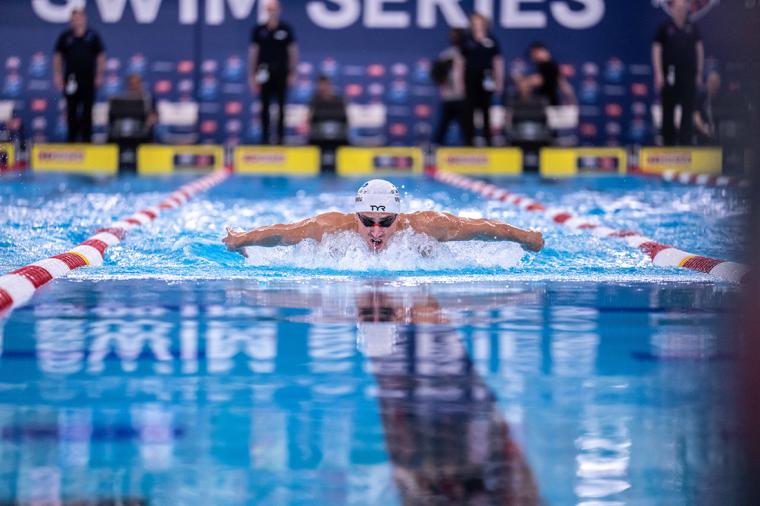
Now that the 2026 Winter Olympics are behind us, the next Olympiad will be in 2028, when Los Angeles hosts the Summer Games. And, just like figure skating at the Winter Games, swimming is a sport that dominates Summer Olympics coverage.
But the sport deserves more consistent attention. As SwimSwam.com, a website dedicated to competitive swimming, noted last fall: “Despite incredible athletes, record-breaking performances and thrilling races, swimming hasn’t reached the audience it deserves. If we want our sport to thrive — not just every four years at the Olympics — we need fresh ideas, new energy and a stronger connection to the fans who already love it.”
Indeed, plenty of fans do love watching competitive swimming (and diving, too). Which is why so many destinations make hosting aquatics events a top priority. Here are eight destinations looking to help event organizers make waves in advance of Los Angeles.
Lancaster, Pennsylvania
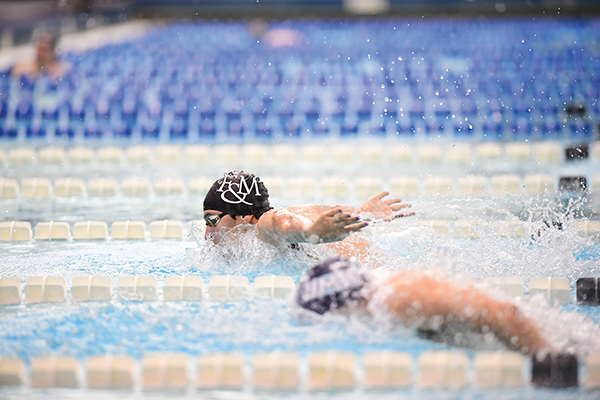
Anchored by the 21,000-square-foot Kunkel Aquatic Center and the 50-meter-by-25-yard McGinness Pool at Franklin & Marshall College, Lancaster’s competitive swimming scene has evolved well beyond the local level, according to Chris Ackerman, director of sales at Discover Lancaster.
The venue holds almost 500 spectators and boasts a state-of-the-art UV purification system that allows for lower chlorine levels and better air quality for both swimmers and spectators.
“What was once centered primarily on school and community programs now includes large club meets, collegiate competitions and championship-level events,” Ackerman says. “This growth has been driven by strong facilities, experienced meet operators and a supportive local aquatics community.”
No wonder Lancaster, located in the southeastern corner of the state, is viewed as a reliable and attractive host for multi-day aquatic events that attract swimmers who travel from throughout the Mid-Atlantic region.
Events hosted include USA Swimming club invitationals, collegiate invitationals and high school and conference championship meets. What’s more, given Lancaster’s small-town vibe mixed with urban energy, athletes and their families can take advantage of short travel times between the natatorium and hotels, as well as between restaurants and attractions.
Sarasota, Florida
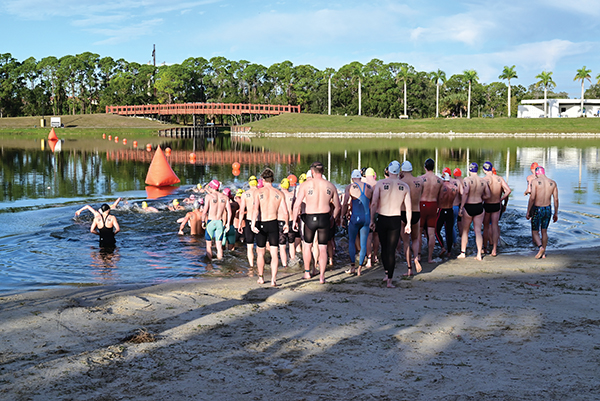
Like Lancaster, Sarasota has steadily evolved into an attractive destination for competitive swimming and diving, according to Nate Sweetman, sports marketing manager for Visit Sarasota County.
“What began with a strong foundation in community swim clubs and local meets has grown into a robust year-round ecosystem supported by elite facilities, national-caliber events and a dedicated sports tourism strategy,” Sweetman says about the Gulf Coast city.
The Selby Aquatic Center, anchored by a 50-meter Olympic-size pool, recently added a training pool and expanded its capacity to host more athletes and programs throughout the year, including the 2026 YMCA National Masters Meet in April, a new addition to the city’s events calendar. An estimated 350 swimmers ranging in age from 18 to 95 are expected to compete.
Meanwhile, the Arlington Park & Aquatic Complex offers a 50-meter lap pool and 25-yard instructional pool that serve both competitive and community-based swim programs.
For open water events, Nathan Benderson Park hosted the 2025 College Swimming & Diving Coaches Association of America’s National Open Water Championship and will welcome the 2026 USA Swimming’s Open Water National and Junior National Championships in April.
According to Sweetman, the emphasis on open water programming is uncommon in most markets, which adds diversity to Sarasota’s aquatics portfolio.
Auburn-Opelika, Alabama
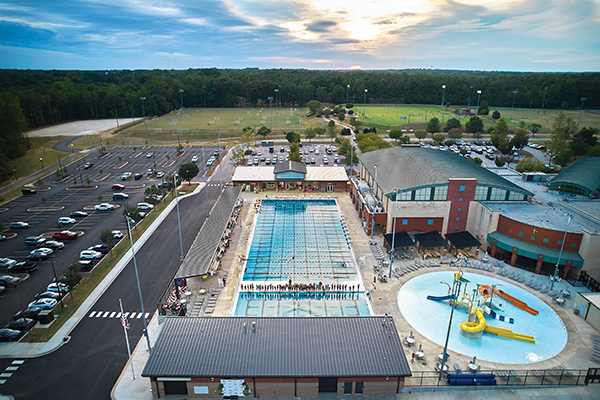
The Auburn-Opelika region, nestled deep in south-central Alabama, has a long-standing reputation for elite aquatic competition, buoyed by Auburn University’s aquatics program, which has won 13 national titles between 1997 and 2009.
“Over the years, the cities of Auburn and Opelika have expanded aquatic facilities and the university has elevated its role from hosting collegiate meets to attracting national events,” says Travis Harrison, experience and marketing specialist for Auburn-Opelika Tourism.
The organization’s sports tourism strategy has evolved, too, shifting from a venue-focused approach to a full-service model that prioritizes the entire swimmer and organizer experience, Harrison says.
The James E. Martin Aquatic Center on Auburn University’s campus remains the cornerstone of Auburn-Opelika’s aquatics offerings. The facility offers an Olympic-size pool with movable bulkheads, an advanced wave-absorbing gutter system, platforms for diving from as high as 10 meters (with a 16.5-foot diving well) and seating for more than 1,000 spectators. It hosted the 2025 NCAA Zone B Diving Championships last March and the 2025 USA Diving National Championships last May.
Additionally, the Opelika Sportsplex & Aquatic Center hosts several aquatics events and recently added an outdoor 50-meter competition pool to complement its indoor competition pool.
The facility hosts the Alabama Recreation & Parks Association Championships and the Auburn Senior Games, as well as Opelika Swim Team meets. All told, the Auburn-Opelika region hosts no fewer than 11 aquatics events every year, attracting a collective estimated 8,000 to 9,000 athletes.
Raleigh, North Carolina
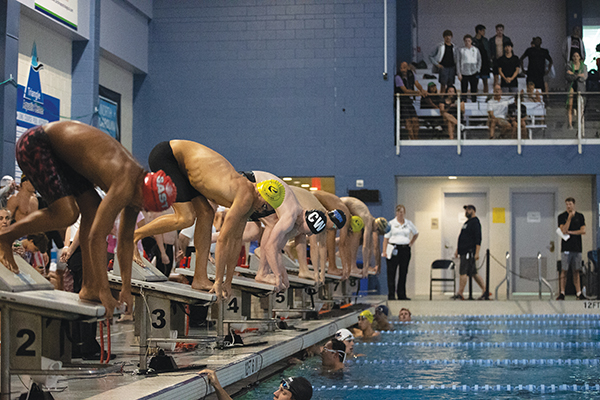
Raleigh distinguishes itself from other aquatics destinations in North Carolina and surrounding states by offering a concentration of year-round competitive venues alongside high caliber training environments that consistently attract elite swimmers, major events and youth competition programs, according to Jason Philbeck, associate director of the Greater Raleigh Sports Alliance.
Indeed, members of Team USA trained for the 2024 Olympics at the Triangle Aquatic Center (TAC), a nonprofit organization that has served North Carolina’s Triangle Area (encompassing Raleigh, Durham and Chapel Hill) since 2007. The 102,000-square-foot facility features four pools, including an indoor 50-meter competition pool, a 10-lane 25-yard pool and an outdoor 50-meter pool.
Other aquatics venues include the city-owned two-story Pullen Aquatic Complex with an Olympic-size pool that caters to both swimming and diving events, and the Willis R. Casey Aquatic Center on the North Carolina State University campus offers an 8-lane, 25 yard pool, an 11-foot diving well and a full 50-meter Olympic pool that can be configured to provide 18 short course (25 yard) lanes.
This year, Pullen hosted the North Carolina High School Athletic Association’s State Diving Championships in February while TAC hosted the NCHSAA State Swimming Championships the same weekend. TAC also welcomed the USA Swimming 2026 Southern Zone East Speed Senior Sectionals and Age Group Sectionals, both in March.
“Greater Raleigh boasts a thriving competitive swimming and diving scene with world-class facilities and elite competition,” Philbeck says. “Sports event organizers love Raleigh’s central location off I-40, nearby hotels, Southern hospitality and proven track record.”
DuPage County, Illinois
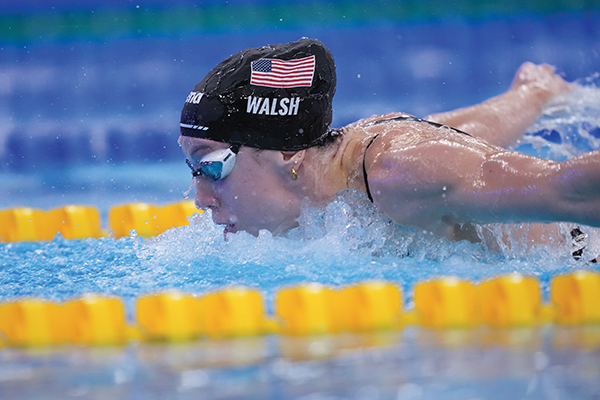
DuPage County is home to several large aquatic clubs that attract swimmers from the greater Chicagoland area, thanks in large part to the FMC Natatorium at Ty Warner Park in Westmont (about 20 miles west of downtown Chicago).
Founded by a swim parent in 2020, the 71,000-square-foot facility attracts both age-group and senior swimming events with a 50-meter Olympic-size Myrtha Pool with nine competition lanes, a 25-yard eight-lane training pool, movable bulkheads, seating for 1,200 spectators, concessions and more.
“The swimming and diving culture has always been a tight-knit community, and that is no different in DuPage County,” says Igor Bakovic, director of the DuPage Sports Commission. “Competitive swimming and diving start at a young age, whether through a park district, swim club or private pool and is widely supported by families and the many athletes that came before them.”
Perhaps that’s why the FMC Natatorium is considered one of the premier aquatic venues in the country, he adds. It has hosted the Illinois High School Association State Swimming and Diving Championships for both boys and girls, and last year, the facility hosted its first international event, attracting athletes from 64 countries for the 2025 World Aquatics Swimming World Cup.
Additionally, 2026 marks the fifth consecutive year the FMC Natatorium will serve as a stop on the USA Swimming Pro Swim Series tour (formerly the TYR Pro Swim Series).
Conway, Arkansas
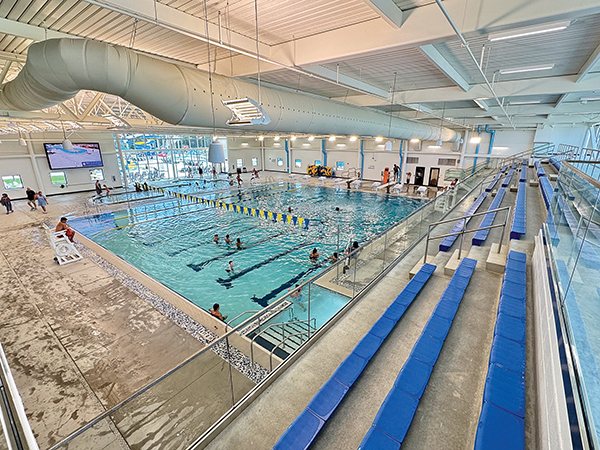
The Conway Community Center, located in the heart of Arkansas, boasts a new natatorium that is already making waves. The eight-lane indoor competitive pool with spectator seating opened in 2025 and already has hosted regional and state high school swim and dive meets, with more on the way.
“Now that Community Center staff have been in place for six months, they are at a point where they can start looking at bigger events,” says Rachel Shaw, executive director of Visit Conway. “We will also be open to pitching for events that would require all three swimming facilities in the city.”
“All three” include the Conway Community Center and the competitive pools at both Hendrix College and the University of Central Arkansas. Adding to the local swimming and diving culture is the fact that Conway offers two competitive swimming and diving organizations that regularly host events in the city.
Snohomish County, Washington
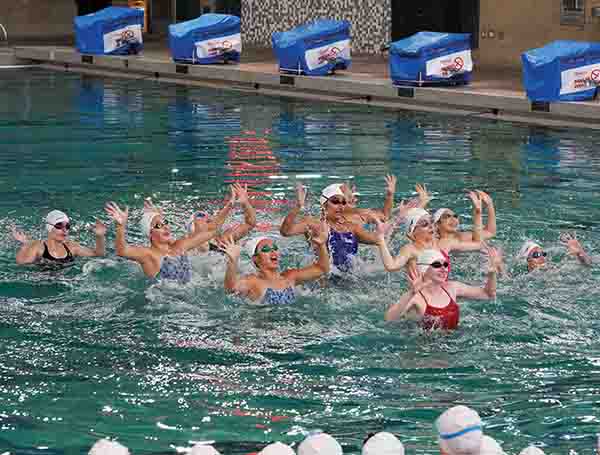
The northwest corner of Washington is home to the versatile Snohomish Aquatic Center, which features a 25-yard-by-25-meter competition pool with up to 10 lanes and two 1-meter diving boards. The venue welcomes everything from high school swim and dive meets and U.S. Masters Swimming events to the 2018 FlowRider® FLOW Tour using the facility’s surf simulation machine.
Most recently, though, the Snohomish Aquatic Center has become a destination for USA Artistic Swimming, which held a 2026 Classic Invitational in March in partnership with Kirkland-based Seattle Synchro Club. That follows a USA Artistic Swimming Rising Star Camp held last fall at the Snohomish Aquatic Center to boost local interest in the sport.
“With a successful 2025 Rising Star Camp and a ‘how can we help you’ approach, we are hosting more USA Artistic Swimming events and growing the sport of artistic swimming in the Pacific Northwest,” says Tammy Dunn, executive director of the Snohomish County Sports Commission, who reached out to the national governing body to inquire about requests for proposals and pitched the Snohomish Aquatic Center. “[From there], a partnership with USA Artistic Swimming and Seattle Synchro Club began.”
Quad Cities, Illinois/Iowa
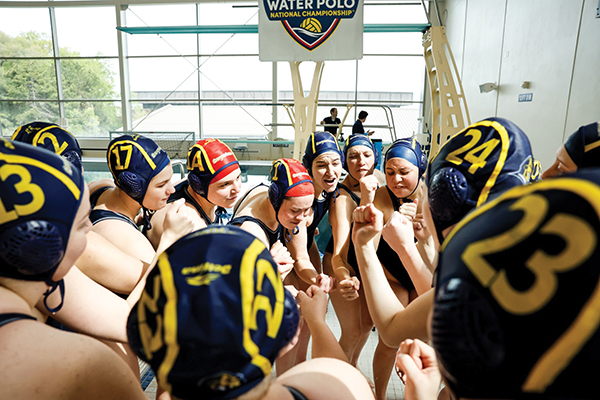
Similar to Snohomish County, the Quad Cities has developed a deeply-rooted and highly competitive aquatics environment that doesn’t only include swimming and diving. Water polo is one of the destination’s specialties.
Comprised of a “bi-state family of communities in Iowa and Illinois on the Mississippi River,” according to Visit Quad Cities, the region offers a strong network of eight-lane natatoriums with diving wells at colleges, YMCA facilities and high schools, creating year-round access for training, competition and athlete development, according to Joan Kranovich, vice president of business and growth development at Visit Quad Cities and director of Sports QC, based in Moline, Illinois.
The Anne Greve Lund Natatorium at Augustana College in Rock Island, Illinois, features a competition-ready pool with ample depth for water polo, a diving well, spectator seating, team spaces and meet-management infrastructure. It hosts collegiate swimming, diving and water polo competitions, including the 2025 Collegiate Water Polo Association’s Women’s Varsity Division III Championship.
“What differentiates the Quad Cities is its multi-discipline aquatics ecosystem,” Kranovich says, noting that the area’s central-Midwest location is within a six-hour drive of 37 million people. “Few destinations of similar size can support swimming, diving and water polo at youth, collegiate and national-governing-body levels using a complementary mix of collegiate, YMCA and high school facilities. We are a destination that values aquatics as a core part of its sports culture.” SDM
Related Organizations
About the Author