

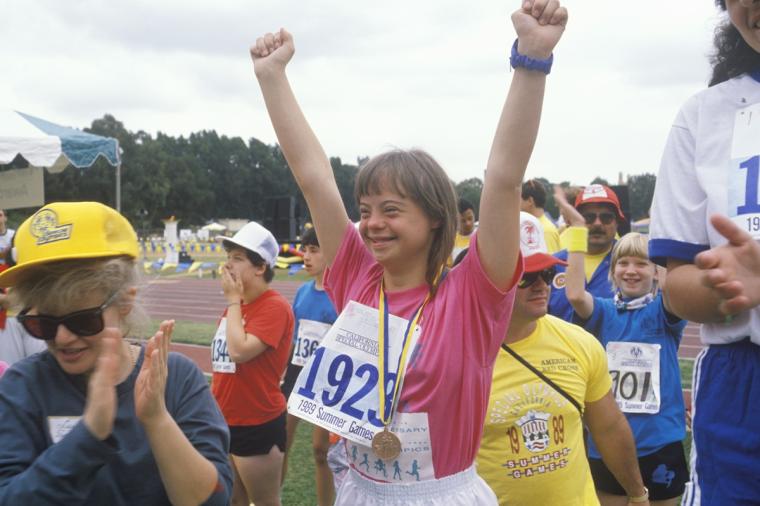
Photo © Joe Sohm | Dreamstime.com
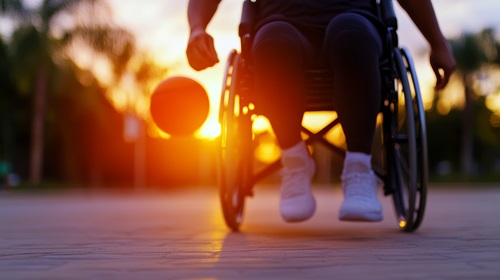
Children’s mental, physical and emotional health all worsen when they’re not regularly participating in youth sports. But there is a greater likelihood of those struggles among children with physical or intellectual disabilities, autism, attention deficit hyperactivity disorder, vision or hearing challenges, learning disabilities and other conditions.
That was just one critical finding of the “2024 Parenting Survey” published earlier this year by the Aspen Institute’s Project Play in partnership with Utah State University and Louisiana Tech University. The 148-page report included a section on the sports experiences of parents of children with disabilities.
Key findings of that survey, as explored in a special report posted by Project Play in September, include the following:
- On average, children with disabilities who participate in sports play about five months during the year compared to 5.7 months for those without disabilities.
- For the most part, children with and without disabilities who participate enjoy similar sports. Basketball, baseball, soccer, tackle football and dance are the most-played activities. The data may be similar because many survey respondents had children with mild or cognitive disabilities who may play in mainstream sports rather than children with physical disabilities.
- Safety is more important for parents of children with disabilities. They ranked abuse prevention training for coaches as more important than parents without a disabled child.
- Sports parents of children both with and without disabilities show almost no difference regarding athletic aspirations for their child. For instance, they believe their child can reach the Paralympics (10%) or Olympics (11%).
“Traditional school and club-based sports often lack the resources to effectively include children with disabilities, leaving families reliant on nonprofit organizations to fill the void,” according to the report, which attributes that information to Julia Ray, programs director at Move United, an affiliate of the U.S. Olympic and Paralympic Committee that offers more than 70 adaptive sports.
“This creates an unnecessary barrier when solutions are readily available,” Ray said. “Sport providers — whether community-led programs, after-school initiatives or individual coaches — can embrace current inclusion best practices and available resources. A coach is fundamentally someone who adapts instruction to meet athletes’ varying skills and motivations. Athletes with disabilities are no different. We need a fundamental shift in mindset to create meaningful change, similar to what Title IX accomplished for women’s and girls’ sports.”
While we wait for that seismic shift, it’s worth looking at how organizations and events in cities from Los Angeles to Freehold Borough, N.J., are giving people with disabilities memorable opportunities to participate in a variety of sporting activities.
For example, as part of an effort by Los Angeles Recreation and Parks to expand opportunities for youths with disabilities, officials offer the PlayLA Adaptive Para Surf Clinic in partnership with the Challenged Athletes Foundation.
“We've seen the benefits of kids who've been told, ‘You can't do this,'” Kelly Caldwell, principal recreation supervisor for the PlayLA program, told LAist.com, part of Southern California Public Radio. “Giving them a place to play, it just … changes their world.
As LAist.com reports:
After Los Angeles agreed nearly a decade ago to host the 2028 Olympics, organizers committed $160 million to local youth sports. LA28 has contributed $60 million to PlayLA since 2018. The International Olympic Committee also chipped in, according to Recreation and Parks.
The money helps subsidize programs for low-income families, and pays for staffing and equipment for new sports, including table tennis, fencing and archery.
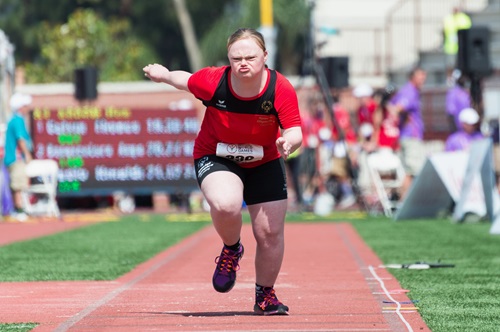
The funding has also helped expand the city’s programs for youths with disabilities. Adaptive youth sports include swimming, volleyball, skateboarding, blind soccer, and track and field.
“The goal of this program is to make sure that everyone has access,” said PlayLA’s adaptive sports facility director Erika Luna Diaz added. “We want to make sure that there [are] no limitations.”
Elsewhere, the National Sports Center for the Disabled in Winter Park, Colo., offered outdoor-adventure experiences this summer to people of all ages with disabilities — including kids and veterans. Activities included therapeutic horseback riding lessons, fly fishing, sailing, mountain biking and rock climbing.
“Participants … get to spend the day with our horses, whether it’s riding in the arena or doing ground therapy, or learning about how to brush and clean the horse,” Mark Stump, recreation program director for the National Sports Center for the Disabled, told SkyHiNews.com about the horseback riding activities at Snow Mountain Ranch, located in the Rocky Mountains. “They get to spend lots of time doing some of that therapeutic equestrian work, which is really, really fun and pretty cool.”
In New Jersey this past summer, meanwhile, “a Freehold Borough High School student organized a footgolf event for soccer players with disabilities — raising funds to support New Jersey Youth Soccer's TOPSoccer Program, which provides soccer programming to nearly 1,000 players with mental or physical disabilities,” reports the Asbury Park Press. “Footgolf is a soccer-golf hybrid played with a regulation soccer ball on a golf course. Players try to get the ball into a 21-inch hole in the least amount of kicks.”
Tab Ramos, former U.S. Men’s National Team captain, even showed up to participate and take photos.
“What I loved about the event was that it built upon the buddy system, which I think [is] a crucial relationship,” one mother of a participant told the paper. “I feel like my son, who is on the autism spectrum, gains so much.”
About the Author