

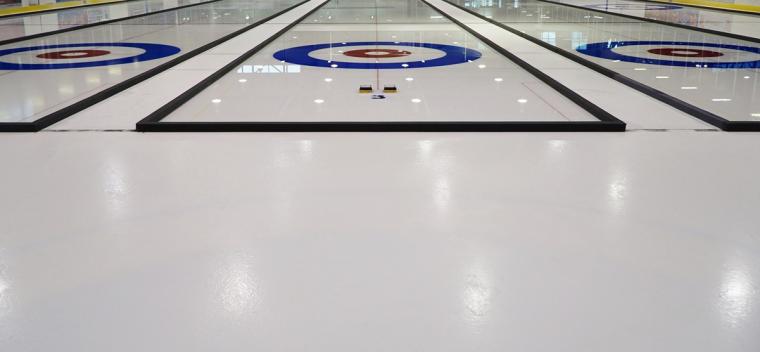
Photo © Yan Xiang | Dreamstime.com
“Millions of Americans fall in love with curling during the 2026 Olympic Games,” proclaimed USA Curling’s website near the end of the 2026 Winter Olympics in late February.
And no wonder: The mixed doubles team of Cory Thiesse and Korey Dropkin won Team USA’s first medal in that discipline, earning silver after defeating Sweden at the Milan-Cortina Games, making Thiesse the first U.S. woman to medal in any Olympics curling competition.
What’s more, 54-year-old Rich Ruohonen, an alternate on the U.S. men’s curling team, became the oldest American to ever compete in a Winter Olympics medal event.
Those kind of feel-good stories prove that curling has broad appeal spanning generations, which might be enough to help keep the sport hot between now and the 2030 Winter Games in France.
“Every four years, we get a big wave of interest [from] people wanting to try curling, wanting to join our club,” Nic Swiercek, president of the Aksarben Curling Club in Omaha, Neb., told WOWT.com. “People think it looks really easy on TV, and it does look easy on TV. But they realize it’s a lot harder when they actually try it. … It’s actually very easy to pick up; it takes a lifetime to master.”
I
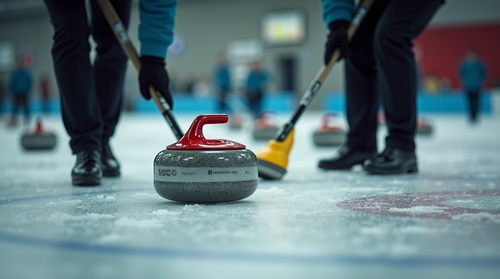
ndeed, curling (often referred to as “chess on ice”) can be physically and mentally draining, and the sport requires balance, strategy and teamwork. But during every Winter Olympics cycle, curling clubs across the country report a surge in renewed interest from people wanting to slide into the sport. Some first-timers won’t be back, but others will stick around and become regulars.
“The very first thought from newcomers is, ‘Oh, this is harder than I expected,’” DeeAnn Wlodarski, president of the Kansas City Curling Club in Blue Springs, Mo., told Axios.com in February. “Then they keep coming, and they’re like, ‘OK, I can do this!’ They realize how fun it is. It’s not just the curling. It’s the community. It makes people stick around.”
Nearly 600 people signed up to participate in the club’s $40 “Curling Experience” lessons in just a month’s time, she added. Of those, Wlodarski hoped to add about 50 official new members.
Indeed, unlike other Winter Olympic sports — we’re looking at you, Skeleton — curling offers a social aspect both on and off the ice that appeals to a lot of people. Some curling clubs celebrate the end of a match (or “bonspiel”) with opposing teams socializing together. The Wauwatosa Curling Club, based in a Milwaukee suburb, calls it “broomstacking,” a reference to the sweeping friction that allows curling stones to travel further and in a straighter line.
Curling also is appealing to people of all ages and abilities. “We have a strong level of senior membership and offer adaptive curling opportunities, where we can accommodate individuals with varying levels of physical abilities,” Wauwatosa Curling Club President Katie Moorhead told ShepherdExpress.com, adding that the club plans to reintroduce junior curling sessions this fall for participants between ages 10 and 18.
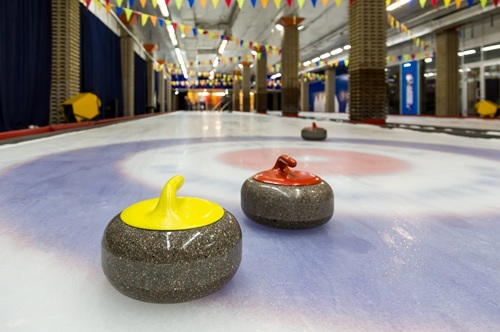
All of this is pretty amazing for a sport that dates back to early-1500s Scotland and involves sliding 42-pound stones across a sheet of ice toward four concentric circles.
But consider this: Curling was the only sport to air every day of the 2026 Winter Games, according to National Public Radio, and “a report shared with NPR by USA Curling showed that curling had the largest viewership of any sport during NBC’s Winter Olympic coverage.” And at the 2026 Winter Paralympics, which began two weeks later, wheelchair curling athletes competed every day, too.
“We do get a good bump every four years, but I think this year seems more significant than in the past,” Dean Gemmell, CEO of USA Curling, told NPR. “That might be because our teams performed well. All of our teams are on ice for 30 hours of television time, so compared to other sports where athletes might get four minutes, we have a lot.”
This year’s boost could continue longer than usual, thanks to the launch of the Rock League, which is hailed as the world’s first professional curling league and has a tagline of “Curling Unleashed.” Launched by The Curling Group, the league’s inaugural season begins in April, with “six mixed-gender, globally based franchises in a multi-format competition designed to elevate the sport into a new professional era,” according to the league’s website.
The Curling Group also owns the six 10-member teams, which are regionally anchored: two in Canada, two in Europe, one in the Asia-Pacific and one in the United States. That U.S. team will be captained by … 2026 Olympic mixed-doubles silver medalist Korey Dropkin.
For more details on the league, game schedules and how to watch, click here.
About the Author