
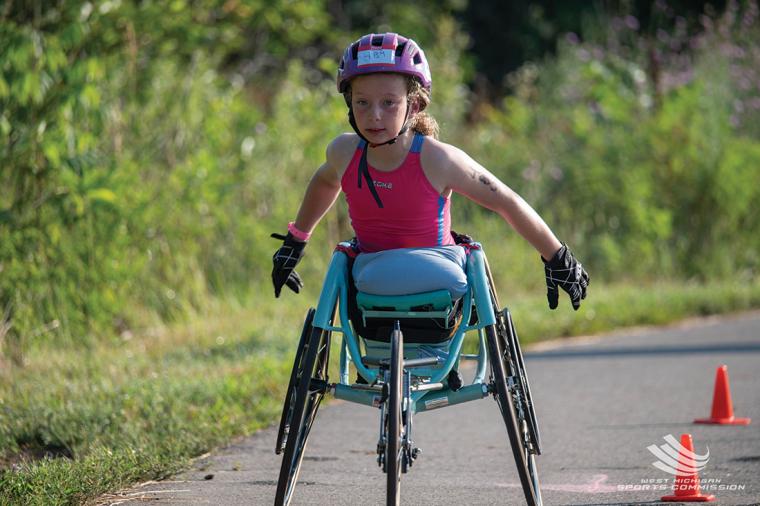
This July, Grand Rapids, Mi will welcome the largest and longest-running national championship for athletes with physical disabilities, visual impairments and intellectual disabilities.
Organized by Maryland-based Move United, the nation’s leading community-based adapted sports organization, The Hartford Nationals will showcase competitions in archery, boccia, para powerlifting, paratriathlon, shooting, swimming, track & field and wheelchair tennis.
“Adaptive sports and welcoming families and individuals who participate in adaptive sports has been a focus of ours for many years,” says Mike Guswiler, president of the West Michigan Sports Commission, noting that Grand Rapids hosted The Hartford Nationals in 2025, too, which attracted a record 423 participants along with 160 coaches (plus family members and supporters).
Move United expects the event to grow by an estimated five percent every year and touted an economic impact of more than $1 million for communities interested in hosting The Hartford Nationals in 2027 and beyond.
For the West Michigan Sports Commission, building a strong foundation in hosting adaptive sports makes a lot of sense. The Mary Free Bed Rehabilitation Hospital in Grand Rapids (which Guswiler says is undergoing a major expansion to include pediatric rehabilitation) has a long history in promoting adaptive sports.
The hospital’s Wheelchair and Adaptive Sports group supports 17 sports teams, including sled hockey, wheelchair tennis and wheelchair basketball, and offers classes and clinics in other sports and activities such as rock climbing, swimming and archery.
Grand Rapids also is home to the 48-year-old Amway River Bank Run, which includes the largest 25K elite wheelchair and handcycling event in the country. Additionally, the American Hockey League’s Grand Rapids Griffins and the local Sled Wings adaptive hockey program host an annual sled hockey game to promote sled hockey.
“We believe that sport can play an important and pivotal role for individuals, families and communities,” Guswiler says. “Beyond the economics of hosting events that bring visitors to our community, the West Michigan Sports Commission has embraced a strategy of inclusion to ensure that all can play and that all benefit from access to sport.”
While “adapted sports” and “adaptive sports” often are used interchangeably, there is a distinction between the two terms. Adapted sports are physical activities that have been modified to include people with disabilities, often through changes to rules or equipment, and also are referred to as “para sports.” Adaptive sports, on the other hand, technically refer to the behaviors of individuals modifying their own actions and skills to participate.
According to research from Move United, four in 10 individuals with disabilities who do not play sports want to do so. That’s why sports tourism entities around the country are tapping into local resources like hospitals, universities and nonprofit organizations to help bring more adaptive sports and recreation events to their communities.
“Our philosophy is simple: Everyone belongs here,” says Luchie Javelosa, senior sports sales manager for Tempe Tourism, which has hosted the National Veterans Wheelchair Games. “Across the board, local officials, businesses, organizations and residents take great pride in being a part of a welcoming and inclusive community.”
Here’s a sampling of destinations broadening the realm of accessible sports tourism possibilities.
Tempe, Arizona
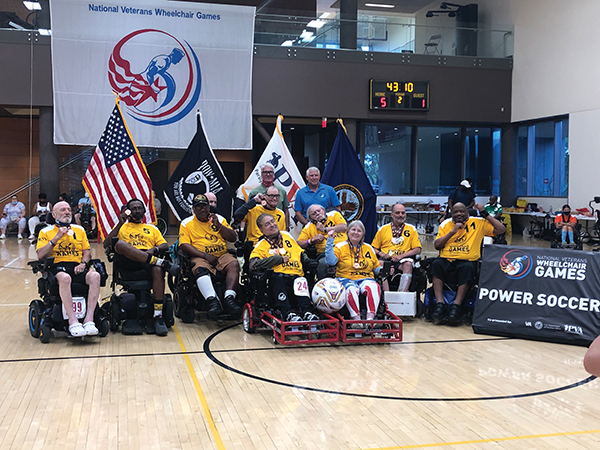
For four consecutive years, Tempe Tourism has sponsored the annual Adapted Sport: Economic Impact Study, conducted by All In Sport Consulting to help raise awareness of the movement. The 2024 report estimated the total economic impact of the adapted sports industry (based on completed study surveys) at almost $164 million, a 14 percent increase over 2023.
Tempe Tourism also partners with Ability 360, Arizona’s largest center for independent living, to support adaptive sports groups and events, and the CVB works with local organizations such as Mikey’s League, which runs inclusive sports programs that partner children and young adults who have disabilities with peers to compete in team sports.
What’s more, the City of Tempe has earned the designation of a Certified Autism Center from the International Board of Credentialing and Continuing Educational Standards for undergoing training and implementing new programs and resources for those with autism.
“As a destination continuously working on inclusion and accessibility, we understand the importance of hosting adaptive groups and the return on inclusion,” Javelosa says, referencing a different kind of ROI. “The Adapted Sport: Economic Impact Study results also show that adaptive sports continue to rise year over year and are poised to keep increasing, especially with the Los Angeles 2028 Olympics and Paralympics.”
Buffalo, New York
Like Tempe and Grand Rapids, Buffalo, New York is a natural destination for adaptive sports events. The Hampton Inn Amherst was the first hotel in the country to earn a Universal Design designation by the Center of Inclusive Design and Environmental Access, according to Greg Celinas, director of sports development for Visit Buffalo.
The four-story hotel near the North Campus of the University at Buffalo and the Northtown Center at Amherst ice arena offers 107 barrier-free rooms, wider hallways, roll-in showers and lowered fixtures, as well as visual and auditory aids.
Additionally, a majority of the rooms have two beds to better accommodate teams. Several other sports venues and public parks in the city are compliant with the Americans With Disabilities Act and are easy to navigate.
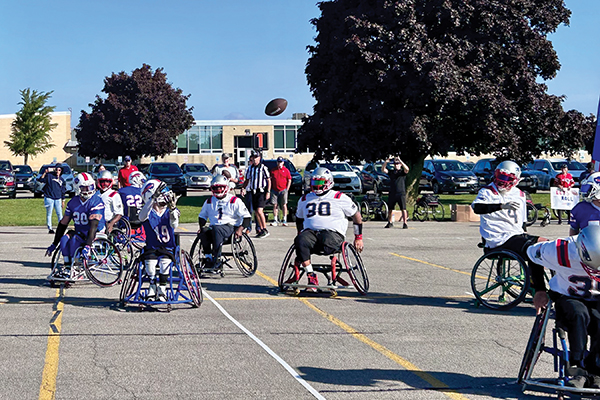
The Buffalo Sports Commission has brought a wide range of adaptive sports events to Buffalo in recent years. They include the USA Wheelchair Football League Tournament, the American Cornhole Organization’s Adaptive Cornhole Tournament, an adaptive mixed martial arts cage fight and the USA Wheelchair Lacrosse National Championship.
The 2025 World Para Ice Hockey Championship drew players to Buffalo from eight countries, and the city is expected to welcome participants from neighboring states for a Northeast Regional USTA adaptive tennis clinic this summer.
Adaptive sports remain an ongoing priority in Buffalo, according to James Adler, director of sports sales for Visit Buffalo, which partners with organizations like the American Hearing Impaired Hockey Association and Greater Buffalo Adaptive Sports.
“At trade shows, connecting with representatives of adaptive sports is a top priority,” he says. “We are now planning to meet with national governing bodies and learn more about programming. We also attend adaptive sporting events so that we can better understand how they are run. Our long-term strategy [is to] become a leader and premier destination for adaptive sports.”
Wildwoods Convention Center, Wildwood, New Jersey
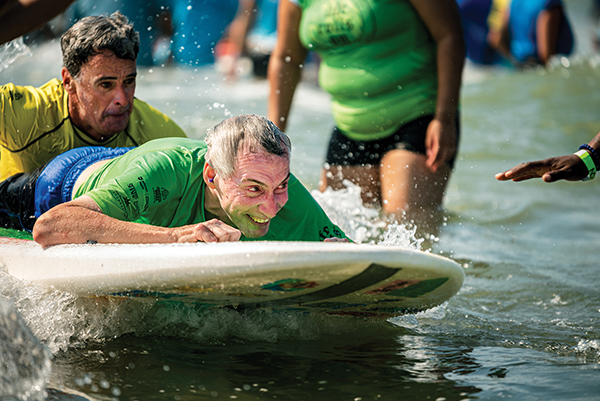
The Wildwoods Convention Center located on the world-famous Wildwood Boardwalk has emerged as a destination for wheelchair basketball and other adaptive sports tournaments. It offers wheelchair-accessible entrances, parking areas and restrooms, and wheelchair-accessible bleacher seating, as well as beach wheelchairs to access the beach via boardwalk ramps.
The convention center has welcomed such large-scale events as the Special Olympics New Jersey Spring Games and the annual Life Rolls On “Surf Wildwood” event, which brings people with spinal cord injuries and other disabilities to the Atlantic Ocean to ride the waves on adaptive surfboards with assistance from hundreds of volunteers.
And then there’s the annual Polar Bear Plunge for Special Olympics, says Michele Mendelson, sales manager at the Wildwoods Convention Center. Held on the beach just outside the convention center, the Polar Bear Plunge offers individuals, organizations and businesses a memorable way to raise money for Special Olympics New Jersey’s 21,000 athletes by braving icy ocean water. “After the plunge, athletes and supporters warm up with a hot catered lunch inside the convention center,” Mendelson says.
Hoover Met Comple, Hoover, Alabama
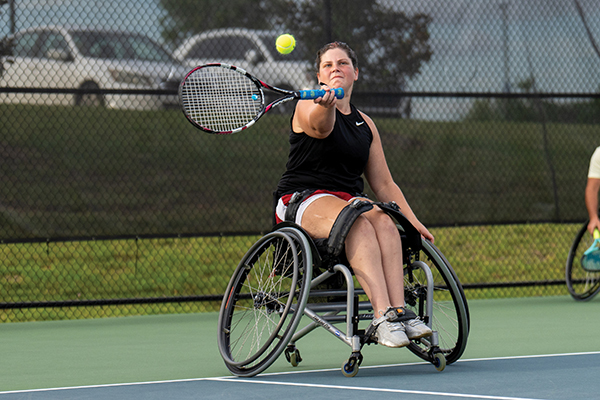
Another venue equipped with plenty of ADA features is the Hoover Met Complex, a multi-purpose indoor/outdoor sports facility that offers accessible ramps, restrooms and parking, as well as sensory bags and quiet rooms.
Like Grand Rapids, Hoover has hosted The Hartford Nationals (in 2022 and 2023), with events held at Hoover Met Stadium, The Finley Center and the facility’s Tennis Center. The complex is located near (and partners with) the Lakeshore Foundation in Birmingham, a U.S. Olympic and Paralympic Training Site.
“Having partnerships with the City of Hoover, the Greater Birmingham Convention & Visitors Bureau and the Lakeshore Foundation, we can strategize about opportunities that allow for adaptative sports opportunities, while also showcasing what the City of Hoover has to offer,” says Tucker Rainey, director of operations at the Hoover Met Complex. “The City of Hoover has been intentional with planning efforts and upgrades for all its venues and parks, and it shows with their continued efforts of making sure all are included.”
Fort Wayne, Indiana
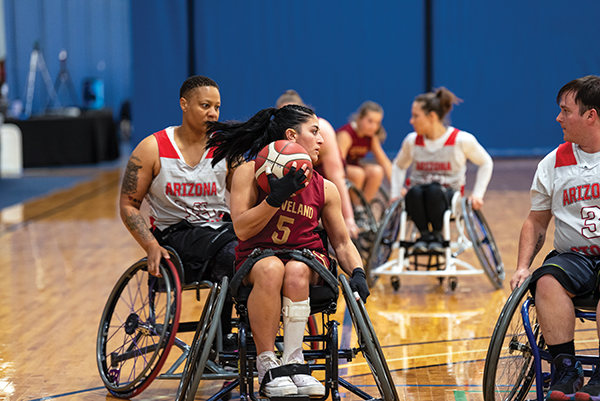
As a TravelAbility Destination Ally, Fort Wayne offers resources, facilities and attractions that appeal to adaptive sports athletes before, during and after competition, according to Nicolle Campbell, director of sales at Visit Fort Wayne.
“With Kulture City certifications [for sensory inclusiveness], new builds and renovations with universal design in mind, as well as hotels that go well above ADA standards, Fort Wayne is mindful of a visitors’ experience,” she says, adding that Visit Fort Wayne launched a 10-year tourism master plan in 2024 with accessibility as a foundational focus.
Last year, for example, Fort Wayne hosted the 2025 World ParaVolley Sitting Volleyball World Cup at Turnstone, a facility for children and adults with disabilities that features the Plassman Athletic Center, an Olympic and Paralympic training site. A total of 15 countries brought 20 men’s and women’s teams to the United States for the first time for that event.
The city also hosted the National Wheelchair Basketball Association’s Women’s and Military Championships in 2024 and 2025 and will welcome the Midwest Conference Championships this year. Other past events include the 2023 USA Boccia National Championships and the 2022 USA Blind Hockey Classic.
Maine
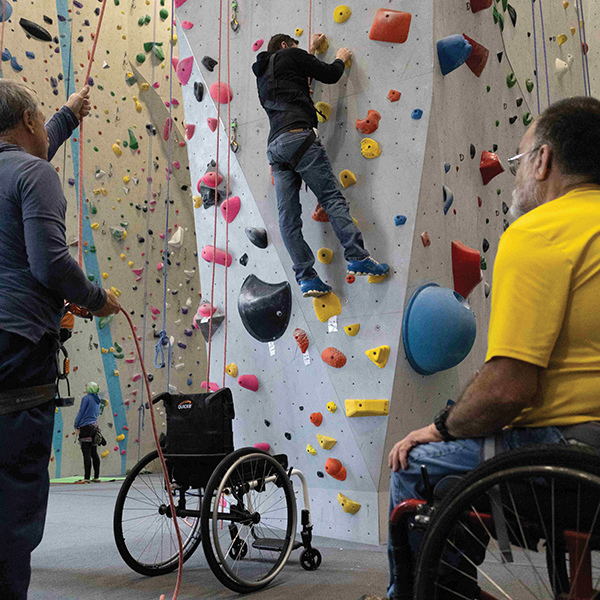
The entire state of Maine offers an abundance of accessible outdoor sports and recreation opportunities, including beaches and trails that are accessible. There also has been an increase in universal trail design and accessible venues, according to Sheila Brennan Nee, strategic director for the Maine Sports Commission.
The state is home to a variety of adaptive organizations. The Amputee Association of Maine, for example, hosts the Maine Community Bank Adapted Open golf tournament every July at the Brunswick Golf Club. It attracts golfers from throughout New England and raises awareness and funds to support amputees.
Meanwhile, Central Maine Adaptive Sports offers four-season adventures in skiing, snowboarding, snowshoeing, sled hockey, track & field, kayaking and cycling. Through those programs, participants are able to train for Special Olympics and other para sports competitions.
Maine Adaptive Sports and Recreation provides skiing, cycling, golf, pickleball, rock climbing and other programs, and Veterans Adaptive Sports & Training (VAST) offers free year-round programming for vets via a wide variety of indoor and outdoor sports, including snow activities such as a biathlon camp.
The Maine Sports Commission is working to attract more adaptive sports events to the state, including badminton clinics and Move United events, according to Brennan Nee. “Our state may not boast large para events yet, [but] there is a sincere focus on inclusivity and empowerment of athletes with all abilities and backgrounds,” she says.
Auburn-Opelika, Alabama
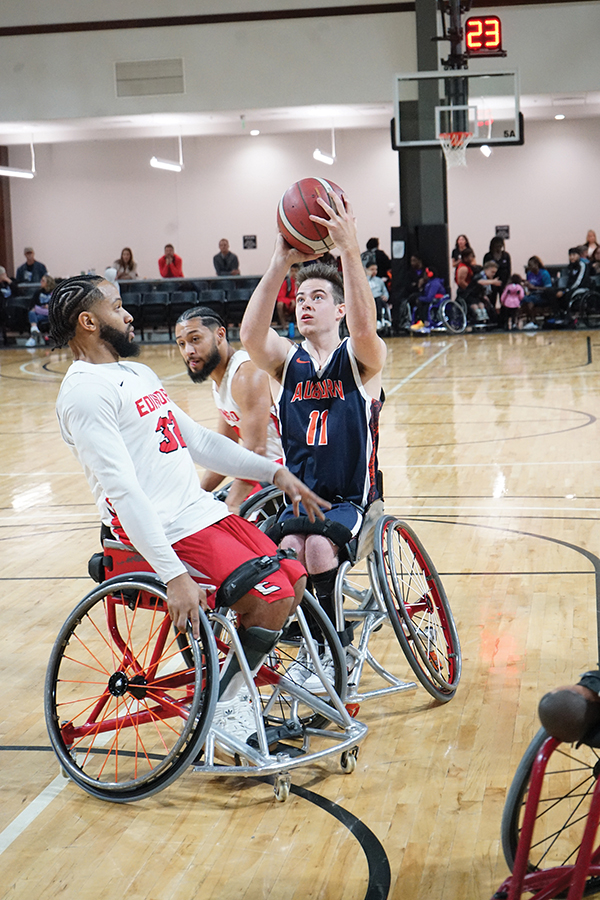
The Birmingham area (home of the Hoover Met Complex) isn’t the only major Alabama destination to make accessibility a significant part of its mission. Auburn-Opelika Tourism’s team and its community partners consistently find ways to support individuals with disabilities throughout the community, according to Travis Harrison, the organization’s experience and marketing specialist.
In 2024 and 2025, Auburn served as the training hub for USA Team Handball’s Wheelchair National Team, with training camps held at Auburn University’s Beard-Eaves Memorial Coliseum. Auburn-Opelika Tourism also supports regional adaptive tennis, basketball and power soccer events, and it partners with Auburn University’s Adapted Athletics and Office of Accessibility. Harrison and his team provide assistance with logistics, lodging and media outreach to help ensure camps and events are successful.
Anthony Terling, sports development director at Auburn-Opelika Tourism, no doubt speaks for all of the above destinations when asked about the role adaptive sports play in the organization’s sports tourism strategy. “Our mission is to create meaningful experiences for all athletes,” he says. “When we host these events, we’re not just supporting a sport. We’re helping build a more inclusive and capable sports destination.” SDM
Related Organizations
About the Author