

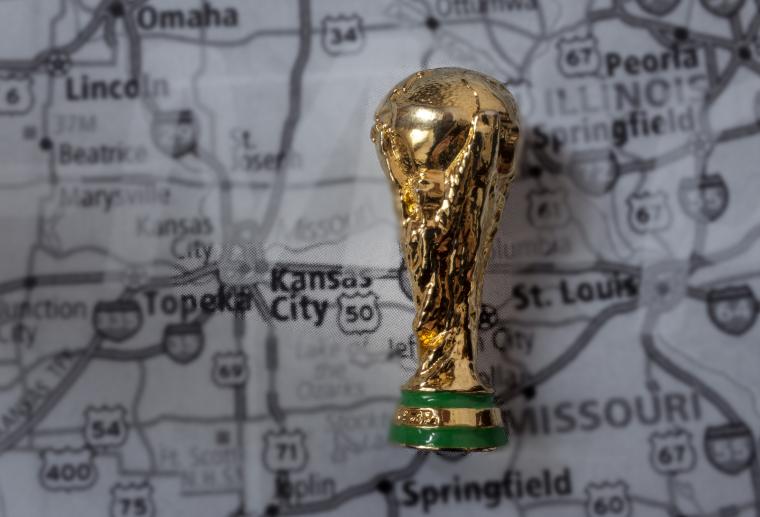
Photo © Pavel Byrkin | Dreamstime.com
This year’s FIFA World Cup will be the largest in history — 48 teams playing 104 matches in 16 host cities across the United States, Canada and Mexico between June 11 and July 19. The U.S. will host 78 of those matches in 11 cities.
Late last year, however, TravelAgentCentral.com reported that inbound travel to the States is slowing, with international arrivals projected to drop 6.3 percent by the end of 2025. And while hotel rates in U.S. host cities surged, early occupancy data for World Cup dates remained in single digits. Visa barriers and high travel costs could push international fans toward Canada and Mexico, where early hotel demand apparently is much stronger.

Indeed, Canada’s two tournament destinations — Toronto and Vancouver — ranked No. 5 and No. 6, respectively, on Expedia’s list of most popular World Cup cities for travelers released in December and based on user searches.
Only Boston, New York, Miami and Dallas proved more popular, with San Francisco bringing up the bottom of the list at No. 16, below Mexico’s three host cities of Monterrey, Guadalajara and Mexico City (No. 13, 14 and 15, respectively).
That said, at least two World Cup host cities — Houston and Kansas City, Mo. — have seen spikes not only in traveler interest but also in bookings.
“Following FIFA’s final draw [on Dec. 5], Houston saw a surge in travel searches and bookings,” according to hoodline.com, a local news site. “Hotels and short-term rental providers began adjusting to increased demand, and ticket brokers reported heightened activity. Downtown businesses and fan-district bars are preparing for larger crowds and higher prices next summer as match-week approaches.”
Indeed, global travel interest in Houston increased about 250% in the hours after the final draw, according to the Houston Business Journal. The city’s NRG Stadium (temporarily renamed “Houston Stadium” for the World Cup) will host seven matches, some of them involving perennial powerhouse teams from Germany, Portugal and The Netherlands.
Local Airbnb hosts also are planning on a windfall during the tournament. “Greater Houston Luxe, one of the city’s major short-term rental management companies … expects to list some properties at up to 500% above normal rates, adjusting pricing as the tournament approaches,” reports Click2Houston.com. “Airbnb estimates that Houston-area hosts could welcome roughly 31,000 guests during World Cup events. Average earnings are expected to hit about $3,000 per stay, depending on property size and location.”
Something worth noting: In 2014, when there was a shortfall of hotel space in Rio for the World Cup, Airbnb unlocked a significant supply of housing; in fact, more than 120,000 people stayed in more than 18,000 Airbnb homes in Rio de Janeiro alone, generating $40 million for local residents. Then in 2016, the roomshare platform did it all over again for the Olympics.
Airbnb also has pledged more than $1 million to support local World Cup community initiatives in Houston, including infrastructure improvements and youth soccer programs.

Meanwhile, tourism officials in Kansas City, which will host six World Cup matches at Arrowhead Stadium (or “Kansas City Stadium”) — including defending champion Argentina — are expecting 650,000 fans to descend on the five-county metropolitan area.
The region will have about 40,000 hotel rooms available each night, but those are already priced higher than normal and filling up fast.
One hotel, the Highland Inn in Peculiar, Mo., “has invested in new mattresses for all rooms, brand new furniture for the entire inn, and added soccer-themed décor,” according to KCTV5.com. Even hotels in rural areas up to two-and-a-half hours from the stadium, are preparing for international visitors.
Kansas City-area homeowners are getting their foot in the tourism door, too, looking into offering short-term rentals.
“Cities across the metro area, including Parkville, Kansas City, Independence, Roeland Park, Merriam and Mission, have already loosened their short-term rental regulations to take advantage of the World Cup’s economic opportunities,” reports Fox4kc.com.
“The World Cup will create enormous opportunity, but only for markets that stay flexible,” Milos Eric, co-founder and general manager of the hospitality jobs platform OysterLink, told TravelAgentCentral.com. “Rates are already high, but fans might be holding off until travel becomes easier and match details are final.”
Indeed, the travel news website predicts that although “the U.S. may face a slower start, the World Cup’s scale — projected to attract five million total visitors across North America — offers massive upside. Once tickets and match logistics stabilize, the U.S. could still see one of its biggest surges in hotel demand since 2019.”
About the Author