

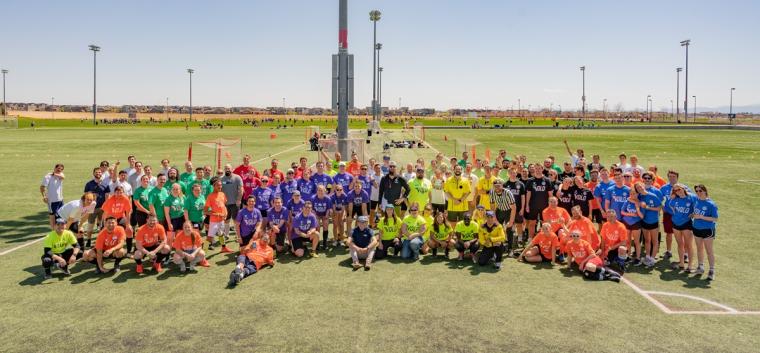
All photos courtesy of Volo Sports
Just recently, SDM profiled the Sport & Social Industry Association, a nonprofit trade organization that serves the businesses that produce, manage or operate adult sports leagues, tournaments and/or social events.
Now, Volo, one of the largest providers of community-focused adult social sports in the U.S. with events in more than 15 markets, has announced the launch of its first-ever Volo Cup Soccer Series, capitalizing on the momentum provided by the FIFA World Cup.
The series is a nationwide tournament experience designed for recreational and competitive adult players looking for a more elevated, social, and community-driven way to compete.
The event started this month and runs through December 2026 across 14 cities nationwide, bringing together players for a professionally operated tournament experience complete with certified officials, custom jerseys, professional photography, sponsor activations, guaranteed games and championship prizes.
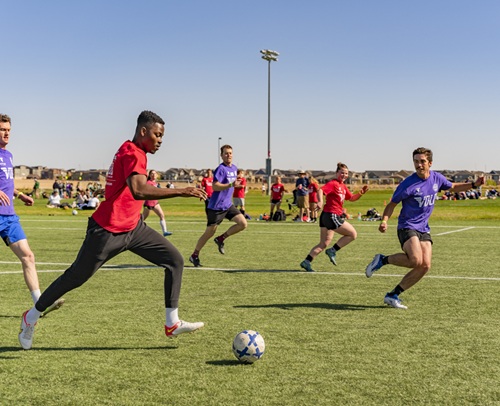
Each competitive division across participating markets will feature a $2,000 cash prize, with teams competing through pool play and bracket rounds to ultimately crown city champions. Volo will also host a National Cup at the end of the event.
It’s hardly surprising that the reception to the concept has been well received; after all, youth soccer participants may have grown up and entered the workforce but they have in no way lost their enthusiasm for their sport, nor for winning.
According to Nate Stahlecker, National Director of Partnership Marketing for Volo Sports, many of the locations participating in the Volo Cup can be found in or near markets hosting actual World Cup play, as well as training camps: Baltimore, Boston, Charleston, Denver, Los Angeles, Miami, New York City, New Jersey, Philadelphia, San Diego, San Francisco, San Jose and Washington DC.
And just as with the FIFA World Cup, the Volo clubs in New York and New Jersey are sharing a tournament location.
“We’ve been encouraged by the enthusiasm from players across our markets,” notes Stahlecker. “The series launched during the busy summer season, so we're using this first year to learn what resonates most with participants and can use this intel to plan future tournaments in spring or fall.”
The stakes are — okay, not quite as high as those in FIFA’s event — but again, they hold the same cache.
“Teams are competing for a $2,000 cash prize, the Volo Cup Trophy and, perhaps most importantly, the opportunity to represent their city and earn year-long bragging rights as the top Volo soccer community in the country.,” notes Stahlecker.
Certain markets, including Denver and Los Angeles, will also include professional soccer game ticket opportunities.
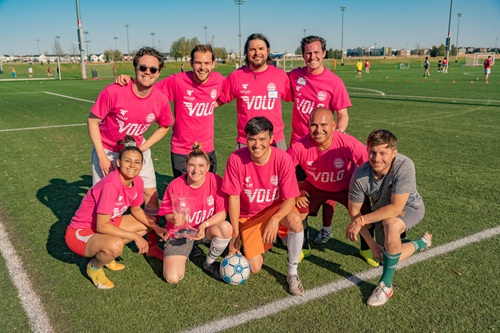
And don’t think that this is all elite-level men’s play either, Stahlecker adds.
“The Volo Cup is designed to reflect the makeup of each local soccer community. Tournaments feature a mix of co-ed, men's and open divisions, ensuring opportunities for players of different backgrounds, skill levels and competitive interests.”
Further, he adds, that’s just one of the things that makes Volo unique.
“Participation doesn't require prior experience or a high level of athletic ability. We strive to create welcoming environments for everyone, whether they're looking for competitive league play, casual recreation, social events, fitness programming or volunteer opportunities. Our goal is simple: make it easy for people to connect, be active and find community through play.”
Field size and team format varies; Most cities are using 7v7 fields; San Francisco has play in 8v8 format, while Miami is hosting 6v6 play. Players can register as full teams, partial groups or free agents looking to join a roster.
As an aside, Travis Tew of 5v5 Soccer has noted that small-sided play is incredibly popular among adult teams. The combination of the ability of assembling a team more easily, with the ability to find spaces to practice and compete that offer less running (these are grown-ups, after all) has led to a burst of participation in older players at the tournament level.
For Volo, says Stahlecker, soccer retains evergreen popularity.
“Soccer remains one of Volo's most popular offerings. In 2025, we recorded more than 139,000 soccer registrations across our markets nationwide, and we expect that number to continue growing in 2026.”
And of course, he adds, with the World Cup front and center in everyone’s periscope, the boost has been tremendous; in this regard, it’s similar to the bounce in participation that follows the Olympics.
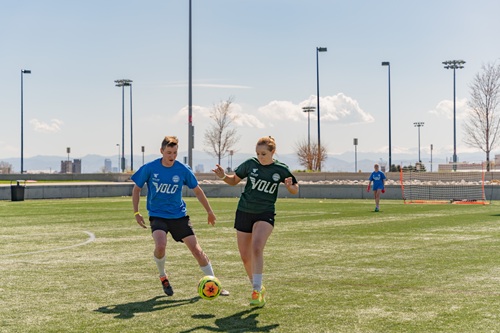
“Major global sporting events have a unique ability to inspire participation, and the World Cup is one of the strongest examples. We expect to see increased interest from both former players looking to get back on the field and newcomers who are discovering the sport through the excitement and visibility of the tournament. When people watch the world's best players compete, it often motivates them to find ways to experience the game themselves.”
Soccer, which has long been one of Volo’s popular sports, reflects this, he adds, with about an 8 percent growth so far over that of last year. (In 2025, the organization recorded more than 139,000 soccer registrations across its markets nationwide.)
The Volo Cup also includes sponsor activations for jerseys, beverages, snacks, meal options, wellness products and other entities.
One of the advantages of adult club sports is their ability to provide not just a workout and not just a competitive outlet but the ability to make friends and connect with others. Part of the success of the business model is that it both allows for and encourages social outings, including postgame gatherings at local restaurants and bars, which in turn, provides additional economic impact to the area hosting competitions.
“At Volo, we believe the game is only part of the experience,” noted Stahlecker. “While providing a high-quality sports experience is important, what keeps people coming back is the sense of connection and community they build along the way. Our leagues create opportunities for people to make friends, expand their social circles, stay active and feel connected in their city. In many cases, we've seen teammates become roommates, business partners, wedding parties and lifelong friends. That's the real impact of community sports.”
Related Content
About the Author