

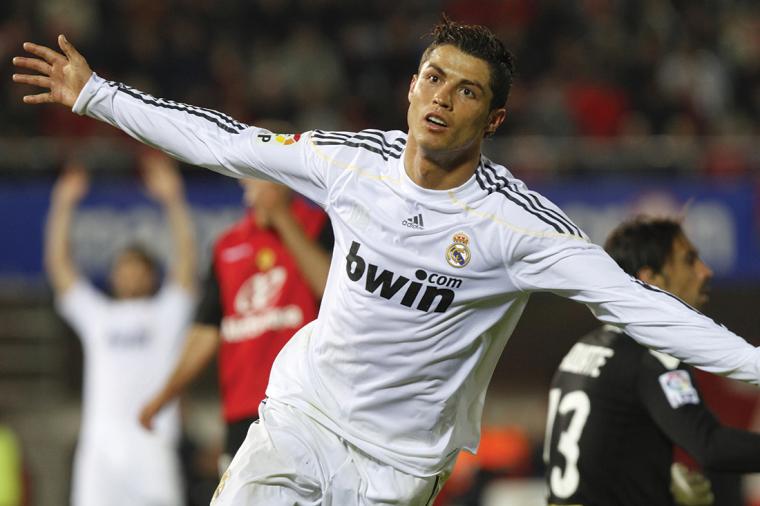
In June, the world comes to the USA’s doorstep to watch the biggest event FIFA has put on to date: The World Cup.
And make no mistake: It is big, with 48 teams playing 104 matches in 16 host cities across three countries (a first for FIFA) before the final whistle blows on July 19.
The Numbers
The U.S. will host 78 of those matches in 11 cities and, as you might expect, there is already an uptick in interest in tourism to host cities. Accordingly, those cities are ready to roll out the welcome mat, hosting everything from soccer festivals to skill clinics and from watch parties to pop-up shops, art installations and live entertainment as the countdown to gametime continues.
There’s a lot at stake here. Various reports and studies have indicated that FIFA expects 6.5 million total attendees and a $17.2 billion gross domestic product boost. The governing body also says the event will create 185,000 jobs nationwide.
The Timeline
From the moment host cities were announced, preparations began. Volunteer recruitment efforts started. Physical improvement projects began, from road resurfacing to upgrades at competition venues. In many cases, football stadium surfaces had to be reimagined in natural grass.
And with host cities locked in, lobbying raged among venues vying to be named base camps for national teams. The long-fought arms race in multi-field facilities came to fruition in a big way, with sites being announced and celebrated.
The Plans
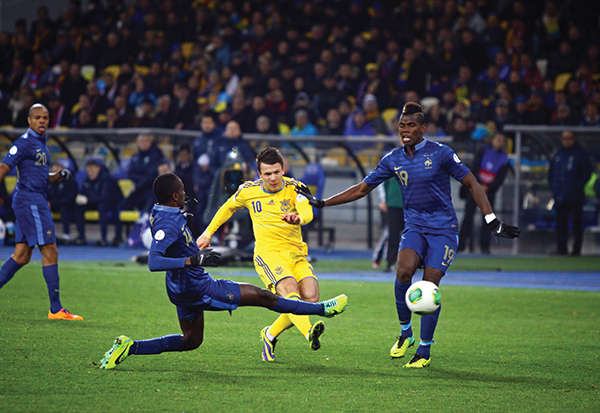
With only a few months remaining until game time, cities are putting the polish on the tie-in events they’ll be hosting in order to keep the excitement going throughout the tournament. Some fan festivals are open to the public and some charge admission; however, all include elements such as live entertainment, including performances and watch parties. Here’s the view from 50,000 feet:
In Atlanta, activations will take place along the Atlanta Beltline, an ongoing urban redevelopment project creating a 22-mile loop of multi-use trails, parks and transit along former railroad corridors that circle the city’s core. Mercedes-Benz Stadium will host matches but the celebrations will spread across the city.
Boston: Seven matches will be held in Gillette Stadium in Foxborough, home of the New England Patriots. The World Cup Fan Festival will take place on City Hall Plaza, an eight-acre public space.
Following an overhaul in 2022, the area is a natural choice for large celebrations, featuring more than 3,000 seating spots, 250 new trees, a 12,000-square-foot playscape and a new Civic Pavilion. The area is accessible and pedestrian friendly.
Dallas will play host to a total of nine matches at the AT&T Stadium, the most of any city in the U.S. These include five Group Stage games, two matches in the Round of 32, one match in the Round of 16 and a Semifinal.
Among the spaces where promotions and other activities will play out are AT&T Stadium Campus and Texas Live! (Arlington), Downtown Dallas/Arts District and Klyde Warren Park/Victory Park. Another strategic activation site will be the concourses at DFW Airport.
Houston will go end-to-end and all out with a fan festival that runs for 39 days — the entire duration of the tournament.
The Greater Houston Partnership notes that the festival will feature a massive viewing area for matches, global and local food offerings, curated live entertainment, sponsor activations and interactive youth soccer activities.
The festival is expected to see 15,000 visitors daily. All games will be played at NRG Stadium.
Kansas City’s 2026 FIFA World Cup activations will take place around one of the city’s most recognizable landmarks: the World War I Museum and Memorial. (Concurrently, the museum will have an exhibit, “The Beautiful Game,” about soccer’s role in the war.)
Kansas City’s Fan Fest, meanwhile, will run from June 11 to July 13, and will include watch parties with two stages. Additional community watch parties and city-wide events are planned. GEHA Field at Arrowhead Stadium, where the Kansas City Chiefs play, will host all matches.
Los Angeles has the honor of hosting the US Men’s National Team as it takes to the pitch at SoFi Field for its first World Cup match against Paraguay on June 12.
A cadre of celebrities including Snoop Dogg (community chairman) will make appearances. Like Houston, L.A. will keep the party going for all 39 days of the tournament.
While the official fan fest will be held at Los Angeles Coliseum (yes, the same place that has hosted Olympians), there will be fan zones, art and cultural activities, live entertainment, community viewing parties, branded merchandise and more attractions throughout the area.
In Miami, the tag line of #WEAREMIAMI, a uniquely diverse community united by Fútbol embodies the city’s multi-culti embrace of the tournament and the visitors it will bring in.
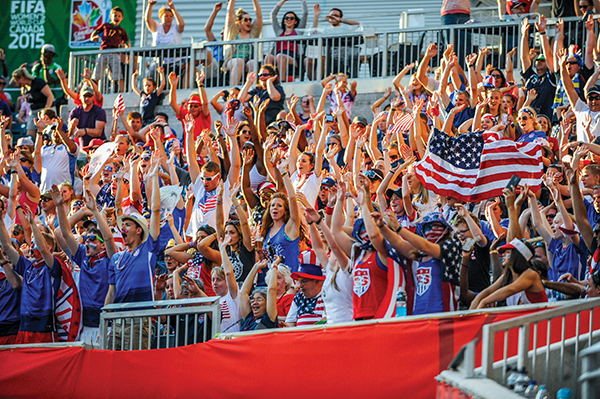
Bayfront Park will be the center of all activities and is expected to see foot traffic from more than 30,000 people per day. The city is helping visitors lean into its free shuttles to get around.
Miami will host seven matches in all at the Hard Rock Stadium, including Group Stage, Quarterfinal and Bronze final play. The website of Greater Miami and Miami Beach offers dining recommendations for visitors for each nation represented as well as sightseeing and cultural offerings.
The New York/New Jersey region has the honor of hosting the World Cup Final at MetLife Stadium. Leading up to that, though, it hosts play at the Group Stage, Round of 32 and Round of 16.
And as might be expected, there will be multiple activations. The Louis Armstrong Stadium at USTA Billie Jean King National Tennis Center in Queens is one of these, with activations running from June 17 to June 28. Rockefeller Center in Manhattan is another, with events scheduled from July 4 to July 19.
The host committee expects to announce further fan zones and pop-ups that will offer live match viewings, interactive soccer experiences, meet-and-greets, local vendors and other attractions.
Philadelphia is having a big year. As one of the epicenters of the country’s semi-quincentennial (often abbreviated on social to #America250), the city will already have a full docket of historical and cultural activities. Add the World Cup to the mix and it gets even bigger.
Lincoln Financial Field will host Group Play throughout June. July 4th will play in the Round of 16. Lemon Hill Park, (the section of Fairmount Park on the east side of the Schuylkill River) will be the site of the Fan Festival that will run throughout the course of the tournament.
The 46-acre area has been upgraded to create better accessibility, more green space and safer traffic patterns. Improved electrical service and security cameras have also been added. After the World Cup, the city plans to add a playground to the area.
Levi’s Stadium, most recently on full display for the Super Bowl, will be the venue for matches in the San Francisco Bay Area. Six Group Stage matches and a Round of 32 match are on the docket.
The open-air stadium located in Silicon Valley has hosted multiple high-profile events, including the College Football Playoff National Championship and the 2016 Copa América Centenario.
At this time, no announcement has been made about official fan fests in the area; however, planning is ongoing and matches are expected to draw interest from international tourists as well as those from the surrounding areas of Oakland and San Jose.
Seattle’s Lumen Field, colloquially known as Seattle Soccer Stadium or just Seattle Stadium, will host four Group Stage games (including USA vs. Australia on June 19), a Round of 32 match on July 1 and a Round of 16 match on July 6.
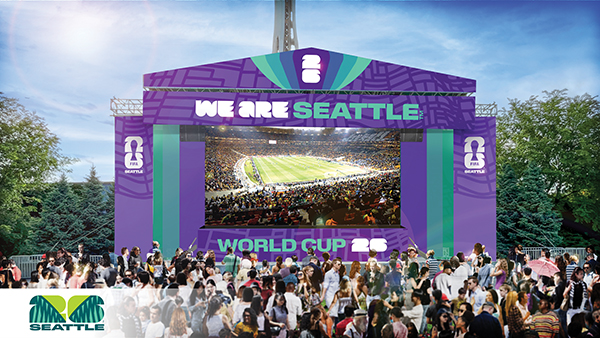
Seattle, which already prides itself on being a soccer city (MLS’s Sounders FC and NWSL’s Reign FC call it home), notes that its biggest community event outside of the matches themselves will be the Seattle Fan Celebration at Seattle Center. Capacity of the Seattle Center is estimated to be up to 20,000 at any given time.
The host committee also plans to host nine additional fan zones so that residents and visitors across the state can celebrate as well.
The Legacy
It all comes to a close on July 19 after the Final at MetLife Stadium. The athletes will depart and the crowds will go home. But according to FIFA, doesn’t mean the end of the excitement around the sport.
FIFA’s World Cup Legacy Program for host cities picks up where the games leave off, with the expectation that local organizations will create lasting social, economic and environmental benefits beyond the tournament.
The Legacy Program emphasizes growing the game (such as through the construction of small-sided fields and the development of youth programs), supporting communities (including the creation of grants for nonprofits and cultural events) and sustainability (such as the development of green initiatives and increasing accessibility for all users), with the ultimate goals of enriching underserved areas, developing youth skills and ensuring a lasting positive impact in each destination. Here are a few:
Miami: The Miami Host Committee has launched a strategic alliance to benefit the lives of more than 30,000 children across the region by the end of 2026, partnering with the Miami-Dade Soccer Initiative, launched in 2023 with Griffin Catalyst, and The Children’s Trust, to create more than 50 small-sided fields in under-resourced communities across the area.
Boston: The U.S. Soccer Foundation is partnering with the Boston host city organizing committee to bring 20 new small-sided fields to communities across New England.
Philadelphia: A total of 26 soccer-related projects is planned throughout the Commonwealth of Pennsylvania to help enrich opportunities to play the game there.
New York/New Jersey Area: Plans are afoot to create 26 new safe places to play by installing small-sided fields in under-resourced communities across both states; by engaging at least 25,000 youth from these areas in soccer programs that build physical, social and emotional well-being skills; and by training at least 1,000 coaches as mentors in youth-serving organizations across the region.
Seattle: The U.S. Association of Blind Athletes (USABA) and the Seattle FIFA World Cup 26™ Local Organizing Committee (SeattleFWC26) announced efforts to accelerate the growth of soccer for the blind across the Pacific Northwest:
• Seattle has been designated as the Pacific Northwest Regional Hub for U.S. Blind Soccer. USABA will name a city lead to coordinate programs, clinics and collaborations.
• SeattleFWC26’s Blind Soccer Legacy strategy will include delivery of Seattle’s first Blind Soccer pitch kit and work toward a dedicated Blind Soccer facility.
• The city has announced its intent to host Seattle’s first U.S. Men’s Blind Soccer international friendly in late May.
“Hosting the FIFA World Cup gives us a platform to lead the nation in adaptive sports accessibility, not just for a few weeks in 2026, but for generations to come,” said Peter Tomozawa, CEO of SeattleFWC26. When the world comes to Seattle, they’ll see a city that doesn’t just talk about inclusion. We invest in it, we build for it and we’re committed to leading the way long after the final whistle.” SDM
About the Author