

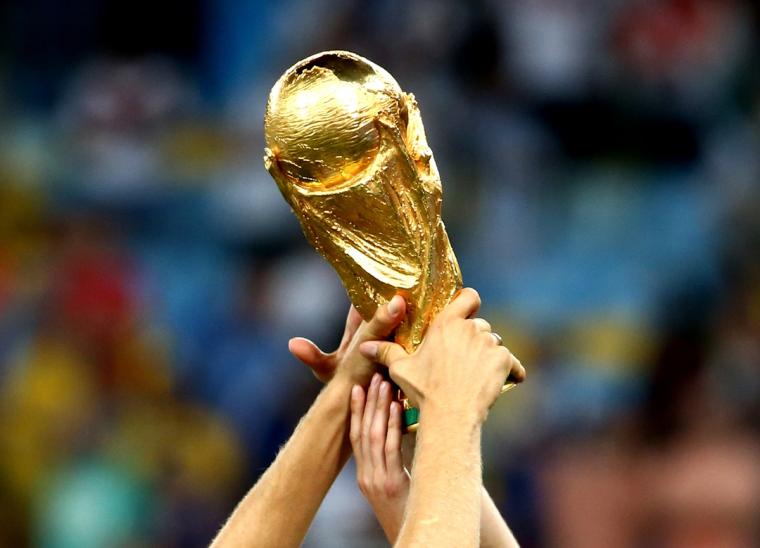
Photo © Andre Ricardo Paes | Dreamstime.com
FIFA is counting down the days to the 2026 World Cup and accordingly, and host cities across the U.S. and Canada are ramping up their awareness campaigns. And while FIFA is taking point on many efforts (or has oversight of them), it’s hard to get away from the localized promotions.
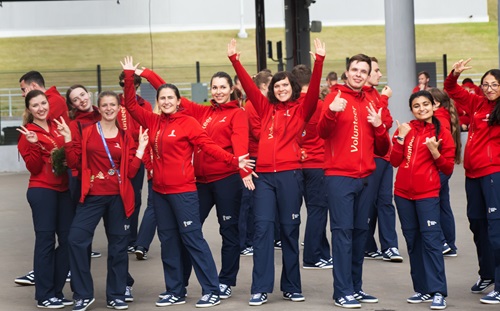
Volunteer Recruitment: FIFA’s website includes a call to arms for soccer enthusiasts, touting the opportunity , noting, “FIFA World Cup 26™ volunteers will be part of a once-in-a-generation team – uniting three countries, 16 host cities and billions of hearts around the world.”
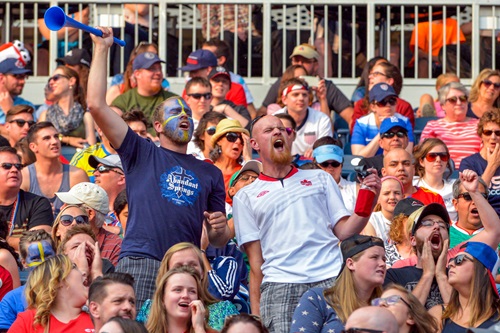
And don’t think it’s simple. FIFA’s multi-step process includes an application, the ability to pass a required background check (although it notes this may vary from country to country), tryouts, role offers and training – all of which must be completed before teams ever arrive in the host city.
Partnership Efforts: Cities are also leveraging the World Cup to forge new relationships with companies.
In Dallas, for example, the North Texas Business Connect Program is encouraging local businesses to stay informed about upcoming procurement opportunities tied to the tournament.
In an email, North Texas Connect notes, “Requests for Information (RFIs) and Requests for Proposals (RFPs) are regularly posted, with some coming directly from FIFA and others issued by the North Texas FWC Organizing Committee. These open procurements are designed to connect qualified local suppliers with global contracting opportunities.”
Currently, North Texas Connect is soliciting businesses that might be interested in taking on the job of City & Brand Dressing Services – FIFA World Cup 2026™ Host City Dallas. And, the organization notes, “The selected vendor will be responsible for designing, fabricating, permitting, executing, maintaining, and removing all city dressing elements, as well as producing a scalable toolkit for regional partners.”
Sponsorship Efforts: Other cities have been active as well, with efforts aimed at increasing sponsorship for their activities. The FIFA World Cup 26™ New York New Jersey Host Committee already announced New Jersey-based real estate firm Onyx Equities as its first Official New York New Jersey World Cup 2026 Host City Supporter.
The Atlanta World Cup Host Committee (AWCHC) announced initial sponsors, Cox Enterprises, Georgia-Pacific, The Home Depot and Southern Company. The “one year to go” announcement was carried in local media, increasing the hometown appeal of making arrangements.
But it’s not always an easy road to travel, note some corporations in an interview with Sports Business Journal:
Brands without official FIFA sponsorships are also seeking to capture the moment. Volkswagen, for example, is leaning heavily on its presenting sponsorship deal with U.S. Soccer, which has been in place since 2019, to get a head start. In conjunction with the “one year out” mark this week, the automaker is launching a campaign using the tagline “Welcome to Our Turf,” which will focus on the world’s game coming to America.
“FIFA rules are tough — they have stronger restrictions than just about any other property,” said Rachael Zaluzec, Volkswagen of America’s chief marketing officer. “So, the best way for us to make sure we’re a part of it is to start early and to get the excitement and to be adjacent and be a part of the sport now.”
Legacy Effect: Something else FIFA leans into heavily is the need to leave a positive impression on host cities; in fact, FIFA has allocated $1 million to each host city in order to kickstart the planning process.
The Seattle Host Committee, for example, has listed nine pillars of this legacy effect: Planning with the Community, Supporting Local Art, Small Business Readiness Initiative, Rave Mini Pitches, Seattle Unity Loop, Seattle FWC App, Human Trafficking Awareness, Increasing Indigenous Youth Access to Soccer and a Labor Stnadards Agreement.
In New York/New Jersey, Airbnb announced it would commit over $1 million to the NYNJ Host Committee’s legacy initiative to fund new soccer mini pitches in communities and support two community celebrations (one in Queens, the other in the Brox) during the tournament.
In San Francisco, the Bay Area Host Committee lays out its plans to create a positive impact on the future; plans include driving access to community sports programs and creating economic and workforce opportunities, as well as protecting the Bay’s natural environment.
Philadelphia Soccer 2026, the non-profit organization that serves as the operational Host Committee announced that the U.S. Soccer Foundation will serve as its Soccer Legacy Implementation Partner leading up to and after FIFA World Cup 26™.
In support of the partnership, Philadelphia Soccer 2026 will invest $2 million in youth soccer initiatives to make meaningful strides toward increasing equitable access and opportunities for youth across Pennsylvania.
These are far from the only initiatives, obviously. This article from an international media outlet notes that “other cities are taking similarly localized approaches: Los Angeles is awarding grants to community nonprofits; Miami is curating a culturally immersive Fan Festival; Kansas City is piloting a new regional transit model; and Dallas is investing in youth soccer infrastructure and media capacity.”
Economic Impact: And when it comes right down to it, that makes perfect sense to play up the tournament: After all, according to recent studies by FIFA and the World Trade Organization (WTO), the following numbers will be in play:
- Across all three host countries, 6.5 million people are expected to attend the tournament.
- The tournament could help drive up to $40.9 billion in Gross Domestic Product (GDP), deliver $8.28 billion in social benefits and underpin the creation of nearly 824,000 full time equivalent jobs globally.
- Within the USA itself, research estimates that 185,000 full time equivalent jobs could be created, with $30.5 billion in gross output and $17.2 billion in GDP.
One of the best descriptions of those numbers came from Miami Mayor Francis Suarez, who said the impact on his city would be equivalent to “seven Super Bowls.”
Breakwater Hospitality Group CEO Emi Guerra added that while the World Cup is a once in a lifetime event for many cities, it was essential to capitalize on the momentum it offered.
"This really does allow us to keep the foot on the gas and keep going,” said Guerra. "All this soccer-driven tourism, I really hope that that stays and that our residents and our locals really embrace that soccer fandom and that soccer culture, because I think Miami could use it."
The countdown in on. Expect to hear even more.
About the Author