

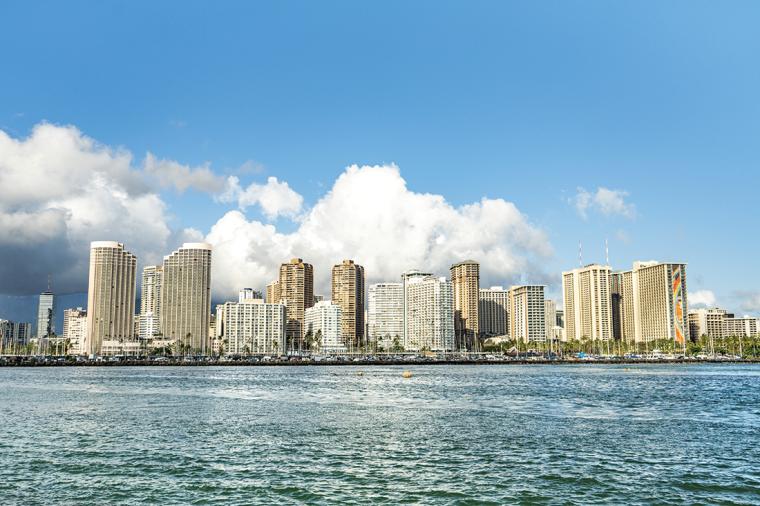
Detroit is home to four major professional sports franchises, all located within its downtown footprint. The city also features the USA Hockey Arena, which serves as the home of the U.S. National Team Development Program.
However, despite its strong sports presence, Detroit holds the record for the most unsuccessful bids for hosting the Olympic Games. Between 1940 and 1972, the city submitted nine bids to host the Olympics and all nine attempts failed. Of course, the question becomes this: Detroit is a great city, so why was it not chosen to host?
Unfortunately, multiple reasons contributed to this. During the 32 years of unsuccessful bids, the city did not have a strong international tourism infrastructure and faced economic challenges. Reports have also cited the bad timing of Detroit’s bid attempts in comparison to international cities with stronger economic, global and political clout. Still other reports cite the lack of a dedicated Olympic stadium.
In 1968, the summer Olympics were awarded to Mexico City which had an Olympic Stadium ready for competition and the most affordable accommodations for athletes among all bid entries. Unfortunately, Detroit, despite all its best efforts, did not have these.
In 1972, the International Olympic Committee (IOC) selected Munich, Germany, providing the country an opportunity to rebrand itself as a political democracy following its previous role as an Olympic Host City in 1936 under Hitler’s Nazi regime. Unfortunately, it constituted another miss for Detroit.
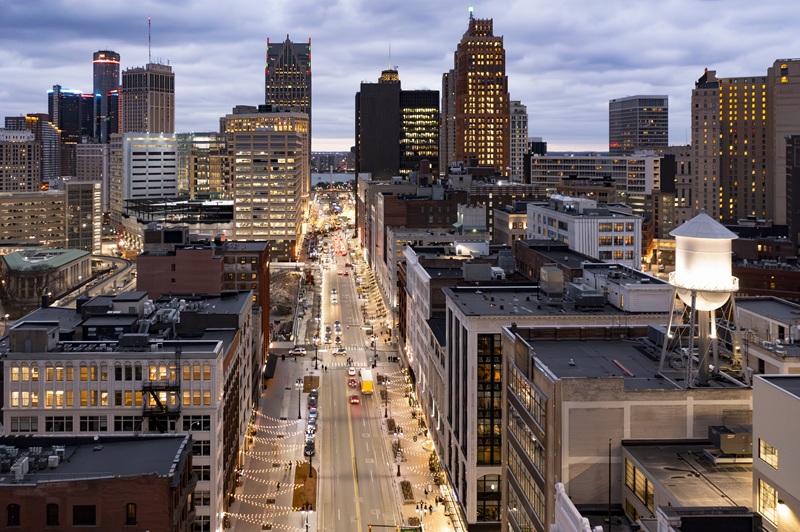
The lesson learned here is that the selection of a host city requires the alignment of a number of forces with the priorities of the rights holder; these forces include infrastructure, financial capacity and political support.
The IOC is a rights holder with all the power to select the host city for each Olympic Games, a practice they follow during special sessions to name hosting rights for Games held every other year. The rights holder of any event creates and evaluates the criteria for cities who bid for hosting privileges.
These criteria are generally provided in a bid specification or Request for Proposal (RFP) used to evaluate cities based on a combination of ideal facilities, strong financial and governmental support, robust infrastructure and the ability to deliver a safe, memorable and economically impactful experience for participants, spectators, volunteers and sponsors.
Tourism agencies and sports commissions are accustomed to completing RFPs and bidding for events since they are the epicenter for driving economic and commercial development to the city through visitor spending.
These agencies know that money weighs heavily on decisions associated with awarding hosting rights to cities, but finances are only part of the equation. It is a combination of factors that assist rights holders in selecting the best geographic location for an event’s management and operations.
According to an article published by the Greater Columbus Sports Commission, the selection criteria can be boiled down to five factors: 1) Infrastructure and Facilities; 2) Local Community Support; 3) Logistics and Accessibility; 4) Local Government Support and 5) Tourism and Local Attractions.

Infrastructure and Facilities:
Evaluations consider factors such as the availability and quality of venues, generally with preference for existing facilities instead of new construction projects.
Facilities must meet technical requirements for the event whether referring to size and layout, seating, parking, ceiling heights, loading dock size, lighting and acoustics, connectivity and internet, power supply, restroom numbers, concession points, training facilities, onsite technical support, leasing arrangements or other special needs.
Infrastructure refers to the physical and organizational structure of an entity or the public works, facilities and systems that serve a city or region. Infrastructure also includes items such as a city’s transportation systems (airports, roads, public transit), accommodations (bed count), hospitality (restaurants), health facilities (hospitals) and protective safety services (police, fire, etc.).
Logistics and Accessibility
Rights holders and event organizers are especially interested in a city’s capability to handle large crowds efficiently and safely. Accessibility and proximity to airports and public transport are important factors for moving equipment and large crowds.
For example, in April 2026, the Augusta Regional Airport, a relatively small hub, hosted almost 4,000 private jets during the annual Augusta National Golf Tournament. Beyond airport capacity, logistics and accessibility refer to a city’s connectivity to provide ease of access and operations.
Local Community Support
In 2018, voters in Calgary, Canada and Graubünden, Switzerland rejected a bid for hosting the 2026 Winter Olympic Games, which were held in Milan and Cortina, Italy.
Strong community support for an event can lead to higher volunteer engagement, increased attendance and a welcoming environment. However, a lack of support and public sentiment, often influenced by concerns over congestion and cost factors, can create resistance that undermines a city’s good intentions.
The selection of a host city is strengthened by a city’s community support and willingness to create memorable experiences for visitors who can help fuel the local economy.
Local Government Support
In addition to public support, ideal host cities are also supported by municipal and regional authorities who provide critical resources such as funding and regulatory approvals.
Wichita, Kansas, for example, has been touted as an example of a local government highly involved in securing hosting rights. In 2024, the city attracted more than 100 events, generating an estimated $61 million in economic benefits.
Local governments like Wichita play a key role in coordinating security and emergency services for large-scale events but often assist in securing financial resources. A strong partnership with local government provides a sense of credibility and can streamline operations.
Tourism and Local Attractions
Rights holders and event organizers often are attracted to the appeal of a city as a destination market catering to spectators and participants. A surfing event on the North Shore of Hawaii, for example, is an attractive prospect for spectators as well as surfers.
A city’s attractiveness, culture and climate are all considerations for selecting a host city. The overall visitor experience, including accessibility, amenities and unique local offerings, can significantly enhance an event’s marketability and opportunity for long-term success.

Additional Considerations
A city’s experience and capacity to host an event is an important consideration when selecting a location for hosting rights. There is a reason the NCAA has returned multiple times to Indianapolis for the men’s basketball final four tournament and the NFL has returned 11 times to Miami as well as New Orleans for the Super Bowl.
The success of past events generally provides a low-risk option for awarding event rights to a city on multiple occasions. That success is partially predicated upon the ease of the previous working relationship with organizers, economic outcomes and confidence in the ability for a city to effectively host an event.
Additionally, a city’s ability to generate revenue through ticket sales, tourism, media markets and sponsorship activation is also an enormous consideration. Ensuring highly trained staff and securing reliable vendors and resources to deliver these operational areas is an important responsibility of the host city factored into the selection process.
The Sports Events and Tourism Association website provides a plethora of documents to assist rights holders and local agencies in planning for, hosting and evaluating events. Among these documents are RFP templates, facility specification guidelines, visitor spending and post event surveys, checklists for local organizing committees and bid scoresheet templates to objectively evaluate proposals.
As cities prepare bids to host an event, they must align their vision with realistic capabilities meeting the needs of the rights holders and all stakeholders. Access to materials and professional organizations are integral to preparing successful bids to host an event.
A compelling proposal not only demonstrates the ability to successfully deliver an event but also articulates how the experience will generate sustainable economic, social and cultural benefits for a city. SDM
About the Author