

Photo © Justlight | Dreamstime.com
Are cold plunges in hot water? Maybe. In Illinois, a bill is closer to becoming law; if passed, fitness facilities and other places that offer cold plunges could be subject to more regulations and training concerning health requirements.
The Will County Gazette notes, “In essence, this bill amends the Swimming Facility Act to define and regulate the operation of cold spas, which are basins of water maintained between 40 and 92 degrees Fahrenheit.
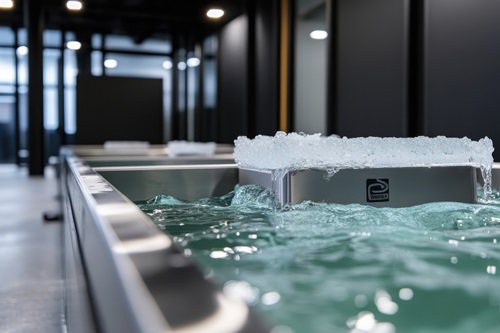
The operation of cold spas is lawful for licensed physical fitness facilities that comply with certain conditions.
These include displaying risk warning signs, prohibiting use by children under 14, having trained staff to recognize hypothermia, maintaining a hypothermic thermometer on site, and ensuring a non-slip deck or mat surrounds the spa entrance and exit.
Additionally, the facility must install a visible clock or timer and ensure water is continuously filtered or replaced after each use.”
Presently, many health clubs and other facilities offer cold plunge areas without supervision, considering them similar to showers, hot tubs, saunas and other amenities.
Cold plunges and ice baths are often marketed as a means of post-workout recovery, as well as stress relief. However, says an article in the BBC, “the science isn't clear on whether cold water immersion helps recover after exercise. People's perception of muscle soreness seems to reduce, and there is some evidence that people recover their strength faster, but these effects only occur when compared to doing nothing at all. A more traditional 'warm down' technique is just as effective if not doing exercise the next day.”
Additionally, the article states, ice baths don't help stress or circulation in the long-term. Doctors, meanwhile, are increasingly expressing concern following incidents like the death of a 39-year-old woman during a cold plunge in a lake or the near death of a man who was swept away by currents during an outdoor cold plunge, and who had to be rescued by first responders.
In 2024, the Deseret News published a letter to the editor from a physician who expressed alarm over proposed deregulation of cold plunges in health clubs in Utah. In part, the letter stated:
“Peer-reviewed research does not support the broad claims that cold water immersion boosts testosterone, burns fat, improves immune function and a myriad of other ideas currently perpetuated. However, research does support the application of cold therapies for management of acute and chronic injuries.”
(Oh, and by “application,” the writer meant the use of ice packs against injured areas.) Information on the final disposition of the bill can be found here.
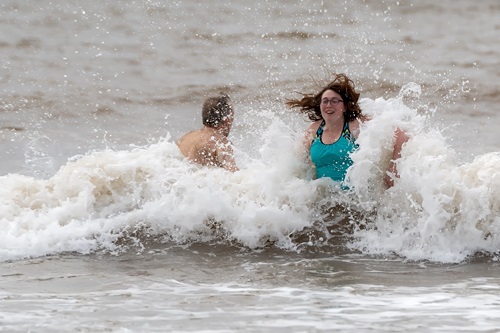
In Vancouver, BC, an entirely separate action has taken place. Cold plunges and ice bathing (offered in social settings, often on a pop-up basis) had been existing in a gray area of the law: neither legal nor regulated but not exactly illegal, either.
But now, says the Vancouver Sun, they’ll be able to be offered. This past summer, Vancouver Council member Lisa Dominato “introduced a motion to relax the municipality’s bylaws to allow, and regulate, outdoor cold plunge and sauna venues — and now the city is considering allowing more options, such as mobile saunas set up beach side, or a proposal to repurpose unused community swimming pools in colder weather.”
In other countries, such as Finland, such areas are everywhere, and are used for socializing as much as for health reasons.
The article notes, “Dominato said the city is responding to a “generational shift” in the experiences people want, including an appetite among young people for health, wellness and personal growth. It also helps repurpose underutilized industrial areas “in positive ways.”
But cold plunges have raised concern among health professionals in the USA for years. As the American Heart Association points out, “evidence supporting the health benefits of cold therapy remains scant. Experts caution that for some people, shocking the body with cold water could do more harm than good, even at less-than-frigid temperatures. The National Center for Cold Water Safety warns that sudden immersion in water under 60 degrees Fahrenheit can kill a person in less than a minute.
"That cold shock can be dangerous," said Dr. Jorge Plutzky, director of preventive cardiology at Brigham and Women's Hospital in Boston. "Whether there are health benefits or not is not clear and has not been established."
The fact that cold plunges seem to be on-trend hasn’t helped. Actor Chris Hemsworth (he of "Thor" fame) went viral for taking an Arctic swim without a wetsuit as part of National Geographic's "Limitless" television series and social media is alive with various influencers sitting in ice baths or jumping into freezing lakes, beaches and rivers.
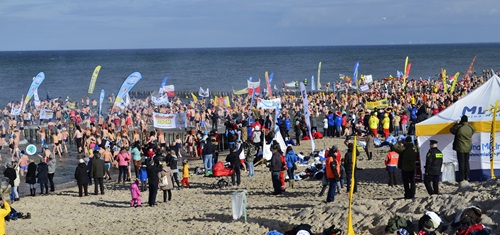
Compounding the issue is the popularity of the so-called “polar bear plunges” routinely sponsored in mid-winter to raise money for charities. (Some studies suggest that people who adapt to cold water immersion through routine ice bathing or winter swimming may reduce inflammation and other cardiovascular risks.)
However, other research shows evidence of higher levels of troponin in people who compete in winter swims, suggesting that prolonged cold water immersion could lead to heart muscle damage. And for those who have undiagnosed heart issues, immersion in cold water can be even more dangerous.
In other words, cold plunges, ice bathing and the like literally are not for the faint of heart. Illinois is likely onto something.
Maybe getting cold feet about the whole issue isn’t so bad.
About the Author