

Photo © Monkey Business Images | Dreamstime.com
Increasingly, trade and vocational schools are looking a lot more like four-year DI universities. They have clubs, student governments, campus newspapers — even study-abroad opportunities — and they have robust sports programs.
Additionally, those schools are leveraging sports not just to let students have fun after classes have concluded but as marketing tools to attract prospective students who might have had a strong high school student athlete career and are looking to stay competitive, without heading into a traditional university setting.
Oh — and by the way, these aren’t limited to robotics, drone racing, esports, soapbox racer building (or anything else that might be the stereotypical concept of a sport that would appeal to students with a technical background). They’re mainstream sports like baseball, track & field, basketball, football, golf and wrestling, as well as a wealth of others, for men and women. In short, they’re what you might find on any college campus.
And it’s obvious that this is a business model that has nowhere to go but up.
According to the Center for American Progress, a nonpartisan policy institute, “vocational education, now more commonly known as career and technical education (CTE), has recently been on the rise as students and workers navigate a changing economy.

Additionally, the U.S. Department of Education data show a 10 percent increase in enrollment for K-12 career and technical education programs for the 2022-23 and 2023-24 school years, while public two-year colleges with high vocational program focus saw a 13.6 percent increase in 2024 and 2025. Meanwhile, enrollment in trade schools is only projected to grow.”
Many of the CTE institutions offering sports have a long history of doing so. For example, the athletics program at Los Angeles Trade-Technical College (LATTC) began in 1958, with men's basketball and track and field. In the beginning, the teams did not have a conference to participate in, so they competed at-large, playing other community colleges and junior varsity college teams.
LATTC was admitted to the Western States Conference as it added more sports to its athletics program, including men's and co-ed tennis, cross country, wrestling, women's softball and golf.
CTE schools compete across an array of conferences and national governing bodies; some two-year schools with career programs play within the National Junior College Athletic Association (NJCAA), some compete within the United States Collegiate Athletic Association (USCAA) or the National Christian College Athletic Association (NCCAA) and some compete within NCAA Division III.
In many case, a strong athletics program complements a school’s curriculum. The Apprentice School in Newport News, Virginia, for example, administrators believe that athletic performance can only help students in their career path of shipbuilding, particularly warships and submarines:
“Shipbuilding is one of the most physically demanding career fields in the nation, requiring endurance, strength, focus and resilience in often challenging environments. Apprentice Athletes are uniquely prepared for this reality. The same conditioning, discipline and teamwork they practice on the field or in the gym translate directly into success in the yard.
Participation in competitive athletics builds habits of physical fitness, injury prevention and mental toughness that extend beyond the game. These qualities not only help apprentices adapt quickly to the rigors of shipyard work but also promote long-term health, reducing injuries and improving stamina across their careers.”
It’s apparently working; in USCAA baseball, the Builders (The Apprentice School’s team name) just clinched its fourth USCAA Small College World Series title. The team’s 2027 schedule will include a variety of games against opponents representing traditional and CTE schools.
Williamson College of the Trades in Media, Pennsylvania takes the concept of participation a step further, requiring students to be active in at least one college-sponsored supervised activity per year. Activities include sports, as well as activities and intramurals. Website information notes this prepares students to be well-balanced adults.
At Thaddeus Stevens College of Technology in Lancaster, Pennsylvania, officials note that the school’s five intercollegiate teams “create immeasurable opportunities for student-athletes to gain valuable skills that are transferable to success in the workplace and life.”

With the omnipresent threat of artificial intelligence (AI) hanging over the heads of many students, many students have begun evaluating their postsecondary options through the lens of AI exposure and which jobs might be AI-proof, notes the Center for American Progress, adding, “This could explain why overall enrollment in trades majors at community colleges has gone up for engineering, mechanics, and health care, while computer science enrollment has fallen. Some of these industries are projected to grow and have among the highest-paying trade jobs.”
Sports, by extension, are seen as a way to create readiness in ways AI cannot. Sports build skills such as critical thinking, good sportsmanship, adaptability and teamwork — something AI cannot do.
Schools are using sports to market themselves to students and since most students are doing online searches, search engines like Tackle The Gap are allowing students to specify which trade they are interested in pursuing — and which sports they want to have.
And the site makes those trades sound pretty darn appealing to students who previously might have considered their options limited (or even nonexistent):
“You can train for a high-paying skilled trade while you compete in intercollegiate athletics. There are hundreds of two-year trade schools, junior and community colleges, all across the country, that provide training for high paying and in demand skilled trades, as well as the ability to compete in multiple sports.
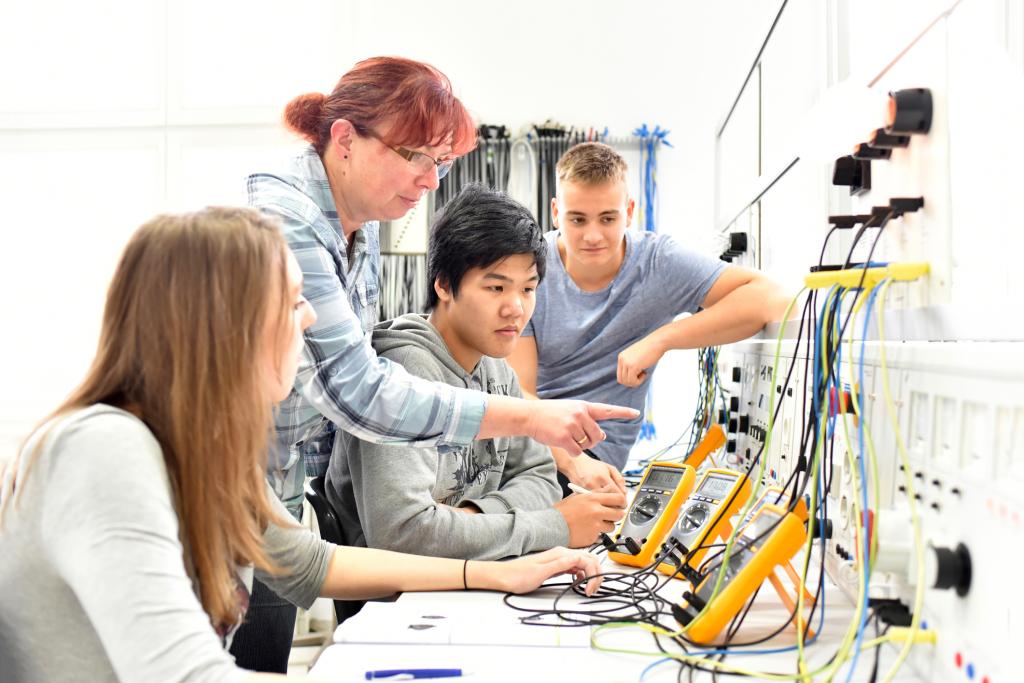
The trades are not "dark, dirty and dangerous" like in generations past. They are clean, modern and high-tech. There are projected to be over three million unfilled openings in the skilled trades by 2028. Not only are these jobs in high demand in your hometown, but you will have skills that transfer anywhere in America and beyond.
Competing in intercollegiate athletics at a two-year school will enable you to improve your skills, gain strength and accumulate film for four-year university coaches. Everyone on the roster is a freshman or sophomore, so you don't have to compete with upperclassmen for playing time. You will have the opportunity to improve your academics to meet the entrance and eligibility requirements of a four-year school while earning an associate’s degree or certification in a high-paying and in-demand skill.”
Whether events will see a boost in teams and athletes from CTE institutions, or whether corporations will forge partnerships with schools to sponsor teams are both questions that will be answered as time moves forward.
In the meantime, though, it's obvious the schools are benefitting from programs as much as the students.
“Apprentice Athletics plays a key role in recruiting a diverse group of future leaders,” Jeff Egnot, Director of Athletics at The Apprentice School, told The Manufacturing Skills Institute in a recent interview. “Our athletic program provides individuals the opportunity to learn a trade, receive a free education and begin a rewarding career, all while playing collegiate athletics. There is truly no more challenging environment to be a successful college athlete”
About the Author