
Photo © Gerard Koudenburg | Dreamstime.com
The California wildfires that wrought so much havoc last year, including on sports, continue to make their presence known on the sports tourism economy in the state, even months after being contained.
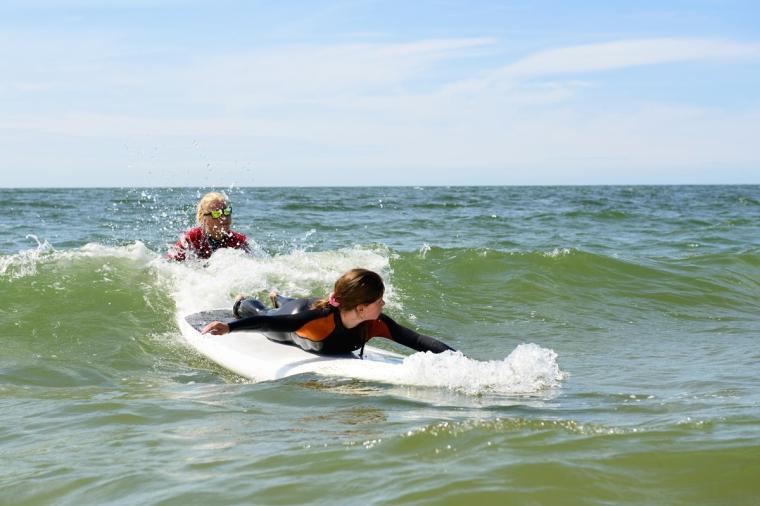
In particular, the surf economy is being affected. Inertia reports that surf camp enrollment has declined, despite the fact that reports show the water is largely safe. In fact, in a recent report by the LA Times, five summer surf camps lamented that sales are down by as much as 50 percent.
It all goes back to parental concerns, say operators.
“I’ve refunded some people who didn’t want to put their kids in the water,” said Tom Corliss, the operator of Malibu Makos Surf Club, told reporters. “Some camps were working on real thin (margins) as it is. A couple of guys I talked to are even worried about staying in business this year.”
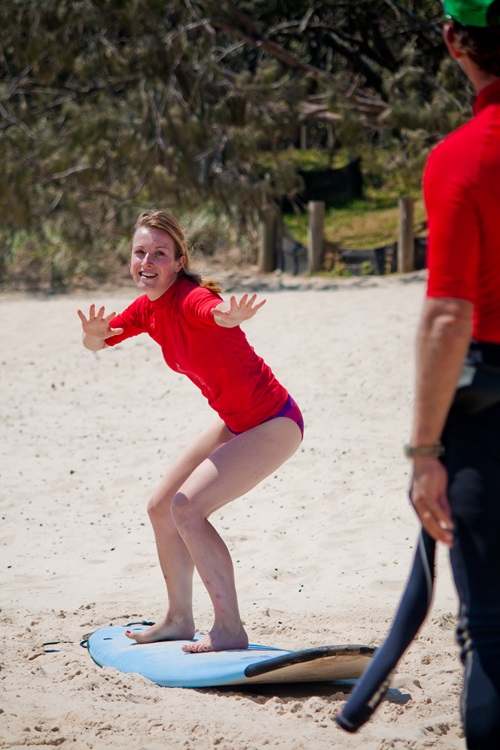
Parents’ concerns trace back to beach and ocean closures in January, which were prompted by runoff and pollutants from the fires. The closures were lifted on February 11, and the warnings were removed in April for beaches impacted by the fires.
The L.A. County Department of Public Health told the LA Times that testing of water and sand “revealed no chemicals related to wildfires at levels that are dangerous to human health.”
But the fears are hard to shake and have had an impact in other areas. They are, in particular being used as ammunition by anti-development individuals.
Monterey County NOW reported that worries over fire-related soil contamination played havoc with a proposed bus line that would take surfing enthusiasts to their favorite sweet spots.
The SURF! busway, an off-highway, bus-only road over the existing Monterey Branch Line from Sand City to Marina, was eagerly anticipated – until a soils report showed concentrations of heavy metals. Bus line advocates had planned for remediation but the concern caused even more delays.
At the end of June, following more reports, funding was allocated and ground was finally broken. The SURF! project will feature a five-mile dedicated busway running parallel to the frequently congested Highway 1, allowing MST’s zero-emission buses to bypass traffic and significantly reduce travel times. It will be equipped with new bus stops and a multimodal mobility hub at Fifth Street Station.
But the concerns over wildfire-related pollutants remain. As an article in The Guardian points out, there is also no single authority in charge of maintaining ocean health, which has made informing the beach-going public a challenge and created lingering uncertainty about whether and when it is safe to get back in the water.
It's a worrisome issue, particularly given the fact that the 2028 Summer Olympics, which include not only surfing but open water swim events, are now only two years away.
Surfer Alex Sinunu voiced the worries of many, noting that it’s not just what washes up on the beach that is a concern; it is the water itself.
“My concern is melted Tesla juice,” he says. “There’s just God knows what’s in the water. I’m looking for some data.”
Back in March, local non-profit Heal the Bay released a report showing the results of ocean samples at 10 sites along the length of Santa Monica Bay, which sits just below the Palisades neighborhood. Immediately after the fires, the data showed water quality was better than expected but could still present risks to aquatic life.
Heal the Bay staff scientists and a regional water agency tested the ocean for 116 known pollutants at multiple sites in January and February. They found elevated levels of only a few pollutants: beryllium and PAHs, both associated with burned vegetation. They were both below the limits set for human health.
For now, event owners are coping with the new reality. Dylan Sohngen, surf program director with the Aqua Surf school, told reporters at The Guardian that in the interest of preserving his business, he has moved all lessons further south on Santa Monica Bay, where there are more assurances about the water quality. He was frustrated by the lack of clear safety guidelines and visible cleanup efforts over the past two months.
“This is totally uncharted territory,” he says. “There isn’t a single authority on what to do about when you can go in the water. There’s not a lot of certainty being given to when it will be quote-unquote safe.”
Unfortunately, this is also a first for the scientists who are trying to establish those parameters, says Tracy Quinn, the CEO of Heal the Bay. For example, there are no existing protocols on what contaminants to screen for, nor are there definitive rules on how to test them, in the wake of an urban wildfire. And throughout the process, debris is still washing into the ocean from 300 houses located on the beach in the Palisades and Malibu, meaning the water quality is likely to remain in flux.
Quinn understand the frustration. She also says that climate-linked events are becoming more likely and hopes the lessons here will help other communities in the future.
“We weren’t the first, and we certainly won’t be the last community to deal with this,” she says.
About the Author