

Image courtesy of AccuWeather
We already saw the devastation wrought by the California wildfires earlier this year, which spilled over into sports being relocated. These included the NFL's Rams-Vikings wild card game, which was moved to State Farm Stadium in Glendale, Arizona. Additionally, the PGA TOUR's Genesis Invitational was relocated to Torrey Pines Golf Course in San Diego.
Women’s sports were affected just as much as men’s. The US Women's National Team training camp was moved to Florida. And the NCAA Beach Volleyball Championship was relocated from Huntington Beach to Gulf Shores, Alabama.
Youth sports at all levels were also hit hard, with cancellations and relocations as well. Some institutions received significant support from neighboring schools, extending their facilities to allow affected teams to practice.
Unfortunately, the conditions for later this year are viewed by forecasters as being equally unstable, with the potential for more fires. That was the word from AccuWeather, who cited risk factors such as ongoing drought conditions and rising temperatures. In fact, the organization’s long-range experts are predicting wildfires to burn more land across the United States this year, compared to the historical average.
“We’ve seen fires reported across 20 states that have already burned nearly 1 million acres so far this year," AccuWeather Lead Long-Range Expert Paul Pastelok said. ”AccuWeather is forecasting 7 to 9 million acres to burn across the country this year, which is more than the historical average.”
Wildfire season in the U.S. typically peaks later in summer and through autumn; however, some areas are already faced with drought conditions. The forecasters say that more than 30 states will face a “moderate,” “high,” or “very high” risk of fires this fall.
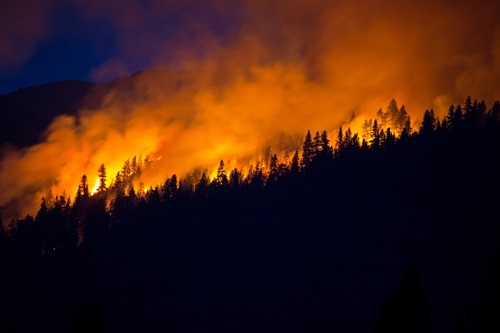
The “very high” risk of fires is concentrated across parts of Central and Northern California, much of southern, central and eastern Oregon, as well as western Idaho.
Abnormally dry conditions paired with warm weather could also boost the fire danger across along the Eastern Seaboard through the rest of this spring and extends as far down as parts of southern Florida.
Additionally, wildfires broke out in the Carolinas in March, impacting areas where Hurricane Helene had downed thousands of trees. The sudden increase of dead trees following the powerful winds and flooding from Helene has led to a dramatic increase in the fuel available for fires, which can contribute to an elevated fire danger for the region over the next few years.
Downed trees from a major ice storm in late-March could also temporarily raise the risk of fires in northern Michigan and northeastern Wisconsin later in the summer and into the autumn. Fast-building fire conditions are also expected to focus on areas east of the Cascades through the northern Rockies.
Travel Industry Impacts
AccuWeather Chief Meteorologist Jonathan Porter says the increasing frequency and severity of wildfires and other extreme weather events in the United States are taking a larger economic toll that is being felt across the nation.
“Unlike many disaster estimates, we consider the impacts to tourism, supply chain and business losses, immediate and long-term healthcare expenses, as well as damage and repair costs among many other items," Porter said.
Event owners should contact their insurance brokers to the specifics of their policies and may wish to think about cancellation insurance. But let's be very clear on this: Cancellation insurance is not like Amazon Prime, where something can be ordered and received the next day; in fact, insurance needs to be taken care of well before any problems appear on the horizon, John Sadler of Insurance told SDM last year. Many carriers have a window of time (often two weeks) before a policy can take effect, meaning that if conditions in the hosting area are dire, it may already be too late to purchase.
About the Author