

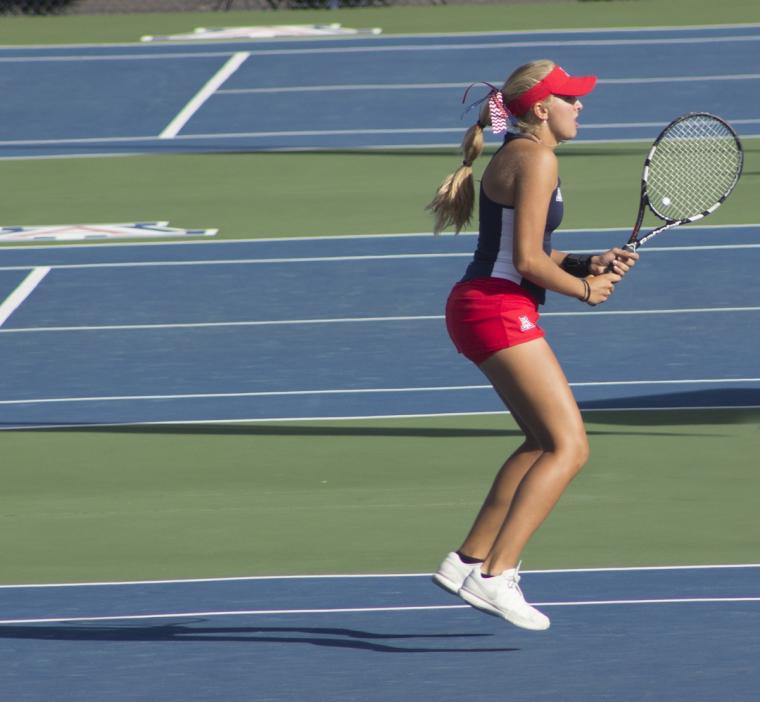
Photo © Mark Christian | Dreamstime.com
Here we are, halfway through National Tennis Month, and the news is … bad.
According to David Mullins, CEO of the Intercollegiate Tennis Association, no fewer than 23 tennis programs across all three divisions of the NCAA have been canceled in recent weeks. “Though we anticipate ten new programs being added or reinstated for the 2026/27 school year, this differential between dropped and added programs is not sustainable,” he wrote in a May 1 letter to ITA member coaches and obtained by SDM.
He called the recent program cancellations, combined with the post-COVID loss of dozens of tennis programs, “truly devastating to witness,” adding that he is “incredibly saddened by the current state of college athletics in general and where our sport in particular sits in the minds of some decision makers across the country.”
The ITA published a statement on the issue, noting, “We believe that college tennis remains an under activated revenue platform, with facilities and courts often sitting idle rather than being leveraged as productive assets. Too frequently, program elimination reflects unrealized value rather than minimal or an absence of value, as many decisions are made without a full evaluation of the sport’s potential upside. Cutting programs should be a last resort—not the default response—particularly given that college tennis serves not just as a varsity sport, but as a broader community asset with meaningful institutional and local impact.”
To wit, St. Louis University, Illinois State University and the University of North Dakota all announced program cuts within the span of a week. Earlier this year, the University of Arkansas and Gardner-Webb University — both of which had successful enough seasons to make the 2026 Division I Men’s Tennis Championship — eliminated their programs. In most (if not all) cases, tennis scholarships will continue to be honored for all players, who also will receive assistance if they choose to transfer.

“Over the past five years, Division I athletics has experienced more change than the previous 30 years combined,” North Dakota Director of Athletics Bill Chaves said when his university made the announcement. “This has required us to adapt to a new landscape by reinventing the way we operate our athletic department as well as analyzing the existing resources we have and reallocating those resources moving forward.”
UND’s statement went on to note that “Title IX compliance continues to be a central component of any decision such as this and remains a guiding priority for UND’s long-term athletics planning. An evaluation process assessed participation opportunities by gender, roster management practices, proportionality relative to undergraduate enrollment and the sustainability of providing equitable, competitive and developmental support across all varsity programs.”
Gardner-Webb buried its announcement by touting the addition of two new women’s sports — flag football and acrobatics/tumbling — and referred to the discontinuation of men’s and women’s tennis as “realign[ing] … for long-term success.”
And in a series of questions and answers accompanying the announcement about discontinuing men’s and women’s tennis at St. Louis University, the final question was, “Is it possible to fundraise to save the program?” SLU’s answer: “No. The decision has been finalized.”
The number of Division I schools sponsoring tennis during the 2024-25 academic year was 237 for men and 304 for women, according to the Associated Press; the NCAA told the news service that participating numbers for the 2025-26 academic year were unavailable.
“The most recent NCAA data showed that among first-year college players in 2022, 64% of men and 61% of women were international students. At Arkansas, seven of the nine men and seven of the 11 women on the 2025-26 rosters are international students,” the AP reports. “The math didn’t work for the Razorbacks anymore. They spent a combined $2.35 million on the two teams in the 2025 fiscal year; the men’s team generated $3,202 in revenue and the women $82. Arkansas’ operating expense per player in 2025 was $41,772 for the men and $41,582 for the women, among the highest in the athletic department. Tennis also ranked among the most expensive sports per player at North Dakota and Gardner-Webb, and at Illinois State the $10,224 cost per men’s player was more than football and baseball. At Saint Louis, cost per player ranked third out of six men’s sports and sixth out of eight on the women’s side.”
An evaluation of feedback by Mullins and his team from athletic directors at institutions that dropped tennis revealed several consistent factors — including no on-campus facility, costs associated with existing facility upgrades, lack of alumni and community engagement (leading to low match attendance figures), failure to meet roster targets set by athletic directors and coach turnover.

“I am taking a hard look at whether we are built for the current demands of college athletics and, if not, then what our role should be moving forward,” Mullins admitted to ITA coaches. “How do we evolve so that we are best serving our membership and the sport, and who do we partner with to realize what is in the best interests of college tennis? … I will have to spend a lot more of my time on communications with campus leaders, public relations, identifying at-risk programs, and getting laser-focused on how best to deploy our limited resources and personnel, while you, as coaches, may need to spend more time fundraising, cultivating lasting relations with alumni and community engagement initiatives.”
The ITA statement also noted, “The ITA has also seen meaningful growth in visibility and engagement across its platforms, reflecting increased interest in college tennis. Social media impressions grew from 13.3 million in 2024 to 35.3 million in 2025 and are already over 32 million in just the first four months of 2026, while followers across ITA channels have increased by 20% year over year for the past three years. Streaming viewership has doubled over the past four years, further expanding the sport’s reach and relevance.”
To try to effect a turnaround, the ITA is expected to hire additional staff and seek outside strategic and public relations assistance.
“I am encouraged by many conversations with the USTA [United States Tennis Association] leadership over the past 12 months” Mullins added. “They have demonstrated a clear eagerness to support college tennis in even more meaningful ways in the coming years.”
USTA, in fact, recently announced a new collaborative framework designed to strengthen the pipeline of future tennis professionals. Through a newly established program, USTA Coaching will collaborate with Ferris State University, Hope College and Methodist University to further align academic preparation with the evolving needs of the tennis industry.
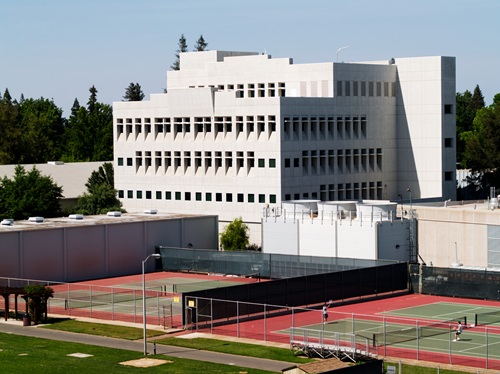
But that will take time. While college tennis is far from playing match point, it’s also clearly not on solid ground. And what might that mean for the 4.1 million youth participants who are “core players” (defined by the USTA as playing at least 10 times per year)?
“If American college tennis doesn’t serve, at least in part, American tennis, then don’t be shocked that more of the athletic directors decide we don’t need this,” ESPN tennis analyst Patrick McEnroe said on his SiriusXM radio show Holding Court with Patrick McEnroe.
“It’s not a revenue maker for universities," McEnroe added. "Arkansas might be the headline today, but this is much bigger than Arkansas. This is about the future of college tennis, and likely the future of college sports. This is about American opportunity. This is about whether we still believe college tennis is a ladder for our kids, maybe not just in tennis but in life, or whether we’re okay watching the ladder get pulled up one rung at a time.”
For one college, at least, a program has been rescued. Former Arkansas players provided an infusion of more than $5 million to be spent over the course of two years to keep the program afloat.
About the Author