

Photo © Simon Lehmann | Dreamstime.com
Shakespeare wrote, "The course of true love never did run smooth;” however, the same can be said of the run-up to the 2026 FIFA World Cup where new drama just keeps rearing its head.
The shakeups so far read like a play presented across four acts.
Much Ado About Nothing?
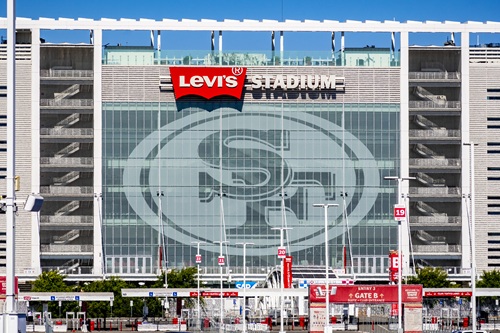
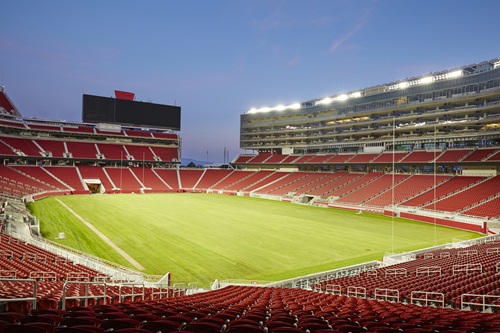
In the San Francisco Bay area, where matches will be hosted at Levi’s Stadium (site of the most recent Super Bowl), there’s distinct unhappiness over the match assignments for this June. In short, they’re being complained about as uninteresting and lacking in star power.
According to The Athletic, the area “failed to receive any matches involving Pot 1 nations across its five group stage matches.”
For reference: Pot 1 refers to teams from the three host nations (in this case, Canada, Mexico and the USA) as well as the nine highest-ranking teams as of November 2025 (when the draw was made).
The top nine nations, for those keeping score, are Spain, Argentina, France, England, Brazil, Portugal, Netherlands, Belgium and Germany.
The Bay Area will host a total of six games. Five are Opening Round matches: Qatar vs. Switzerland, Austria vs. Jordan, one of Kosovo/Romania/Slovakia/Turkey vs. Paraguay, Jordan vs. Algeria and Paraguay vs. Australia. After that, the destination will host one game in the Round of 32.
In every other U.S. host city, each venue has been given at least two games involving teams from Pot 1 of the draw. Mexico, however, got an even shorter end of the stick since Monterrey will host only three Group Stage games with no Pot 1 teams.
The shortage of leading nations or players with recognizable names in the Bay Area has led to complaints, and to the area host committee considering a significantly reduced approach to official fan festivals.
Even FIFA, according to the article, “made a tacit recognition that the appeal of Bay Area games has reduced because games at Levi’s Stadium are among the very small number of games for which prices have dropped since the match schedule came to light.”
Reporters at The Athletic noted that because of the lower interest (which could result in less travel to games than expected originally and a substantially lessened economic footprint, “The Bay Area may no longer hold official FIFA fan fests on matchdays, because the local host committee is obliged to weigh whether it is still cost-efficient.”
Sources indicated that fan fests in major markets can cost in excess of $1 million per day. As a result, the area is eyeing the possibility of smaller grassroots-led watch-parties within communities.
But that brings up another wrinkle: “Any pivot to smaller and non-official FIFA events will require FIFA’s approval, because contracts signed between host committees and FIFA, reviewed by The Athletic, say that official fan fests must be the only public viewing events “endorsed and authorized” by the host cities.”
But the Bay Area will not be without compelling storylines. One is Jordan appearing in its first-ever World Cup. Fun fact: The team’s 3-0 win over Oman was the cause for joyous celebrations throughout the country; these included King Abdullah II posing for photos while wearing a national team jersey and a drone show that spelled out congratulatory messages.
The excitement among diehard Jordanian soccer fans and the wish to see their team take the field in person could drive tourism to the Bay Area; certainly, Discover Santa Clara’s World Cup landing page is showcasing the match and providing a link for ticket sales.
Measure for Measure
On the other side of the USA, meanwhile, a completely different drama is playing out, with a host city trying some desperate measures to square off against FIFA.
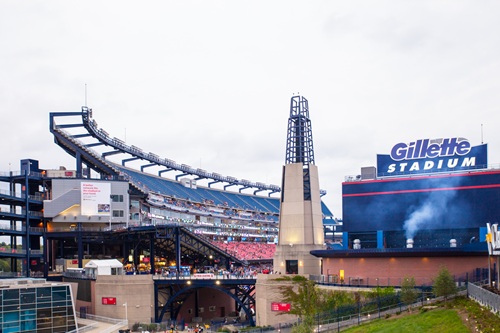
Foxborough, Massachusetts is threatening to cancel all seven World Cup matches (including a quarterfinal) scheduled at Gillette Stadium because of a disagreement over the fees for security.
Specifically, town officials do not want taxpayers to have to eat the $7.8 million security bill. At one point, officials assumed the Kraft Group, which owns Gillette Stadium, would cover the costs; however, this will not occur, stated the Boston Business Journal:
Michael Loynd, the president of Boston's World Cup host city committee, said his organization is "contractually obligated" to handle public safety costs. Host cities in the USA will jointly receive $625 million in federal funding for security bills but Foxborough officials said the timeline associated with receiving a federal grant is unhelpful.
"Our issue quite honestly is grants don't really work for us in the sense of timing," Bill Yukna, a member of Foxborough's select board, told the Boston Globe last week. "We obviously would have to pay all the officers and any of the [new capital] purchases before the grant would reimburse us."
The money would have to come from somewhere, he adds, and it’s not pocket change for an area with a population of 18,000. So far, Foxborough has not purchased any of the security equipment it is expected to have in order to host.
According to CBS News, Foxborough officials say they have an ace up their sleeve: the potential to withhold an essential entertainment license if they don’t receive the funding by March 17.
Even so, a fight with FIFA, after contracts have been signed, sponsors lined up, tickets sold, fan fests planned, practice venues locked in and matches scheduled, would be unlikely to end well.
And, notes the Financial Post, although the Boston stands to receive a more than $1 billion boost, the benefit to Foxborough will be much smaller.
“This is not a money maker for this town,” notes Select Board Vice Chair Stephanie McGowan. “In fact, it’s probably more of a headache than it’s worth.”
Maura Healey, the Governor of Massachusetts, hastened in with reassurances that the problem will be taken care of.
"There's going to be a lot of burden on local folks," she told reporters. "We just have to make sure that expenses are taken care of because cities and towns are already burdened enough … This is going to go forward. It's going to be great."
Sounds like Healey is hoping that by the time kickoff comes, she’ll be able to say, “All’s well that ends well.”
Love’s Labours Lost
Jersey City officials spent a lot of time and energy planning an enormous fan fest at Liberty State Park, only to cancel it in late February. Instead, says USA TODAY, resources will go toward a $5 million community initiative.
Originally announced in February 2025, the event was to be open for all 104 matches of the tournament. Sales of $10 tickets for the fan fest began in December and had been ongoing until the cancellation announcement.
That event, which was expected to include watch parties, live entertainment, vendors, food offerings, skill clinics and other activities, was easily one of the most ambitious of all the fan fests planned, and took advantage of the fact that the area would host the World Cup Final on July 19.
Officials have not detailed exactly where investments will be made instead of hosting the Liberty State Park event, other than to generally mention support of communities across the state and investments in small businesses, cultural associations and community nonprofits.
A fan fest is still planned for the Billie Jean King National Tennis Center in Queens from June 17-28, and a fan village is scheduled for Manhattan's Rockefeller Center from July 4-19.
All the World’s a Stage
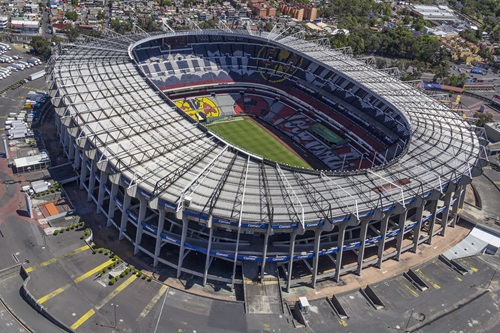
But World Cup problems are not confined to the USA. In Mexico, officials are admitting that work on Mexico City’s Estadio Azteca is far from complete and may not be finished in time for World Cup play to begin.
Journalist Rubén Rodríguez had a pessimistic outlook, pointing out that the venue might not pass FIFA inspections in May.
“If FIFA finds out that the stadium won't be ready in May,” said Rodriguez, “it will take away our opening match and hosting rights.”
And that, by Shakespeare’s definition (or anyone else’s), would be a tragedy; however, it is not the only challenge facing Mexico right now. Compounding it are recent news of drug cartel-related crime and concerns about traveler safety; the State Department keeps this page updated with current information for those who will be traveling.
Additionlly, the war in Iran may make it impossible for the Iranian national team to attend, despite having qualified. And because inbound travel from certain countries is now banned, international tourism could suffer.
But the World Cup isn’t until June and if there is one thing we know for certain, it's this: Much can change over the course of even a fairly short window of time.
About the Author