

Photo © Tempestz | Dreamstime.com
Recently, headlines were made (and not in a good way) by the Vancouver, British Columbia-based Lululemon SeaWheeze Half Marathon, as potential runners gaped in open-mouthed shock at the registration price of $320 Canadian (about $235 in the U.S.), making it the second most expensive half marathon in North America.
And since you were going to ask, the most expensive half marathon race is the Disney Princess Half Marathon in Lake Buena Vista (about $250 U.S.), where race registration fees include the cost of admission to Disney World.
The Lululemon race, which went dormant after 2019, had been one of Vancouver’s signature events. When it was resurrected; however, according to Canadian Running Magazine, the jump in cost was substantial. In 2019, registration for SeaWheeze was $178 Canadian (about $130 U.S.), which is a little over half of what it will cost in 2026.

The magazine noted, “While it is easy to cite rising expenses and operational costs, the near-doubling of the entry fee has raised some eyebrows, including from Canadian marathon record holder Natasha Wodak, who made an Instagram poll asking her followers if they would sign up for a $325 race. Spoiler: 90 per cent of respondents said no.”
But a recent survey from Running USA notes that road race event owners are having a difficult time striking a budget balance. Financing events is a perennial challenge, with race directors trying to entice participants, keep a lid on costs and provide a safe, enjoyable experience.
“One of the most common requests we hear from event organizers is for an overview of what their colleagues are paying for their race day necessities,” noted Running USA. “What’s the cost of traffic control for the average 5K? What about for a marathon? What is a 10,000 person event paying for barricades versus a 2,000 person event.”
The resulting survey, the first the organization has conducted, is an attempt to answer those questions.
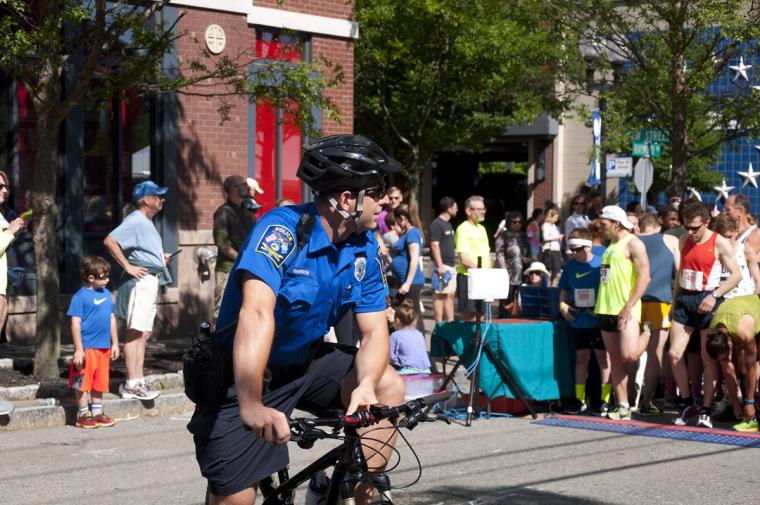
As is the case with many sports events, participants often do not understand the logistics necessary to put on road races; these include setting up a registration platform, obtaining insurance, sanctioning a course, getting security and safety personnel, putting up barricades, setting up hydration stations, arranging for post-event celebration areas (and refreshments), as well as having shirts, medals and other swag created.
And, note those who answered the survey, all those costs are subject to inflation and have to be factored into the registration price.
Meanwhile, another survey by Running USA found that nearly three-quarters (73.7 percent) of all runners indicated race fees are too expensive, up from 63 percent in 2024. However, says SGB, they still love their swag: "A majority (59.5 percent) of respondents believe that tee-shirts are important for their run experience. As in 2024, hats and socks ranked one and two as a swag alternative, followed by drinkware, including a water bottle/thermos and a glass or mug. As in 2024, the least preferred swag items were koozies/coasters and drawstring bags."
The largest percentage of respondents (37.9 percent) ranked the half marathon as their favorite distance. The second most popular distance was the 10K, followed closely by the marathon and the 5K.

The most important factors in choosing a racing event were location, preferred distance and a desirable course (such as fast or scenic). In addition to cost, having friends or family participating also rank high.
Race directors, like all event operators in any sport, continue to try to strike a balance. Some of the challenges cited by race directors included rising costs, the impact of tariffs and global trade issues, economic uncertainty, sponsorship challenges, revenue and participation pressures and various other issues, such as legal costs and the need to keep upgrading technology.
To meet challenges, race directors have reported taking steps such as raising revenue, increasing operational efficiency, reducing expenses, venue and course adjustments, starting marketing and growth initiatives and other steps.
The full report can be purchased at this link.
About the Author