
Pickleball is not just a force in the marketplace: it is a juggernaut, with more players, more events and an industry that just keeps growing.
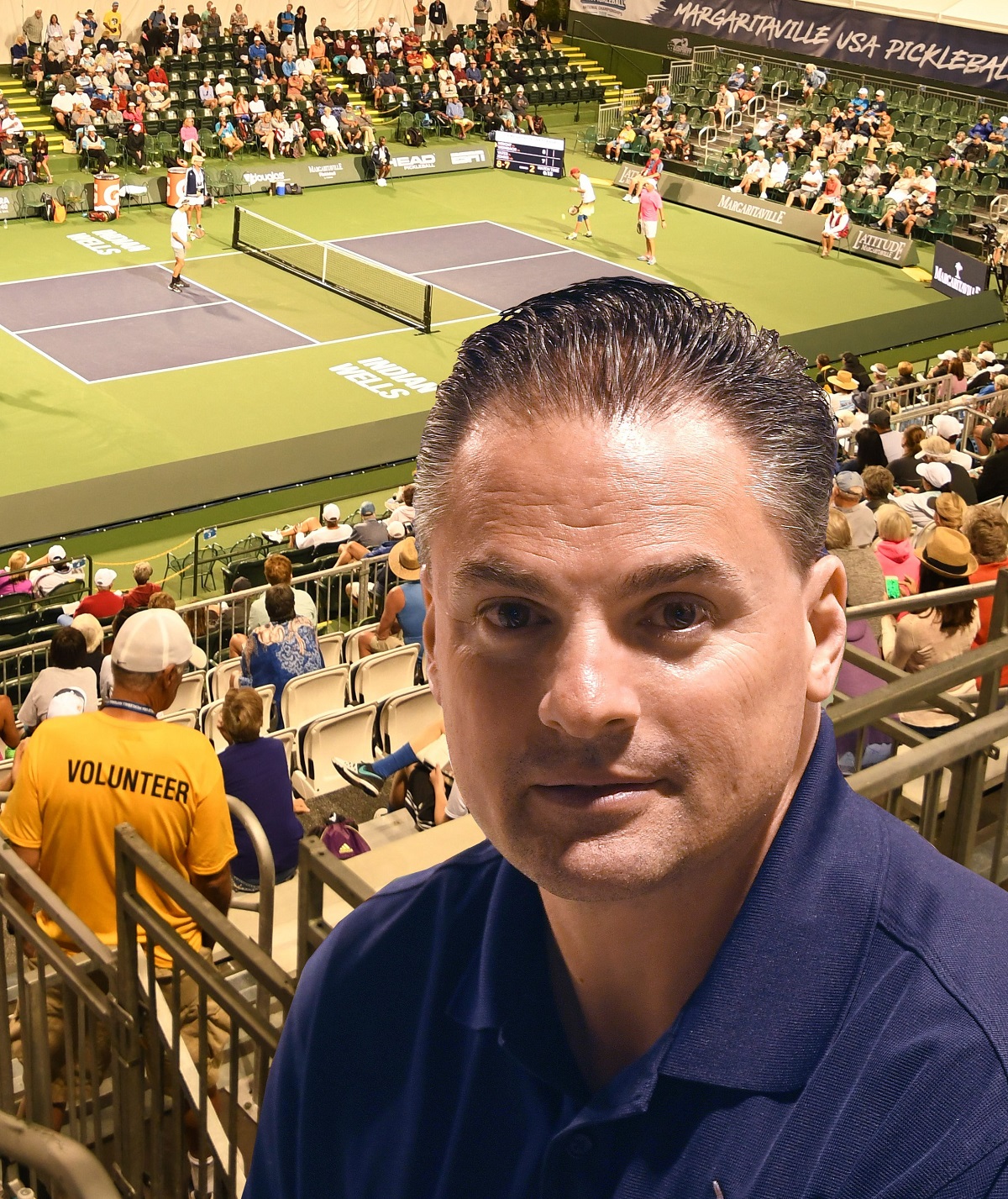
Sports Destination Management caught up with Justin Maloof, Chief Competition Officer at USA Pickleball, to learn about the latest developments in the sport and the impact they are having on events.
What are the Participation Trends?
Pickleball is the fastest-growing sport in the country right now and has been for at least the last four years.
According to the Sports & Fitness Industry Association (SFIA) there were 24.3 million players in the USA in 2025. In the previous year, that number was 19.8 million and the year before that, 13.5 million, so the growth is definitely continuing.
The male/female ratio of players is trending higher in terms of the number of men in the sport; it’s about 58.6 percent male and 41.4 percent female.
We know for a fact players are getting younger. The average player age has gone down; in 2024, SFIA found the largest player population was in the 25 to 34 age group.
What is the Reason for the Trend Toward Younger Players?
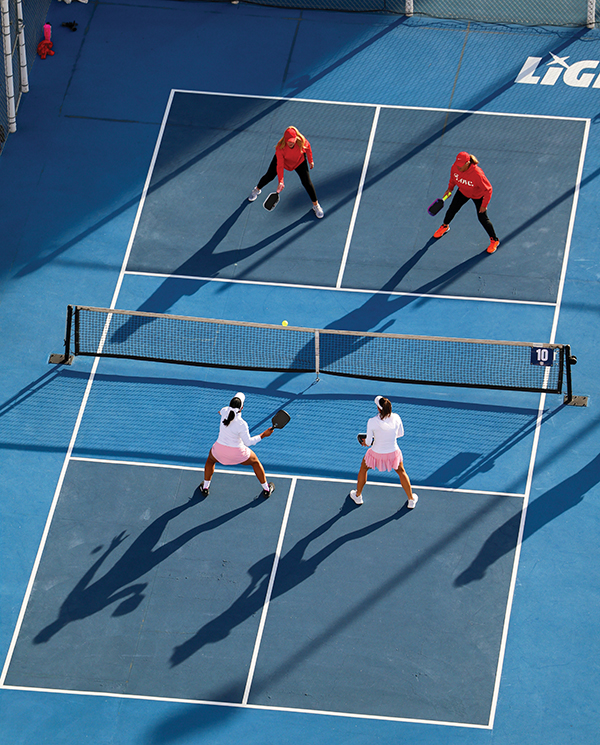
To understand why players are getting younger, you have to look at how the sport started, which was in the sunbelt states, where you had a lot of seniors and retirees, meaning people ages 55 to 60 and up.
That was our core group of players; in fact, when we’d put on the USA Pickleball National Championships, that was our biggest age group for a long time.
What we saw happen, though, was a geographic shift. A lot of those people were snowbirds, and when they went back to their homes, they brought the game home with them.
Initially, that resulted in a lot of people buying pop-up nets for $150 and setting up courts in places like cul-de-sacs or parking lots, as well as on hardwood floors in rec centers and senior centers, and eventually in their athletic clubs — and that led to people of all different ages seeing the game being played and wanting to try it.
Parks and rec departments started to get requests, and they found they could test-drive pickleball at little to no cost. As pickleball started to prove itself, parks were getting more and more requests for courts and leagues. That’s when we started to see an increasing number of permanent courts coming online.
Now, there are lot of permanent clubs dedicated just to pickleball, like the Picklr or Dill Dinkers, that are readily available and provide even more places to play. That kind of growth has presented opportunities to kids and juniors, as well as young adults. Court availability will always drive the sport.
Are Courts Still Lined for Both Tennis and Pickleball, or Is That Dropping Off?
USA Pickleball has been tracking the trends in court construction. Initially, temporary courts and multi-line facilities — where tennis courts were marked with pickleball lines — outpaced permanent pickleball courts, but in 2024, that started to change.
The trend now is the construction of permanent pickleball courts. Those are better because you don’t have as much court congestion and you don’t have as many problems about who gets to play which sport.
What is the College Scene Like?
There is definitely growth. USA Pickleball partners with the Association of Pickleball Players (APP), the National Intramural and Recreational Sports Association (NIRSA) and Selkirk Sport to serve and grow college pickleball across the United States.
Pickleball is not an NCAA sport but there is more organized team play in colleges, and more club programs are being started all the time. Our website has resources for those who want to start programs on campus.
Ultimately, college play is related to high school play. This year, for the first time, Arizona high schools have pickleball leagues. Pickleball is still considered a club sport, but this is a great start since there will be a state pickleball championship; we are involved with that.
Could Pickleball Be in the Olympics?
That’s a question that comes up a lot. Of course, we would love to have it in the Olympics but it really hinges on the sport’s international growth.
Right now, the Global Pickleball Federation has national governing bodies in 77 countries. It is going to take some time, though, to achieve the worldwide player development you’ll need in order for countries to have enough players to field teams to play at the Olympic level. Right now, the USA has such a big head start in terms of the sheer numbers of players, leagues, courts, coaches, tournaments, equipment and everything else.
The signs are good, though. We are seeing talent from other countries on the pro circuit. There is a chance pickleball could be in Brisbane in 2032 but for that to happen, a lot of things would have to come together in a relatively short period of time.
How About the Quiet Products?
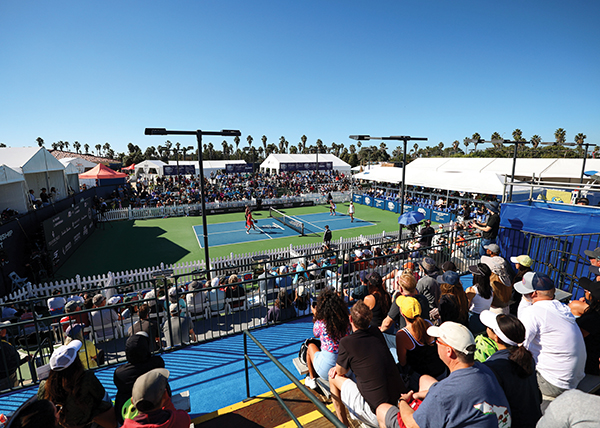
USA Pickleball developed a category of equipment, Quiet Products, in 2023 with the goal of lowering the noise level of the game. These products have been well received. Our goal is for people to be able to use them to help keep courts open where people are complaining about noise, or to get them reopened where they were closed because of noise.
Are there Any Headwinds in the Industry?
Right now, because there is so much growth, the industry is almost like The Wild West because so many people are jumping onto the pickleball bandwagon and they don’t have the knowledge or the technical expertise.
Unfortunately, that’s having a detrimental effect on the sport. One example of that is the counterfeiting of high-end paddles. In years past, you could get a decent paddle for anywhere between $40 and $60; now, really good equipment is a lot more expensive. Some paddles routinely retail for north of $200, $250, even $300.
That has led players who want those expensive paddles to go looking online for them; as a result, they’re finding these knockoffs on places like Temu and Alibaba and Facebook. The paddles looks a lot like the real thing but they cost $20.
In response, USA Pickleball worked with Pickleball Instruments to develop courtside testing equipment to detect counterfeit equipment. We started out by testing only the paddles the pros were using at our events, the ones where there was money on the line.
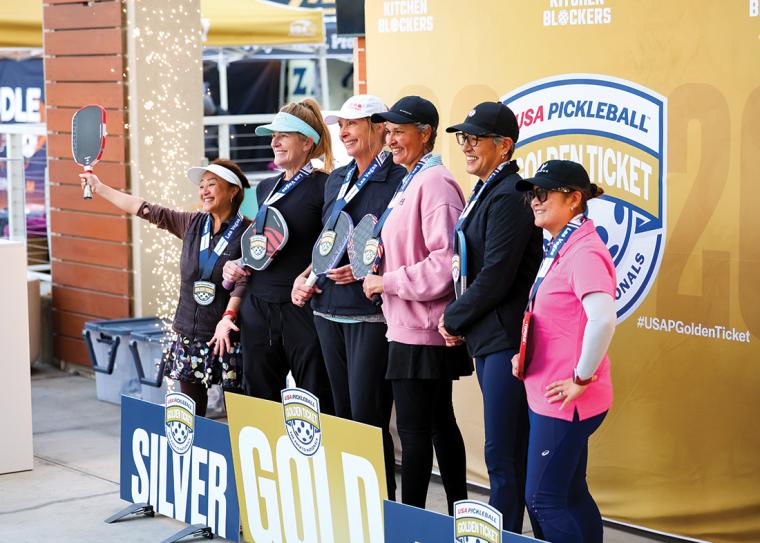
After that, we expanded our testing program and required it for everyone participating in our two Golden Ticket events in Glendale and Las Vegas. We were able to flag and remove some paddles that were counterfeit.
How Are Players Responding?
Everyone is very intrigued by this. They’re curious about how the testing works and they want to watch it being done. We’re glad they’re so interested, and we’re glad to be able to do our part to put the counterfeiters on notice.
Does USA Pickleball Have any Growth Initiatives or Grant Programs?
We have a number of programs in place to help keep the sport growing. USA Pickleball Serves is our charitable arm. The Play It Forward grant program is designed to fund court enhancement projects in under-resourced or high-demand areas, while the Grow the Game grant program provides essential equipment bundles to community organizations and schools that are beginning or maintaining programs and increasing exposure to the sport.
Additionally, whenever USA Pickleball holds a tournament, we put on a youth clinic, working with local YMCAs, Boys & Girls Clubs and other organizations. We teach kids to play and we provide packages of equipment, including paddles and balls, so they can remain engaged with the sport.
These are only a few of the programs available to help grow the game and benefit others. Our website, usapickleball.org, has full information, as well as impact reports. SDM
About the Author