


Photo © Robert Hills | Dreamstime.com
Pickleball is alive and well – and there’s a lot of emphasis on the “well” aspect (although the sport itself shows no signs of dying off so don’t worry about the “alive” part either).
That’s the word from a new survey conducted by the Sports & Fitness Industry Association and DUPR. One big takeaway: Players are complaining about court congestion.
The report, 2025 Pickleball Market Playbook: Consumer Spending, Gear Preferences & Play Habits, recently hit SIA’s bookshelf and it offers a wealth of information both to event owners and to the destinations looking to host. Among the highlights:

The Sport is Experiencing Explosive Growth: In just the last three years, the sport has nearly quadrupled its player base, growing from just under 4.8 million participants to 19.8 million. According to SFIA’s participation data, pickleball has seen consistent year-over-year growth for the past decade, and for the last four years, it has held the title of the fastest-growing sport in the country.
It's Not Just for Seniors Either: The report found growth across all age groups, from youth to seniors. SFIA notes, “This level of age diversity is rare in sports, where participation typically peaks in a few age brackets and drops off sharply elsewhere.”
Health is the Prime Motivator of Players: Nearly 94 percent (!) of players cite the physical benefits as a key reason they play, underscoring the sport’s appeal as a fun and effective way to stay active.
But There are Other Attractions: Players are also drawn by the joy of the game and the competitive spirit it fosters, making pickleball a magnet for participants across age groups and skill levels.
Word of Mouth is the Main Attractant: In the survey, players were asked how they first heard about pickleball. The most common response was through friends or family, accounting for 65 percent of respondents.
SFIA Insight: “Given pickleball’s inherently social nature, it’s no surprise that word-of-mouth plays such a significant role in its expansion. Coming out of the isolation of the pandemic, Americans were eager to reconnect with loved ones, and pickleball offered a fun, accessible way to do just that, fueling its explosive growth.”
Parks Are The Biggest Point of Entry: When examining physical play locations, public courts at parks and recreation facilities were the most popular, with 88 percent of players reporting they had played there.
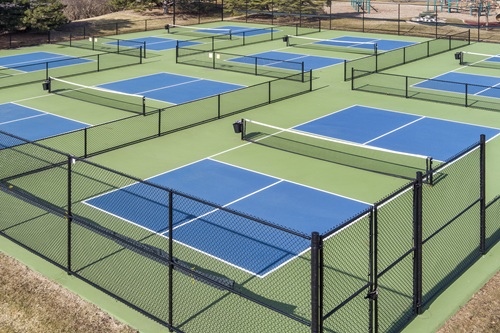
…With Clubs Close Behind: Clubs and dedicated facilities are a strong second-place, with 74 percent of players having played at such venues. These spaces have significantly enhanced the player experience by offering structured environments for learning, competition, and community building.
Players Say The Biggest Challenge is Crowded Courts: The most commonly cited challenge to accessing pickleball was overcrowded courts, with 44 percent of players identifying this as a barrier. Despite significant investments in new courts and facilities over the past few years, demand continues to outpace supply. Additionally, 26.1 percent of participants reported limited court time as a barrier to regular play.
Unfortunately, many cities and clubs are trying to satisfy the demand for court time by adding pickleball lines to existing tennis courts – something the USTA has recommended against since ultimately, that leads to even more congestion.
However, improvements are underway, and it is likely that this issue will become less prominent in the near future. SFIA notes, “A key driver of [pickleball’s] momentum is the rising investment in infrastructure, particularly the development of dedicated pickleball courts and facilities. These spaces are critical to the sport’s long-term success.”
Pickleball-specific courts have a number of benefits, including the following:
- Enhancing the player experience
- Fostering community
- Helping to retain participants by making play more accessible and enjoyable.
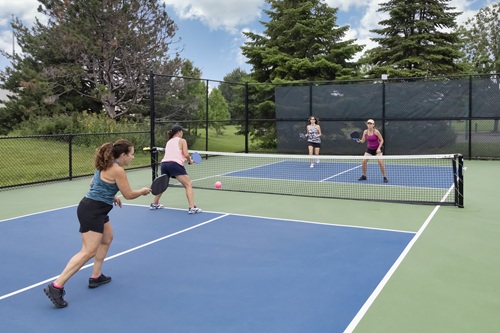
Singles Looking for Partners: Pickleball is largely played in doubles – something that oddly presents another concern of athletes. About 39 percent of players cited the difficulty in finding players of similar skill levels.
Players Love Tournaments: A whopping 73 percent of players have competed in at least one tournament, and 60 percent are involved with a league, which allows for competitive play on a regular basis
Tournament participation varied by skill level: 96 percent of advanced players had competed, compared to 81 percent of intermediate players and 44 percent of beginners. Notably, 43 percent of beginners who had not yet played in a tournament expressed interest in doing so, signaling a clear opportunity for tournament organizers to engage this group.
Join the Club: 74 percent of players also love club play, and club events also saw strong participation, with 65 percent of avid players reporting involvement. Another 24 percent expressed interest. SFIA notes, “As new clubs continue to open and expand nationwide, it is promising to see that the most active players, those most likely to join and engage with clubs, still represent a growth opportunity.”
The recent repurposing of big-box stores and defunct department stores as what have become known as “picklemalls” is becoming a tremendous franchise opportunity for those interested in harnessing the pickleball energy. MarketWatch has been keeping an eye on the trend, calling it the savior of America’s malls.
Additional facts garnered by the survey include the following:
- A total of the surveyed players reported participating in an in-person group coaching or learning session. Worth noting: Players will pay for live coaching, while a small minority (seven percent) expressed a willingness to pay for online tutorials.
- About 25 percent said they actively followed competitions at the highest level, including PPA, MLP, APP and others. About one-quarter of these fans said they attend live events.
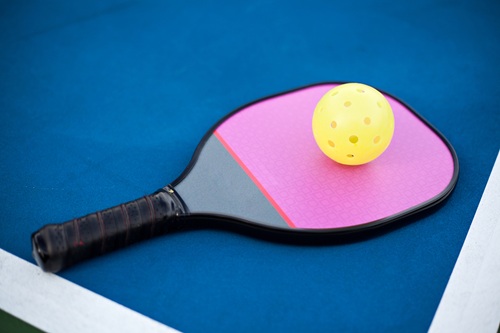
- Players have strong preferences in terms of the paddles, balls and shoes they use.
About the Author