

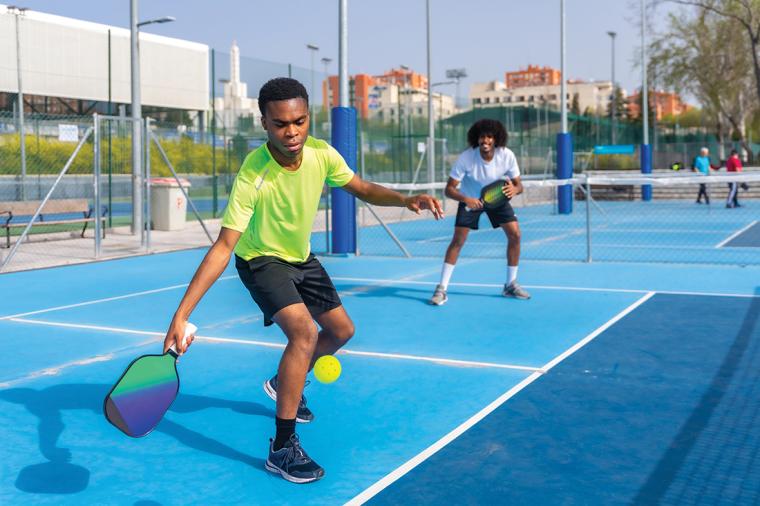
Pickleball continues to proliferate throughout the U.S., with new courts going in, and new programs starting up. At the same time, the number of opportunities to compete is increasing at all levels, from recreational league play to professional tournaments.
USA Pickleball, the national governing body of the sport, is fully engaged in facilitating all this growth, as well as in a number of initiatives within the game itself. Carl Schmits, Chief Technology Officer, sat down with SDM to discuss some of these and to give a sneak peek at what is on the horizon.
The Changing Player Demographic
Pickleball used to be a sport that was dominated by the 55-plus age group but its players are getting younger. The age 25 to 34 demographic is growing and is currently the largest in the sport.
Obviously, we think this is great, and we believe it is largely due to the fact that this is a recreational sport that is fun to play, inexpensive to take up and very social in nature. We’re not sure yet whether this demographic includes young families and represents an opportunities for parents to get out with their kids but we certainly hope it does.
There’s a lot of grassroots growth in pickleball, and it is really contributing to the popularity of the sport. We want to keep addressing our market in order to make that growth sustainable.
Creating Enough Courts to Meet the Demand
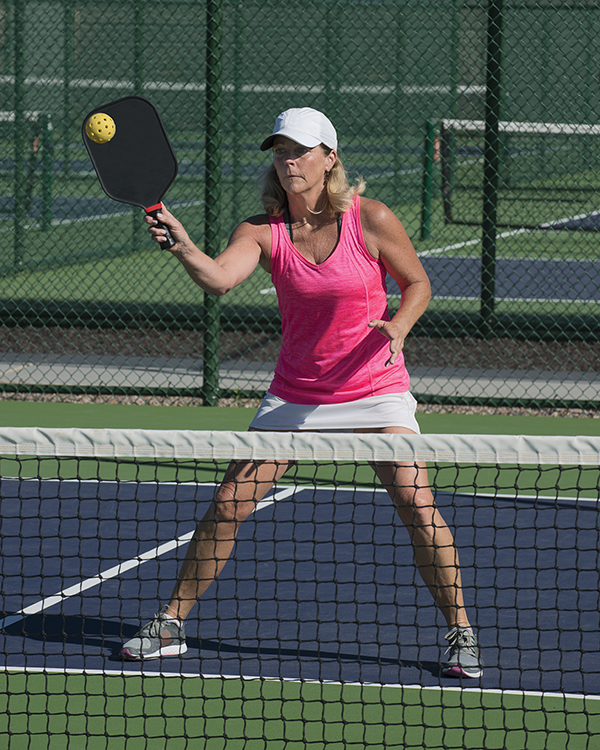
Pickleball’s popularity has resulted in an increase in demand for courts throughout the U.S. Obviously, USA Pickleball wants to see more courts put in but we want to make sure this is done the right way.
Trying to get more courts built has been challenging for many cities, as well as HOAs and clubs, since they are trying to balance not just the economics of adding facilities but the need for adequate land to do so. Both land and finances are generally finite resources, and the fact that pickleball players are making their wishes known means that a lot of officials are being pushed to make decisions.
Park and rec decisionmakers, as well as others who are considering adding courts, are usually under tremendous pressure to respond to the needs of players, so we always advise these decisionmakers to look at their assets and to ensure they’re used with relation to the current demands in the district.
Sometimes, for example, there may be a pocket park with facilities that are unused or underused; these facilities might be tennis courts or they might be something else entirely. At that point, the park and rec person needs to talk with their constituents and find out if the existing park is a good candidate for redevelopment.
The process should include discussions not just with the people who want pickleball but with the people who live around the area, and who stand to be affected by the presence of the pickleball courts.
Conversations need to be held about what the courts will bring to the neighborhood: what hours they will be in operation, any lighting that will be used, where people will park and all other factors that will come into play. There also has to be input from anyone who is currently using that pocket park for its current purpose, whether that means they’re playing tennis there or doing something else.
The pressure on the recreational officials is huge when it comes to doing the right thing. There is always a need to gather feedback and to work toward a solution that is acceptable to as many people as possible. You may not want to walk away from an opportunity to put in courts because one or two people are opposed but you do need to make sure everyone’s input is understood and taken into consideration before a final decision is made.
We have seen cases where entities simply moved ahead and put in courts without getting input from the community and the results were disastrous, with long-term friction between residents and players. We’ve also seen cases where pickleball courts were being considered and people held meetings and talked to neighbors about mitigating noise and other issues and had much more success.
Sometimes, there have to be conversations around the clearances between the courts and any houses or other properties, and about any codes that stand to affect the project. We also advise people to do an acoustical study and to understand any local ordinances governing noise as well as lighting.
Putting in courts can be a complex and sensitive issue. USA Pickleball does not want to influence or drive what a local entity chooses to do; we simply want to provide them with the information they need in order to make the decisions that are right for them.
USA Pickleball is committed to the growth and success of the sport but we’re not interested in pushing court construction at all costs. In all cases, there has to be the ability to work with neighbors to make sure the courts, as well as the players that use them, remain a beneficial part of a community.
Play It Forward
USA Pickleball Serves, the organization’s charitable arm, recently announced that its 2025 Play It Forward Court Grant program has awarded two $50,000 grants to support community-driven pickleball court development efforts in Eugene, Oregon and South Hadley, Massachusetts.
The Play It Forward grant program is designed to fund impactful court enhancement projects in under-resourced or high-demand areas. This year marks the first time USAP Serves has awarded monetary grants.
Quiet Products Category
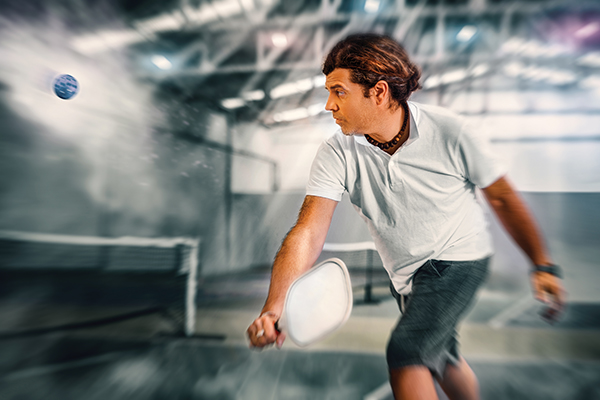
Not much has slowed down the growth of the sport but one of the objections that is voiced first when courts are suggested is the sound made when the paddle and racquet meet one another. Accordingly, USA Pickleball has worked with manufacturers to create products that mitigate noise.
This initiative, which was first announced in late 2023, has been very successful. There are now a little less than two dozen paddles and several balls that have been designated as “quiet” or “noise reducing.”
The program is very specific; for example, if a paddle hitting a ball typically creates sound in the 1,100 to 1,200 hertz range, USA Pickleball’s new quiet products can be no louder than 600 hertz. Additionally, acoustical panels have been developed; these can be hung from fences surrounding courts to help block the sounds of play.
USA Pickleball’s website has a special section devoted to quiet products and our work in this area will continue.
The New Frontier for Pickleball
USA Pickleball is always seeking to enhance the player experience. One of the most exciting developments is our new partnership with Sandals and Beaches Resorts, with the properties being named USA Pickleball’s “Official All-Inclusive Resorts.”
As part of its work with Sandals, USA Pickleball contributed guidance on layouts, design, materials and entertainment areas for future on-resort development. The partnership also includes onsite USA Pickleball Approved Pickleball Coaches, making Sandals the first resort company to have resort staff undergo official training so that guests can up their game.
Additional perks include the rollout of co-branded events, private and group lessons with pros, the integration of pickleball-themed vacation packages and tournaments, plus becoming a partner of USA Pickleball’s Golden Ticket Tournaments and the National Championships.
We look forward to these resorts becoming pickleball destinations, blending great courts (more than 70 in all) and excellent amenities to create an opportunity for travelers who want to play pickleball in an excellent setting.
More programs are on the horizon, both in resort areas and closer to home, and we look forward to using them to leverage pickleball’s growth in the years to come. SDM
About the Author