

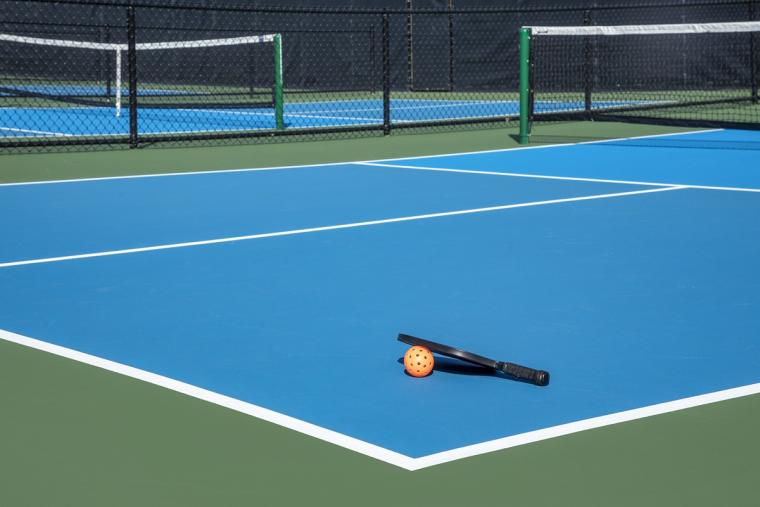
All photos © Lmphot | Dreamstime.com
With popularity comes scrutiny. That’s certainly what is happening with pickleball these days. It might be the fastest-growing sport in the United States for four years straight, but pickleball does not appeal to everyone — like some of the residents who live near outdoor courts.
Carmel-by-the-Sea, a small coastal California community, recently became the first city in the state to ban (yes, ban) pickleball at public facilities, citing noise complaints. As KSBW.comreports, “an urgency ordinance banning pickleball at the park could become a permanent ordinance, making it part of the city charter.” If that happens, pickleball players could face a $1,000 fine for violating the law.
“I’ve never seen anything this mean before in Carmel,” local pickleball player Cindy Vandenberg told the TV station. “We have to have quiet, but we also have to have recreation, and it’s a big part of our healthy vibe that we have here.”
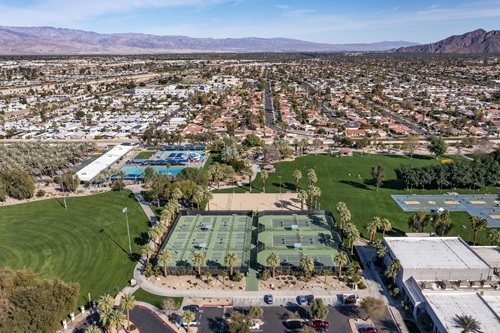
Carmel-by-the-Sea, located about two houses south of San Francisco, has been hailed as “a stunning village that will make you feel like you’re in Europe,” as described by Islands.com.
But five of the approximately 3,200 residents there made some noise about the sound of wooden paddles popping against plastic balls, Mayor Dale Byrne has said. And reports seem to indicate that efforts to enforce the use of “quiet” paddles and balls weren’t met with enthusiasm, despite such changes taking place in other California cities.
“In Laguna Beach, city officials adopted an ordinance this year requiring pickleball players to switch to quieter paddles or face a citation,” the Los Angeles Times reports. “In the Silicon Valley city of Saratoga, officials set aside $100,000 for efforts to tone down the volume at its pickleball courts.”
The “harm” from pickleball pops, according to the nonprofit organization Pickleball Noise Relief, “comes from the vibration of the hard paddle, the ping of the plastic ball and how that affects us psychologically and physically. … Chronic noise sets off our ‘fight or flight’ response. When our stress response is firing all the time, it can contribute to mental health issues like anxiety or depression. We also have a higher chance of developing heart disease or diabetes. Chronic noise can also affect our sleep patterns and how children learn. Impulse or jarring noises like pickleball are likely more detrimental to health than continuous noise, like traffic.”
The decibels emitted from a pickleball paddle connecting with a pickleball are four times louder than a tennis racket connecting with a tennis ball, the association notes.
“Tennis basically consumes zero time and expense ... and, unfortunately, the reality of pickleball is that it’s created a significant distraction for the five of us [council members] and for the city,” Carmel-by-the-Sea council member Bob Delves said during a recent council meeting, according to the Los Angeles Times. “And it’s expending resources that we don’t have. It’s time to just stop.”
But this is not just a California issue. Officials around the country are facing similar challenges.
City council members in Marco Island, Fla., will need to approve plans for a planned expansion of pickleball courts at the Marco Island Racquet Center — which so far have been met with disdain from neighbors who say the constant popping is disruptive.
“Our issue is noise. It is actually an invasion of our neighborhood is what we’ve called that,” David Cadwell, president of the San Marco Villas Condo Association, told Fox4Now.com.
“We absolutely are very sensitive to the neighbors and that’s really a big part of the plan that we have in place,” countered Pat Campbell, a leader of a local pickleball group who said the planned expansion would include improved sound barriers and a better design to reduce noise. “We care about the community; we care about our neighbors. And the fact of the matter is, status quo is the enemy here, not the pickleball players. We believe improving and enhancing with additional courts, with additional enhanced sound barriers, we actually are being very sensitive to the neighbors and helping improve their quality of life too.”
In Boise, Idaho, meanwhile, city officials simply closed pickleball courts at two parks after a neighbor sued the city over pickleball noise. But after receiving more than 150 emails from the public, recreation leaders in Boise have committed to dedicating 25% of outdoor racket courts at city parks to pickleball by 2027 and 40% of all courts by 2031— just not in the parks that generated the original tort claim filed against the city and claiming the noise from the sport made a home “unlivable,” according to the Idaho Stateman.
“Pickleball has exploded,” Boise recreation superintendent Roseanne Brown said. “We take it very seriously.”
About the Author