

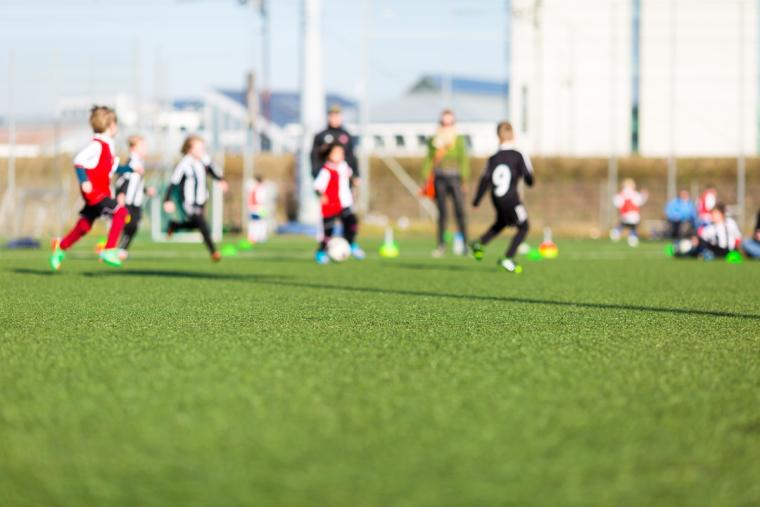
Photo © Bigandt | Dreamstime.com
The California Office of Environmental Health Hazard Assessment (OEHHA) released a study finding that recycled tires used as crumb rubber in synthetic turf are not likely to harm users or spectators.
There is no evidence of significant risk for cancer or other health problems from this recycled rubber to players, coaches, referees and spectators based on the available data, even for young athletes.
The California Office of Environmental Health Hazard Assessment (OEHHA) is the lead state agency for the assessment of health risks posed by environmental contaminants and is the California Environmental Protection Agency’s (CalEPA) scientific adviser.
"This study should ease concerns about the safety of crumb rubber use in synthetic turf fields," said OEHHA Director Kris Thayer, "Athletes of all ages can use these fields without parents worrying about this commonly used material."
Synthetic turf fields are engineered to resemble natural grass but require less maintenance, use less water, and provide consistent playability without rest periods. These properties have led to widespread use on athletic fields, including more than 900 installations in California.
As the number of field sports being played rises, particularly at the youth tournament level (and particularly now, with the explosive growth of flag football), and as cities grow increasingly landlocked, turf has become the go-to surface.
Many fields use crumb rubber, small granules produced by grinding up recycled waste tires, as infill material placed between the synthetic grass blades. This infill helps keep the blades upright, provides cushioning, and improves traction during play.
California’s Circular Economy
OEHHA studied this material to inform California’s sustainability goals. California’s Waste Tire Program sets standards for safely managing waste tires and explores appropriate markets for materials that might otherwise be landfilled.
"Protecting public health is our top priority, and California is committed to making sure waste tires are managed safely so they don’t litter communities or pose risks to residents," CalRecycle Director Zoe Heller said. "CalRecycle appreciates the work of OEHHA and its partners to advance our understanding in support of a cleaner, healthier circular economy."
More on the circular economy can be found below, under “The Sustainability Question.”
Comprehensive Study Design
To evaluate safety, OEHHA tested 35 synthetic turf fields. The sampling accounted for both old and new fields, as well as fields from every climate region in California. Multiple samples from each field were collected to account for variations in source materials. OEHHA also collected air samples both during active use of the field and when no use occurred.

OEHHA’s groundbreaking study focused on more than 100 chemicals that could pose a risk — unlike past studies that only looked at a small number of chemicals. To identify the full suite of chemicals present, OEHHA coordinated with the Lawrence Berkeley National Lab to simulate sweat and digestion and identify chemicals to which the public could be exposed.
To understand how people might be exposed to chemicals found, OEHHA worked with researchers from UC Berkeley and the University of Arizona. They studied how soccer players might contact crumb rubber—through skin, breathing, or swallowing small pieces.
The team surveyed more than 1,000 soccer players, ages 7 to 71, about how they play, like sliding or diving on the field. They also recorded players during games and practices to see how often they touched the turf. Because goalies dive the most, the study used goalie data to estimate risk for players. Researchers also looked at chemical risk to toddlers who might crawl on the field.
No Significant Risk Found
OEHHA found no acute risk to athletes, referees, coaches, or spectators, including toddlers. In most cases, risk of sensory irritation, cancer, harm to the reproductive system or a developing fetus, or other health effects were negligible.
A Long History of Controversy
Almost from the time turf has been around, controversy has existed on its safety, both in terms of the injuries a player might sustain and in terms of the long-term risks of exposure to it.
In its earliest iterations, AstroTurf, as the surface was known (for its presence in the AstroDome, built back in 1965), was a plastic grass mat laid over asphalt. As the years went on, however, surfaces evolved, using infill to create a more natural, cushioned feel.
In 2015, claims brought up in a TV news report that questioned the safety of the fields were promptly shot down by turf manufacturers, as well as scientists, who noted the report contained no scientific data.
That same year, a report released by the Connecticut Department of Public Health found “no relevant health risks” to children and adults playing on synthetic fields. The executive summary of the report is here.
2024 was a turning point for turf. In April, the EPA made headlines when it announced that studies had found no significant difference in the exposure to certain chemicals between athletes who played on synthetic turf fields that use crumb rubber infill vs. those who played on grass fields.
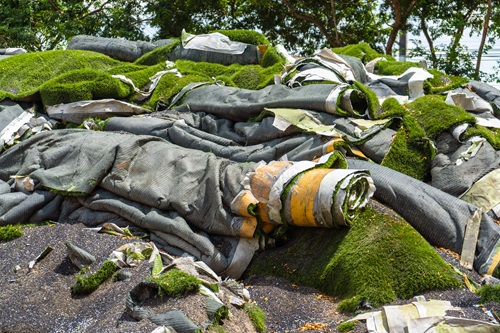
In September of 2024, a study found that synthetic fields actually have a lower incidence of concussion.
That study, conducted by researchers at UT Southwestern Medical Center and published in the Clinical Journal of Sport Medicine, studied football players between the ages of 10 and 24 years old who had had a concussion. Of those, players on natural grass experienced more severe concussions and a higher number of symptoms than those who played on synthetic turf.
The Sustainability Question
Synthetic fields will also reach a point (generally eight to 12 years after installation) where replacement becomes necessary. Unfortunately, synthetic fields don’t fit that definition of products that can be recycled – at least not the way plastic bottles or aluminum cans are able to be recycled.
The good news in the industry is that a number of technologies have emerged – and all provide satisfactory alternatives to putting old turf into a landfill; they include the following:
Component Reuse: Specialty contractors have developed equipment and methods to extract infill from an aging synthetic field, and to store it for use by installers putting in the next field. At the same time, there are companies on the market that specialize in reselling used turf, either whole or in segments, for new uses.
Full Surface Recycling: The full recycling of turf (known as a circular system) originated in Europe, but driven by the sustainability movement, has begun to appear in the U.S.
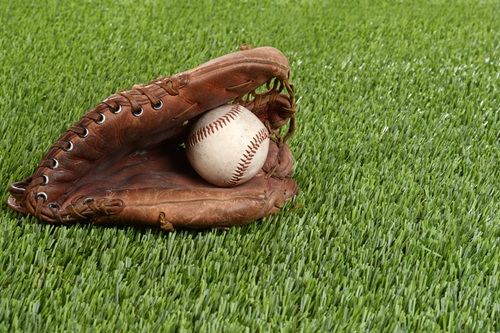
In the full recycling process, the recycling company will gather field surfaces which have met the end of their useful life (or they also gather scraps left over from the installation process).
These materials are taken to one site for shredding, then moved to another facility for additional reprocessing. Ultimately, the material is transferred to an advanced recycling facility to be broken down into compounds that can be used to make new products that have quality and performance identical to those of virgin raw materials.
While the study in California is the latest piece of information, it would be ingenuous to think it is the last time the issue will surface.
About the Author