
Photos of FKL courtesy of Andrew Phan
NASCAR gets a lot of love, a lot of tailgating, a lot of economic impact and a lot of attention here in the USA. Formula 1? Not so much. In fact, many races have struggled to survive and some have failed, even in sports destinations.
But the discipline has a deep bench and right now, its stars are leaving their rivals in the dust at local go-kart tracks – and parents are shelling out for them to do it. Because they’re that young.
According to the Washington Post, F1 has faced a problem: how to identify future champions who can’t yet drive a car.
“Karting is the sport’s best approximation,” the article states, “a birthday party diversion that has been bankrolled and professionalized into a series of miniature Grand Prix races. Every current F1 driver started in a go-kart.”
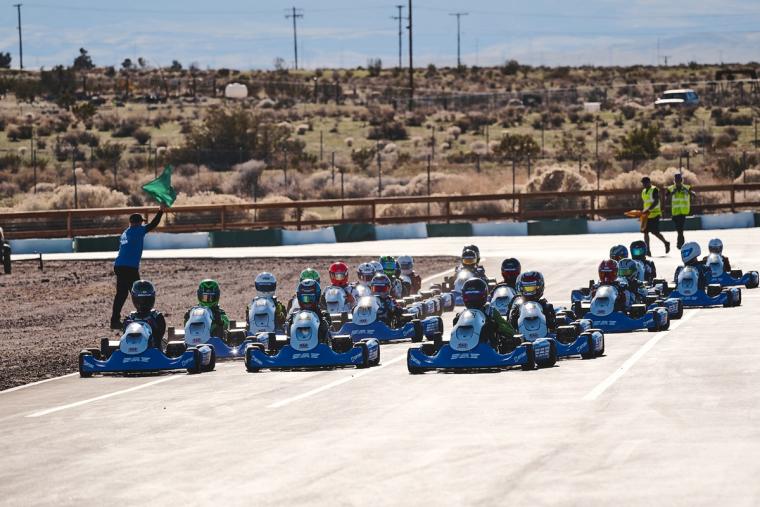
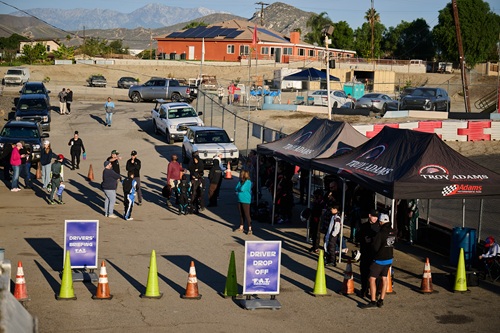
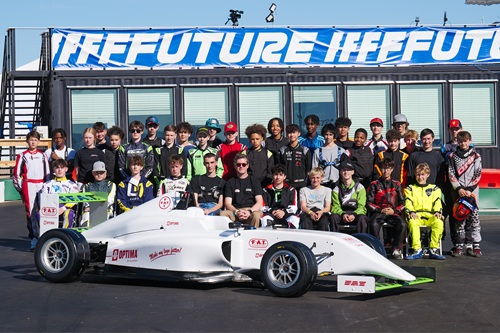
While the Post article focused on one racing syndicate, Baby Race, others have sprung up as well. FAT Karting League (FKL), for example, offers races throughout the United States, and was co-founded by F1 engineer Rob Smedley and FAT International founder Ferdi Porsche.
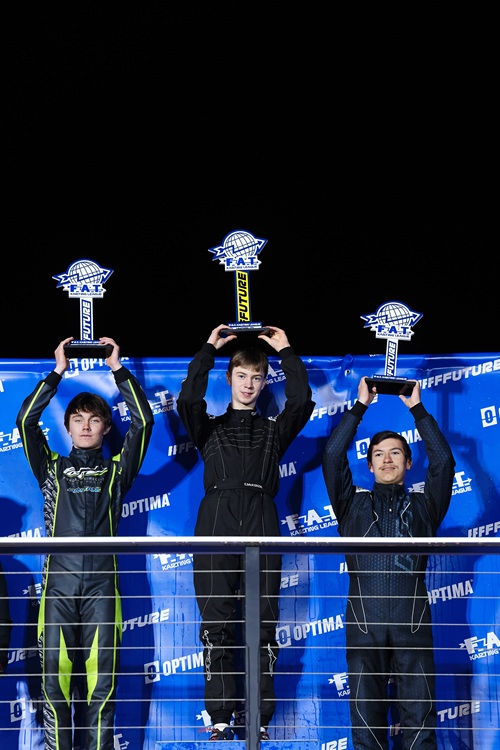
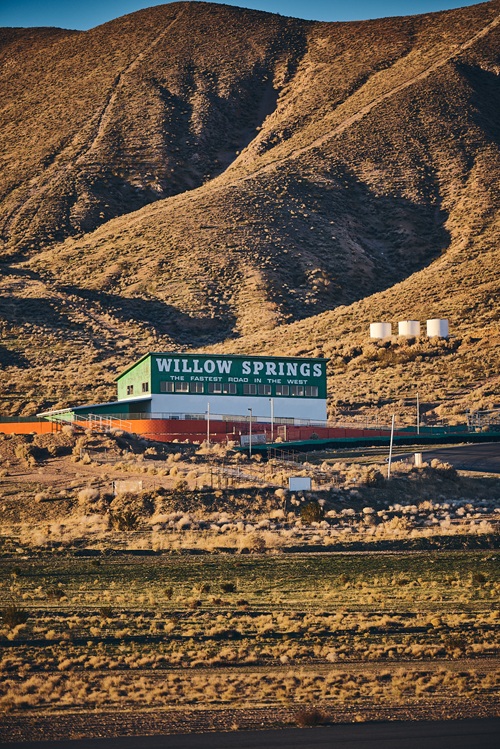
In mid-December, FKL announced the winners of its 2025 World Finals race at Willow Springs International Raceway in California. More than 100 of the best youth drivers from the U.K., the Midwest U.S., and California raced to win major rewards, including a fully funded seat in the FIA British Formula 4 Championship for junior drivers.
And in case you’re wondering, F4 is the first step in the FIA's single-seater motorsport ladder, designed as the entry-level circuit that takes kids from karting to professional car racing, allowing young drivers (around 15+) to learn the finer points of racing prior to graduating to F3, F2 and eventually F1.
And make no mistake: It takes a lot of work to get to this level. According to the Washington Post, parents and sponsors invest hundreds of thousands of dollars a year in their children’s careers. Baby Race charges its drivers $7,500 for a four-day race event (plus a $600 entrance fee).
Like many top-level athletes, serious karters are homeschooled to allow them to concentrate on their racing.
Kids generally graduate to the competitive circuit quickly – as long as they are serious about their racing, which, as with other sports, involves travel and dedication.
“There is effectively no way for young American drivers to aspire to Formula One without relocating across the Atlantic,” notes the Washington Post, which found that one driver flies from Miami, where he lives, to Italy once a week during peak karting season. The rationale: That’s where the F1 scouts spend their time.
“This weekend showed what happens when opportunity meets talent,” said Ferdi Porsche, founder of FAT International and co-owner of FKL after the 2025 Grand Nationals in Willow Springs. “For some of these drivers, it was the first time competing outside their home country. Giving them a platform to race, learn and a proper chance to pursue their dream is what matters most. The World Finals are another step toward shaping a more inclusive future for motorsport that is built on merit and built to last.”
The work doesn’t stop for young drivers, even if they’re at the top of their game. The February Shootout represents a career-defining opportunity for four FKL drivers competing for a fully funded seat with FAT Racing in the 2026 FIA British F4 Championship. Running from February 6-11, 2026, the comprehensive evaluation program will assess candidates across multiple disciplines: karting performance, simulator work at FAT Karting League headquarters in Oxfordshire and rigorous fitness, media and mental evaluations.
The selection process will culminate with two days of testing in Tatuus F4-T421 machinery at Circuito Mike G Guadix in Granada, Spain. The successful driver will then enter an intensive pre-season testing program ahead of the championship opener at Donington Park on April 18.
At the FKL event in Willow Springs, two big winners emerged. Shea Aldrich, 14, of Orange, California, took home the Junior category title, while the UK’s Ellis McKenzie (12) won the Junior Light category.
Aldrich started his racing journey when he was just five years old. McKenzie is an anomaly; despite having raced for only two years, he has become one of the most highly decorated racers on the circuit. Both drivers qualified for the World Finals by winning the California and UK FKL Championships respectively.
The trajectory of the sport can be remarkably quick. Arvin Lindblad, for example, moved from karting to F1 in five years. His journey took him from the go-kart track to F4 and escalated from there.
“I was just focused on trying to learn as much as I can, drive as fast as I can,” he told reporters at the Times of India. “One thing I was sure of was that the better I’d do, the faster I’d come through the ranks and that would give me a higher chance of getting to Formula One.”
F1 drivers remember their karting days fondly; in fact, Kimi Antonelli, one of F1’s youngest drivers, decided to enter a kart race under an assumed name. He finished first but earned a DQ.
And realizing the allure, cities are embracing the karting boom. Las Vegas, for example, opened a new F1 karting attraction that allows drivers to recreate the experience of driving a kart on the city’s F1 course.
“These new experiences are as close to an F1 race one can get without being a professional driver,” attraction producer and co-CEO of Round Room Live Jonathan Linden said in a press release. “There was no better place to do it than the home of the Las Vegas Grand Prix. Whether you’re a lifelong fan or new to the grid, this is an inside look at what makes F1 a global phenomenon–with plenty of thrills along the way.”
F1 Drive is part of the new 39-acre Grand Prix Plaza–a space with three ticketed attractions, interactive exhibits, a gift store and restaurant. In addition to a realistic driving simulation, fans can explore the history of Formula 1 in an artifact-filled museum, build their own race car in the design studio, and take part in a Pit Wall Challenge making race decisions on tire changes, pit stops, and team tactics in a fast-paced simulation.
Sports tourism has caught on in a big way, and cities are building tracks to attract the next-gen of racers. Some outstanding facilities, according to this article, can be found in destinations like:
- Carlsbad/Irvine, California
- Dallas, Texas
- Homestead, Florida
- Las Vegas, Nevada
- Charlotte, North Carolina
- Newcastle, Indiana
- Avondale (New Orleans), Louisiana
- New Carney, Texas
- Dawsonville, Georgia
- Erda, Utah
… and that’s just a sampling. And there’s a really good reason cities are investing. At the recreational level alone, karting facilities are adding $170.9 million to the economy, according to Market Report Analytics.
“The United States and Canada dominate the market due to a well-established recreational industry, high disposable incomes and strong consumer demand,” notes the MRA report. “The presence of numerous go-karting tracks and entertainment venues further boosts market growth in this region. This region accounts for approximately 40 percent of the global market, translating to roughly $1.2 billion in annual revenue.”
Overall, this research notes, the motorsports industry overall has an economic impact of $69.2 billion on the American economy. Other key findings from the study include:
- Nationwide, the motorsports industry supports more than 318,000 American jobs.
- American workers in the motorsports industry earn more than $22.1 billion worth of wages and benefits.
- The industry generates more than $8.2 billion in tax revenue, including $5 billion in federal taxes and $3.2 billion in state and local taxes.
In short, economic drivers, start your engines.
But with that money comes risk. Headlines are made in karting – and not always in a good way. Motor sports carry the potential for serious injuries, with the National Library of Medicine noting the emergency room visit statistics. More worrisome have been recent reports of accidents, including one of a six-year-old who died after a crash at a recreational track.
But the kids are almost rabid in their enthusiasm and the parents, who see it as a path forward (as well as an interest that keeps them focused) are are all-in on racing. In Maryland, one man won permission to construct a go-kart track on his property so that his son could practice.
Another set of parents surprised their son with a high-end kart on Christmas. (Their rationale: He was spending too much time on video games and could use more experiences outdoors. It worked.)
On the track, kids are competitive, hyper focused and completely aware of how much is at stake. (Click here to watch video of a race.) Sponsorships can be made and broken by a racer’s finishing place and a crash can mean a total loss, both of equipment and endorsement funding.
The emotional strength of racers is tested every time, with coaches, parents and sponsors watching closely to see how kids handle stress, victory and adversity, all of which can show how well they’ll do as adults on a competitive track.
But for now, says the Post article, they’re still kids.
“Perhaps more than any other sport, young drivers can appear like children pretending to be adults, surrounded by expensive gear and support teams, taking tight turns at freeway speeds, giving choreographed postrace interviews. Minutes later, they’re sharing memes on TikTok and farting in each other’s helmets.”
About the Author