
Photo © Pp1 | Dreamstime.com
Summer sports and open water just seem to go together. Unfortunately, so does the occurrence of blue-green algae levels in that water.
Already, multiple destinations have been issuing warnings and event owners are taking note. Some events have been cancelled, others rescheduled and in other destinations, officials are keeping a close eye on the water before making a final call.
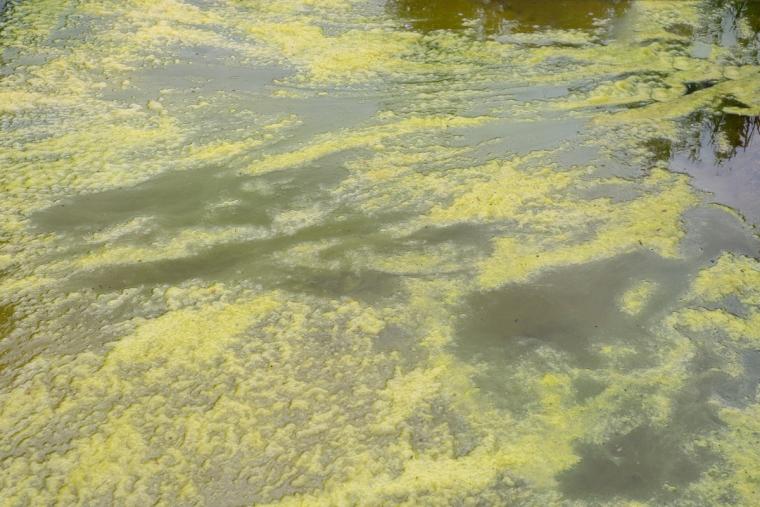
Blue-green algae, the slang term for a type of bacteria technically known as Cyanobacteria that thrives in warm, nutrient-rich waters and can form harmful blooms that look like pea soup or spilled green paint, are invading lakes nationwide, as well as internationally. It tends to bloom when certain conditions are met: low water levels, limited circulation and warm temperatures, all of which seem to coincide in the summer months.
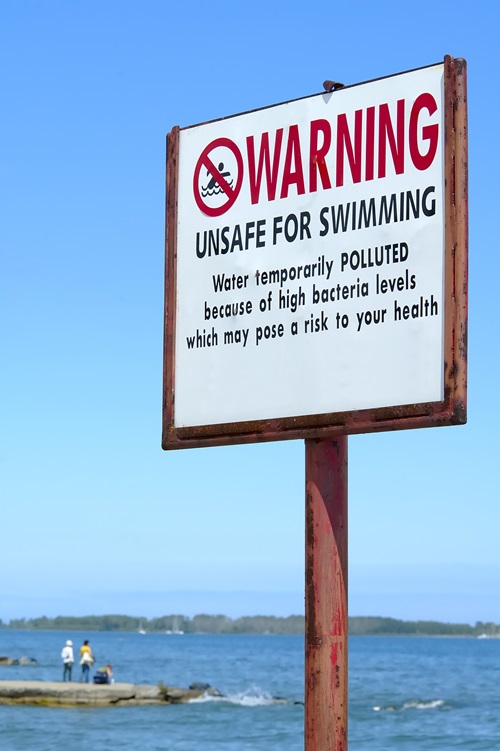
The problem is not confined to one region or geographic area; it has been spotted across the USA as well as internationally.
In North Dakota, the Bisman Triathlon eliminated its swim segment after algae blooms near McDowell Dam caused problems with the water quality.
Race director Brian Jackson told reporters the timing of having to cancel the swimming was unfortunate but unavoidable.
“That’s just part of the sport,” he noted. “Switching from a triathlon to a duathlon happens. It’s also, as anyone will tell you about triathlon, a mental sport. So, this is part of it. It’s like changing and pivoting and being ready for it.”
Officials at Lake Anza, a popular area for recreation (it’s adjacent to Berkeley, California) were on edge earlier this summer after the toxic algae was noted; after remediation, the lake was opened to swimmers. Last summer, the lake was closed in mid-June, just as schools were letting out. The lake’s season is generally April to mid-September. Lake Anza was entirely closed to swimmers from 2020 to 2022 mainly because of algae.
“We’re hopeful that the treatments we did earlier this spring will keep it open through most of the year,” Matthew Graul, chief of stewardship at the park district, told reporters. “There’s no guarantee, so I would encourage people to look at our website before they come out (to swim).”
Another group of water athletes (and just plain water enthusiasts) who stand to be adversely affected is dogs. Summer events, like dock diving, held on lakes, can bring dogs into contact with harmful algae blooms, which, veterinary sources note, can cause death if symptoms are not treated immediately. Unfortunately, symptoms in many cases may be overlooked by owners (who think of them as the effects of too much sun or heat on the dog) until it is too late. In Maryland, the Department of Natural Resources noted an uptick of problems.
Blue-green algae is not a new challenge for event owners. In 2019, event owners were confronted with the situation after health threats were noted with triathlons. The die-off of aquatic life as a result of algae blooms also impacted water quality. In 2017, SDM reported that event planners may want to consult with an event insurance company regarding planning for additional coverage that may be necessary when hosting water-based events.
“If a claim were to be brought against an organization that had purchased this coverage, they would be insured,” Lorena Hatfield, marketing manager for K&K Insurance, told SDM at the time, adding that her firm offers transmissible pathogens coverage. “It’s important to know that this is not standard coverage offered in the general marketplace.”
The Centers for Disease Control warns individuals to “[a]void drinking, playing, swimming, water skiing, boating, or practicing other activities in areas where the water is discolored and has a bad odor, or where there are visible foam, scum or mats of algae on the water’s surface.”
About the Author