

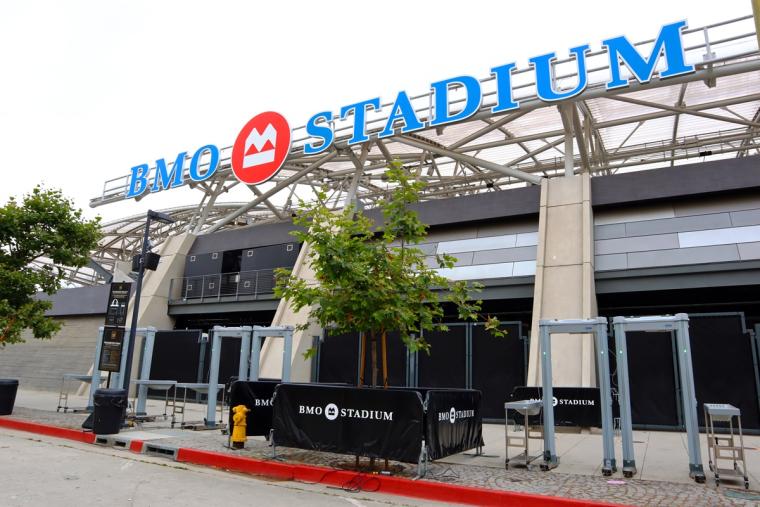
BMO Stadium, site of the recent NFL/Team USA match-up, will be the location of flag football play in Los Angeles in 2028.Photo © Walter Cicchetti | Dreamstime.com
NFL players have been making noise about wanting to be included in the Olympic squad when flag football reaches the Summer Games in Los Angeles two years from now.
But at the recent Fanatics Flag Football Classic at BMO Stadium that pitted Team USA Flag and the NFL, tackle players learned the very hard way that they have a long way to go before they can play for Olympic glory.
The headlines that erupted afterwards were simply brutal:
- Team USA flag Football Squad Trounces 2 Teams of NFL Stars
- Team USA Rolls Through NFL Stars Tom Brady, Joe Burrow and Jalen Hurts
- NFL Stars Humbled by Team USA in Flag Football Clash
There were more but they all told the same story. As the New York Times pointed out, Team USA won all three games against the pros by a combined 106-44 score. Ouch.
It’s easy to focus on all that Team USA Flag was (and all the NFL wasn’t) but for the events market, and for the sports business industry as a whole, there are more important takeaways. Here are a few of them.
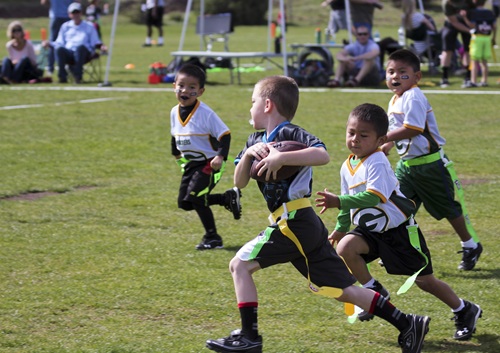
It Takes a Very Different Skill Set to Play Flag: Flag football is all about player speed and maneuverability. It’s less aggressive, more tactical and relies on precise route running and specialized passing and catching.
Flag pulling is an incredibly difficult skill to master as well. This was immediately evident at the Fanatics event, just as it was evident to everyone watching.
“[Team USA Flag’s] skill set was very different than anything we’ve ever seen in the NFL,” said Luke Kuechly, a five-time All-Pro linebacker. “The speed, the quickness, the ability to create space — our inability to put our hands on those guys made the game very difficult.”
Youth athletes can learn that their own skills, which might not lend themselves to tackle football, can play a valuable role in flag.
You Can’t Play Well Without a Knowledge of the Rules: Flag also has a distinct set of rules and while it’s likely a few of the NFL players reviewed them, it was obvious they lacked the deep-seated familiarity with them that made the game second nature to Team USA.
As USA flag football star Darrell “Housh” Doucette was heard saying on a live mic to Yahoo! Sports — and as he has said in the past when the possibility of NFL players trying out for an Olympic team was first suggested — “those guys don’t know this game like we do.” The results backed him up.
The biggest takeaway for youth (and event owners) watching from home: Knowledge will triumph on the field.
Big Names Don’t Win Games: According to reporters at The Athletic, “Anyone wondering whether NFL players could slide into the emerging Olympic sport and dominate needn’t wonder any longer.” And the NFL players were made keenly aware of their shortcomings; after each bad play and penalty, the SNL “Debby Downer” two-note sound effect played, adding insult to injury. It played a lot.
Why is that important? Because it gives kids incentive to join flag football programs, particularly if they do not have existing football skills. Especially at the youth level, potential athletes are often dissuaded from trying out for a program where everyone already has playing experience. With flag just starting, it’s easy to find a league or team where everyone is learning at the same time. It also makes for more robust tournaments with teams at multiple skill levels.
Lesson for youth players: The underdogs were already champions in their own right. All they had to do was play their game. In fact, Team USA has been undefeated in IFAF play since 2018, winning by an average score of 50-17.
Injuries Are Kept to a Minimum: The only significant injury sustained during the game was Rob Gronkowski’s pulled hamstring.
Parents have become increasingly concerned about concussions and the CDC recently released data showing there were more head injuries in tackle football than flag.
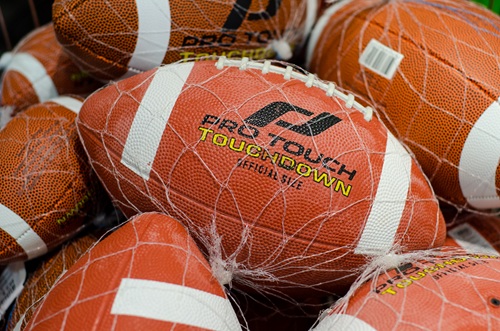
The Business of Flag is Booming: The NFL didn’t have its best day but it was a shining moment for the game of flag, which, according to CNN, is bringing a big boost to sales of equipment.
In fact, notes the article, the sport’s boom has resulted in a nearly 30 percent increase in equipment sales, as reported by the Sport and Fitness Industry Association.
“You start thinking about all those jerseys, all those flag belts, all those footballs, all those participants, all those tournaments and events. Youth sports tourism is a big thing,” pointed out NFL FLAG executive director Izell Reese. “That multi-billion dollar industry of youth sports – flag is a skyrocket for that, and one of the biggest growth sectors.”
Last year, the NFL announced the inception of a pro flag football league for men and women, which has since gained some high-profile backers. According to reports, "The plan is for the new competition to begin play in the runup to flag football’s Olympic debut at Los Angeles 2028, which will act as a springboard for a sport which already claims to have approximately 20 million players globally. In the U.S. specifically, approximately 4.1 million youth play flag football, which is a more than 50 per cent increase since 2020."
Brands Want In: That means more opportunities for the sponsorship of events, teams and players.
“You’re just starting to see the industry start to involve,” said Reese. “You’re starting to see Nike, Adidas, all of these apparel companies now wanting their brands to be donned and worn across collegiate, high school and youth.”
While the Fanatics event might have been a wake-up call to the NFL, it was an even bigger one to the public and to the industry at large. It showcased that flag was a different game entirely, and that a reset was in order.
“Come at it with an open mind” said Doucette prior to taking the field. “Be positive about the game because we’re here to showcase what five-on-five flag football is all about.”
About the Author