

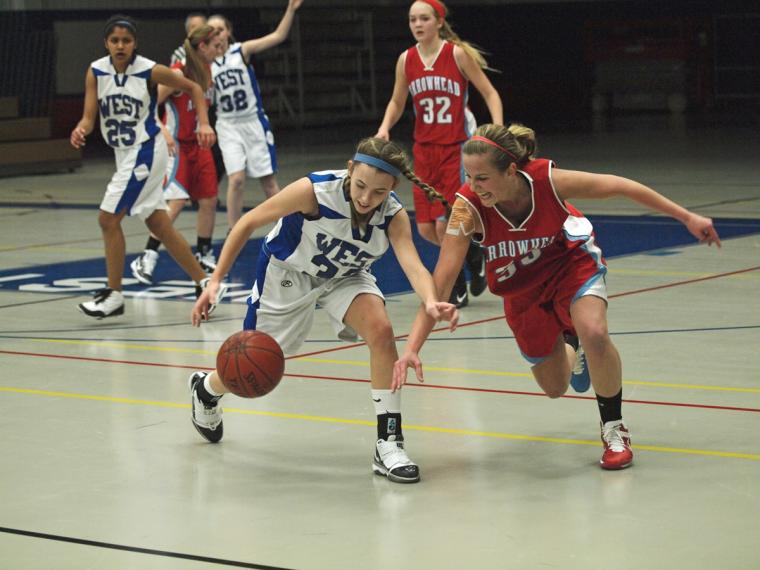
Photo © Louis Horch | Dreamstime.com
Data from the National Federation of State High School Associations shed light on a troubling trend: The decline in girls’ participation in their high school basketball programs. In fact, since 2000, records show a drop of more than 20 percent.
The trend, reported upon by Associated Press, compared the NFHS data with information from the National Sporting Goods Association (NSGA) which noted that “overall basketball participation for girls ages 12-17 dropped from 3.1 million in 2001 to 1.7 million in 2024, a 45 percent decline.”
Whether the industry pins the drop at 20 percent, 45 percent or anything in between, it’s still worth noting. Some states recorded more significant losses in participation than others and it’s worth remembering that not only does the NFHS rely on all states to self-report data but that some states fail to report entirely while others may have data fluctuations caused by the number of schools reporting in any given year, adds AP.
That said, it’s time to examine possible issues that could have factored into the drop.
More Sports Options for Girls in High School: It’s no secret that opportunities are on the grow for high school girls who want to play sports, and that certain sports are accelerating rapidly. Both wrestling and flag football, for example, have made enormous gains in the number of girls playing.

Wrestling and flag are making big noise at the college level as well, and that growth is also grabbing its share of headlines.
The recent news that NCAA had added four new women’s championships, as well as the simultaneous announcement that flag had been added to the list of Emerging Sports for Women, means girls are seeing sports that differ from basketball as having a big future.
The growth of new sport offerings has been particularly noticeable across the past five years, which dovetails into the decline noted.
To be quite clear, having more sports available to girls is a good problem to have; unfortunately, participation in one can come at a cost to another.
Other Traditional Sports Gaining Popularity: It’s not just the upstarts gaining players. Track & field, volleyball and soccer for girls have all increased and remain in in the NFHS top ten list. (And with events like the September 2025 college women’s volleyball match that sold out Memorial Stadium in Lincoln, Nebraska, it’s clear that women’s sports are grabbing more eyeballs and giving high school girls something to aspire to.)
Throw in another permutation of volleyball (beach), which enjoys one of the highest profiles of any Olympic sport, as well as one of the most instantly recognizable college championship sports, and you have yet another tug on the attention of student athletes.
More Sports Specialization, Starting Earlier: Unlike high school students of the past few decades who became three-season athletes, more students are specializing in one sport. They’re also attending camps and working with trainers and coaches to hone their skills. NFHS has pointed out the flaws of this trend, including increased rates of injury, as well as more stress, social isolation and a higher than average number of student athletes burning out; however, the trend persists.
More High School Students Choosing Travel and Club Programs: Back as far as 2019 (but likely even before that), high school administrators were decrying the fact that players were departing for club and travel programs.
“AAU is killing high school basketball,” Marcus Stout told Complex. Stout, a former standout at Fordham University who briefly played overseas, now teaches basketball fundamentals to youth. “Kids don’t have any loyalty to their high school anymore. We live in a microwave society where players and coaches are focused on short-term success rather than building something bigger.”
While AAU was singled out in the article, it is far from the only event owner in the market, officials noted. Additionally, basketball is not the only girls’ sport in jeopardy at the high school level; softball programs (which play in an entirely different season) are also being threatened with cancellation due to low numbers.
Parents Pursuing More Visibility for their Children: In many cases, parents want their children to be seen by college scouts and coaches and want to enroll them in events like combines, camps and showcases. Much has been written about the drive toward athletic scholarships and about the fact that it is highly unlikely that most students will leverage one (or an Olympic or pro career, for that matter) but just as with sports specialization, the trend continues.
Other Opinions: Other suggestions have been offered, many through parent blogs and not necessarily backed by research; these include the idea that girls might see basketball as too physically demanding and not a feminine sport, as well as not having attractive uniforms. (Like we said, not necessarily researched.)
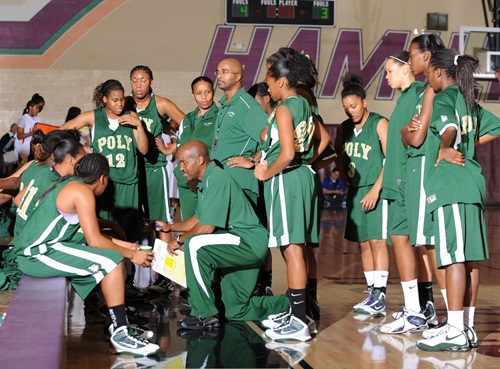
So What’s At Fault? While everyone wants to see a villain in handcuffs, it’s unlikely there is just one cause for lower participation in girls’ high school basketball; in fact, several of these phenomena could be combining to spin up the so-called perfect storm.
Reasons for Optimism: There’s a movement afoot to encourage high school-age students to play for their teams, without sacrificing the chance to compete at a higher level. The Right to Play Act, which went into law in Illinois on January 1, allows high school student athletes to compete in non-school events, or on non-school teams, during the same season in which they play for their school.
Several other states have since announced similar, though not identical, legislation, signaling a sea change that could help boost high school sports as a whole. This, combined with a recent message from the NFHS to keep education first and to view school sports as “the last class of the day,” has been gaining attention.
Dr. Krissa Niehoff, CEO of NFHS, adds that high school sports participation not only encourages students to make friends, but teaches them valuable lessons that prepare them for successful lives and careers. Additionally, she notes, “Surveys have shown that more than 90 percent of CEOs of Fortune 500 companies played high school sports.”
Even actress Dakota Fanning, from the age of 15 to 18, attended high school full time. During those years, she was also a member of the cheerleading squad. And when asked now, she says she wouldn’t have changed a minute of it, including the student athlete experience.
"I didn’t want to miss out on those memories,” she told reporters. "I didn’t feel like [school] was something I wanted to sacrifice,” she says. "And I didn’t have to.”
Related Content
About the Author