

Photo © Petro Kushnaryov | Dreamstime.com
The ongoing conversion of big-box stores to what have become known as “picklemalls,” or franchise clubs dedicated to pickleball, has escaped nobody’s attention.
It’s a great trend and has helped build a robust pipeline of courts in cities where the sports infrastructure in parks and sports clubs has not yet caught up with the player demand.
At the same time, though, basketball courts are disappearing from clubs, who want to use the space for spin rooms, yoga studios and other group fitness programs with a larger revenue stream — as well as, yes, indoor pickleball.
But big-box stores aren’t generally being transformed into “basketmalls,” which would appear to be a ready market — right?
Or maybe not right. While many big-box stores can be retrofitted for pickleball, thanks to portable playing surfaces that roll out over existing floors, the preferred surface for basketball is hardwood — something that is far expensive for a facility operator to purchase and have installed as well as to maintain; in fact, hardwood sports floors are such a specialty trade that entire textbooks have been written about them.
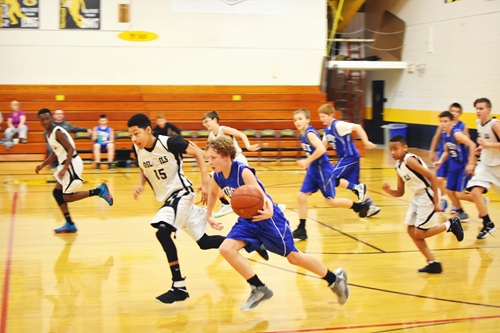
And, noted this article in the Mankato Free Press, changing up facilities is a far more extensive process than most people understand.
In Mankato, town officials studied the cost of converting two buildings that had formerly held a Kmart and a Sears. Unfortunately, said City Manager Pat Hentges, “The retrofitting of the buildings is almost as expensive as building new buildings.”
In both of the former stores, Hentges noted, the ceilings were too low for sports play and modifications would have been prohibitively expensive. Additionally, one building had moisture infiltration issues which would have to be remediated before any sports infrastructure could be added.
In both cases, buying the facilities and making the necessary changes (and that’s before adding the cosmetic work) did not make financial sense.
The ongoing trend of dwindling basketball courts in clubs has players at all levels voicing their concerns. Competitive athletes, including those on school or travel teams, want places to practice in the offseason. Players who take part in gym-based leagues are losing their facilities. Even those who just want to play on a drop-in basis are finding it hard to access courts.
The problem, say those who play regularly, is exacerbated by the fact that these closings leave only two options: Park and municipal courts, which can be crowded with players, and which are often already scheduled to host adult sport and social club games, and private facilities, such as those where travel tournaments play — which similarly are often scheduled in the evenings and on weekends.
In gyms, the trend has been to follow the requests. Over the decades, racquetball and handball facilities were taken out and climbing walls added, while in other areas, functional fitness took over spaces that had been set aside for aerobics.
According to Athletech News, Life Time Fitness has been removing basketball courts and converting the space for pickleball, “but for those who had joined specifically for basketball, it was a blow.”
Players pushed back, blasting the company on social media, circulating petitions and complaining loudly to anyone who would listen.
Adds the Athletech article, “he pushback makes sense when looking at the numbers. According to a Nielsen Sports study commissioned by the International Basketball Federation, more than 3.3 billion people worldwide identify as basketball fans, making it the second-most popular sport on the planet, behind soccer.”
Some options do remain. PickupUSA, a basketball-based fitness club, offers multiple locations (though nowhere near as many as Life Time did). SDM covered the company last year in this article.
About the Author