

Photo © Oasisamuel | Dreamstime.com
The countdown to June 11, 2026, has begun. The 2026 FIFA World Cup is poised to trigger one of the largest coordinated movements of people for a sporting event in history.
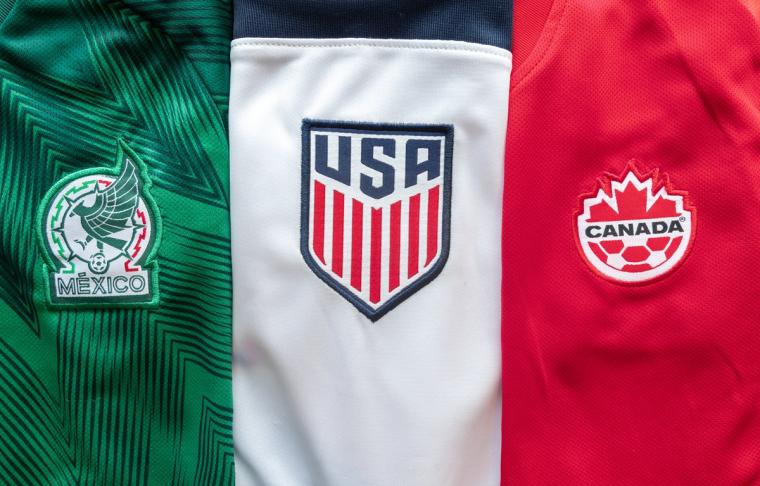
With 48 teams, 104 matches, and 16 host cities across the USA, Canada, and Mexico, its scale and geographic dispersion stand in sharp contrast to Qatar 2022's centralized model.
This tri-nation format fundamentally alters travel dynamics, replacing single-country flows with complex multi-border itineraries that span three currencies, time zones, and regulatory environments.
Continental Hopscotch Reshapes U.S. Domestic Travel
For the United States, which hosts the majority of matches, domestic travel patterns are likely to face significant strain.

The expanded format – 12 groups of four teams advancing to a Round of 32 – encourages high-frequency movement. Fans following one team might travel from Seattle to Philadelphia to Los Angeles within 10 days, requiring airlines to reallocate capacity from traditional business routes to match-day surges.
This shift compresses domestic leisure travel into narrow windows around fixtures, creating bottlenecks unlike those seen in prior World Cups.
Global Demand and Early Planning
FIFA received more than 500 million ticket applications for approximately 7 million available seats. The multiplier effect (each ticketholder bringing two to three companions) creates unprecedented pressure on airports, hotels, and ground transport.
Four years ago, FIFA reported that the 2022 World Cup in Qatar drew roughly 3.4 million total spectators over 29 days, with peak daily arrivals estimated at around 30,000 in Doha.
In contrast, peak 2026 match weekends in major U.S. host cities could see daily arrivals well into the six figures.
A meaningful portion of early hospitality demand is emerging from affluent international markets, including Greater China. Unlike typical leisure travel from the region, which peaks 3-6 months out, World Cup hospitality demand is behaving more like long-range MICE (Meetings, Incentives, Conferences, and Exhibitions) travel.
Corporate buyers are locking in premium options early – often before final match schedules are finalized – to align with budgeting cycles and to get ahead of volatile dynamic pricing.

The Rise of Fixed-Value World Cup Bundles
While public debate fixates on ticket price inflation, corporate and high-net-worth travelers prioritize experience certainty over raw cost.
Hospitality packages deliver fixed-value bundles – multi-match access plus guaranteed logistics – at lower per-match costs than piecemeal premium tickets plus surging hotels.
Early interest is clustered around major business hubs like New York/New Jersey, Los Angeles, and the San Francisco Bay Area, which act as anchors for travelers combining marquee fixtures with existing business ties.
For these travelers, certainty across flights, accommodations and ground transport often outweighs marginal price differences.
Pressure Points in U.S. Infrastructure
The U.S. aviation system faces unprecedented pressure as business travel corridors collide with massive fan movements. Match schedules upend traditional patterns – a midweek Seattle game creates Tuesday arrivals and Friday departures, overwhelming weekend-heavy airline capacity.
Private jet traffic is expected to rise significantly, placing added pressure on Fixed Base Operators at key hubs such as Miami, New York and Los Angeles.
On the ground, "last mile" access becomes critical. Car-dependent host cities (Houston, Kansas City, Dallas) lack public transit, driving rideshare surges and rental car shortages during peak match windows.

Regional Ripple Effects
Primary host city hotel rates are likely to surge well above seasonal norms, pushing significant overflow into nearby secondary markets. Nearby markets such as Fort Lauderdale, San Diego and Jersey City are likely to function as de facto “bedroom communities” for primary host hubs, overloading regional rail like Amtrak's Northeast Corridor and Florida's Brightline.
This creates new twin city travel patterns: commuters traveling 45-90 minutes daily to stadiums, a phenomenon absent from prior World Cups.
Regional airports (Ontario for LA, White Plains for NYC) are expected to see significant traffic spikes as savvy travelers bypass saturated primary hubs.
Cross-Border Complexity Adds New Friction
Canada and Mexico introduce regulatory hurdles absent from single-host World Cups.
U.S.-Canada land border crossings such as Detroit-Windsor and Buffalo-Fort Erie are expected to face traveler volume spikes for Toronto and Vancouver matches.
Mexico-U.S. border crossings (San Diego-Tijuana, El Paso-Ciudad Juárez) enable fans to create dual-stadium itineraries across both countries but will overwhelm existing daily commuter traffic.
Air travel sees new trans-border flows: Vancouver → Kansas City → Monterrey patterns emerge as teams advance, requiring airlines to guarantee seat inventory across sovereign carriers.
The Evolution of “Bleisure” and Predictive Management
The tournament is accelerating the Bleisure trend, the blending of business and leisure. Corporations are utilizing match hospitality for week-long client summits and incentive programs, potentially doubling the average length of stay in host cities from 2.5 nights to 6 nights.

To manage this complexity, the travel industry is increasingly turning to AI-powered predictive modeling. These tools allow travel planners to anticipate disruptions, such as a flight delay in Chicago impacting hotel arrivals in Toronto and adjust itineraries in real time.
This shift toward technology-driven planning is a direct response to the risks of traditional piecemeal booking in a high-demand environment.
A Legacy of Infrastructure
The 2026 World Cup will test the resilience of the North American travel industry, but the event is also expected to leave a lasting legacy through airport expansions, transit upgrades, and the digital transformation of hospitality services.
While the logistical frenzy will be significant, the infrastructure improvements and the adoption of predictive travel technologies will likely benefit the region in the long run.
The tournament is set to prove North America's ability to handle continent-scale events, redefining expectations for future mega-tournaments like the 2031 Women's World Cup or 2031 Rugby World Cup.
For travel and hospitality companies building integrated, technology-enabled solutions, the tournament represents less a one-off disruption and more an inflection point in how large-scale mobility is managed across borders.
About the Author