

All images © Wave Break Media Ltd | Dreamstime.com
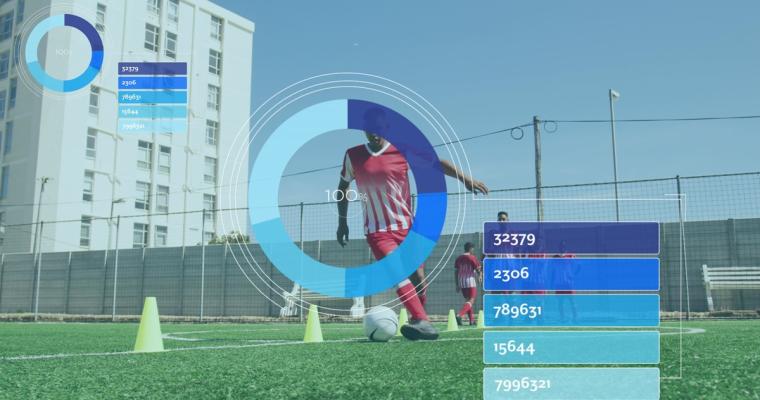
Player analysis technology is far from new; however, it initially appeared only in high-end facilities frequented by youth players who wanted a pro career. Now, however, it’s showing up across a wide range of facilities, including those catering to the youth sports tourism market.
A generation ago, the technology was unheard-of, according to an article in The Globe and Mail.
“The amount of data we can capture and will be able to capture in the coming years is kind of remarkable,” says Ray Giroux, a former NHL defenseman and now COO of Canadian sports technology provider LiveBarn. “When you see what’s happening at the NHL level, five years later that same type of data, the same type of iPad on the bench technology and behind-the-net cams, all these things are going to be available to the youth and amateur players.”
Additionally, an increasing number of event owners are forging partnerships with player analysis services, which also give athletes the ability to market themselves to prospective coaches.
The Intercollegiate Tennis Associate, for example, recently announced a continuation of its partnership with PlaySight. ITA first worked alongside Playsight in 2015. The platform offers coaches detailed match analytics and has extensive AI Video capabilities allowing key points to be detected automatically when creating clips.
ITA CEO Dave Mullins says working with the platform has “enabled fans around the world to experience the high-level, dynamic competition that defines our sport.”

The GameChanger platform, meanwhile, has found favor in the youth basketball landscape, announcing a partnership with Nike Jr. EYBL. GameChanger is touted as having the ability to provide earlier identification of elite talent and to contribute to more data-driven recruitment processes. It is also viewed as allowing parents increased investment in developmental resources.
US Youth Soccer offers a partnership with platform Taka, which allows players to create profiles to showcase themselves to coaches. In 2025, the relationship was enhanced to extend the availability of Taka’s centralized video analysis platform and college recruitment hub to more than 70,000 players competing annually across all levels of The National League.
Teams and clubs within The National League have the option to opt-in for full-service professional analysis, and players will continue to have the option to purchase Taka event packages at select major US Youth Soccer events.
The Globe and Mail article notes that it’s just the tip of the technological iceberg.
“In the next two months, we’re going to be launching integration with Apple Watch, and a player is going to be able to log in and be like, ‘how many shifts did I have? What was my average speed? Who’s the fastest guy in our league?’” says Ron Moravek, co-founder of SportNinja, a Vancouver-based provider of amateur and youth sports league software. “We have a prototype for an LCD scoreboard, so when someone scores a goal, it can immediately put up your stats, the speed you were skating at, and show the highlight, all in real time, and all automated.”
These are far from the only platforms available – and they’re certainly not the only events to forge deals with them. Additionally, youth sports facilities nationwide are upping their game with player analysis
In August, the Youth Sports Business Report notes, Lubbock City Council approved a 20-acre lease in Bill McAlister Park for a $51 million youth sports complex that would include a 1,800-seat championship arena with ASB LumiFLEX Court surface technology. This glass surface provides grip and elasticity for players while including video display capabilities. The technology was featured in this year’s NBA All-Star game, creating a key marketing feature to attract youth teams.
“I think every kid in America is going to wanna come play on this,” Dr. Rhett Butler (a local physician and youth basketball coach) said about the digital court surface. “When my boy saw that we were going to do this, he was overjoyed.”
In fact, Youth Sports Business reports, this is hardly the first (or the last) facility that is expected to upscale its technology in order to drive business. The sports management software market is poised for significant growth, from $8.09 billion in 2023 to a predicted $19 billion in 2029.
Of course, one of the biggest questions is whether technology drives up participation costs. Spoiler alert: Yes. But event owners can control that, according to this article, which lists the factors that should be taken into consideration before listening to a sales pitch. And the first, and perhaps most important of these is to define the data needs.

Additionally (but also important) is the need to find a provider that will be able to accommodate an event’s requirements as it grows and scales up.
“By understanding the factors influencing the cost of sports data, exploring various pricing models and following cost-effective acquisition strategies, sports teams, media companies and enthusiasts can leverage data to optimize performance, enhance fan engagement and make data-driven decisions that propel them toward success,” notes the article.
The combination of youth sports and technology is still in its infancy and still developing in a multitude of different directions. Top Right Soccer, a testing program that introduces standardized metrics into the evaluation of soccer prospects, was recently covered in Athletic Business.
Rather than simply judging how many goals a player can score in a game, tests measure shot velocity, dribbling speed, agility with the ball, acceleration and sprint speed. After testing, prospects are measured against averages from their level, including professional, college or youth players.
Whether this becomes a game changer in the sport remains to be seen; however, it too may be added as venues and programs work to increase their marketability to parents of youth athletes.
About the Author