
Photo © Yekatseryna Netuk | Dreamstime.com
Hotel room construction is up but here’s a micro-trend in that sector that bears watching: The increasing addition of more, and more accessible, hotel rooms, as well as facilities in hotels designed to accommodate users with physical and developmental challenges. And that includes users coming to sports events.
Not surprisingly, that growth is being driven by the wish to travel on the part of more individuals with disabilities, as well as the wish of families (who may have one or more members with disabilities) to have everyone included.
And as with anything else in the travel industry, money is talking in the loudest possible voice. Statistically, the global accessible travel market is expected to reach $135 billion by 2032, with demand growing every year. Additionally, according to the Access in Hospitality Report, nearly three in four guests (71 percent) believe more needs to be done to address a lack of accessibility for disabled people in the hospitality industry.
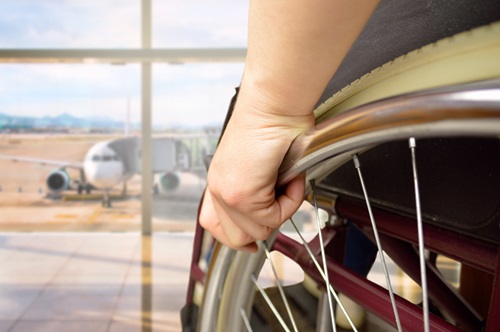
And according to a Harris Interactive/Open Doors Organization study, travelers in the U.S. with disabilities now spend over $13 billion annually on travel-related services. This spending encompasses more than 17 million hotel visits and 9.4 million airline flights each year.
Additionally, by 2030, an expected one in five U.S. residents will be of retirement age. Adults are remaining active as they age, and they are also continuing to travel, including for sports participation. Even when their mobility becomes limited, many want to continue to take part in sports. Accordingly, the National Senior Games Association has non-ambulatory categories for several sports, including bowling, cornhole, shuffleboard and pickleball.
All that has put the onus on hotels to accommodate the needs of all travelers, including those who may or may not be fully ambulatory, or who may have other challenges. 2025 marks the 35th anniversary of the Americans With Disabilities Act, which has helped train a spotlight on the need for more and better accommodation.
Accordingly, many hotels are working to meet the demand. Hilton Hotels, for example, recently partnered with Be My Eyes, the company that connects people who are blind or have low vision with sighted volunteers and companies, through live video and AI, in order to expand access in all its hotels.
Other chains, like Hyatt and Marriott, have also begun embracing accessibility, according to Travel + Leisure.
“We’re in the ‘welcoming all’ business, and we want everyone to feel great, no matter who you are or what your abilities are,” says Apoorva Gandhi, a senior vice president at Marriott International. The company has in recent years worked to go beyond the requirements of the Americans with Disabilities Act, he says: “Small gestures can have a big impact.”
According to the same article, Hyatt recently partnered with the nonprofit KultureCity to understand the needs of neurodivergent travelers and better accommodate those with so-called “invisible disabilities” (like ADHD and dyslexia) before they arrive.
Marriott, meanwhile, is touring its Room for All initiative by working with third-party organizations such as Disability:IN to survey travelers with disabilities about what they’d like to see in a truly inclusive hotel.
“They were not shy — and we didn’t want them to be,” Gandhi recalls.
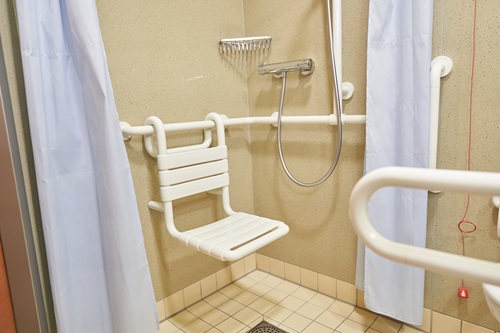
Among the most frequently heard suggestions were larger bathrooms, flexible bed heights, low pile carpeting suited to mobility devices and sliding doors. Ways to implement these solutions are now spelled out in Marriott’s inclusive design guide, which influences how new properties are built.
Mechanical doors for hotel rooms are appreciated by guests with mobility limitations, since in many cases, it is difficult, if not impossible, to open a hotel room door and push inward while using a wheelchair or a walker, much less while trying to carry travel items like computers, tablets or hand luggage.
Guests with disabilities, as well as their families, want hotels to pay attention to what they need when they make reservations, since disability and accessibility are not one-size-fits-all terms. One individual penned an editorial in the New York Times, decrying the fact that an “accessible room” can have multiple definitions; despite the fact that as a wheelchair user, she reserved a room in advance, specifying she needed accommodations that would be usable for her, she often did not get those.
Even at higher-end hotels, I often arrive a day early, knowing that despite booking an “accessible” room online, I may not get one, or I may get a room meant for those with hearing impairments where flashing lights provide a visual notification that someone is at the door, but there’s no guarantee of a bathroom door wide enough for me to enter with my wheelchair.”
Some entities are taking it one step further. Morgan’s Wonderland theme park in San Antonio has announced the construction of the new and fully accessible Morgan’s Hotel™ which is expected to be completed in 2026.
“I am confident that this new hotel concept will remove barriers and tremendously enhance the lodging experience for everyone,” said Gordon Hartman, founder of Morgan’s, the entity that includes Morgan’s Sports (a fully accessible sports park). “This will certainly be a hotel for everyone including those with special needs who, going forward, will feel more included, valued, and fulfilled.”
The hotel’s design features wider hallways, larger guest rooms, and easy access to elevators, as well as specialized services, including staff trained in disability etiquette, assistance with mobility devices and accommodations such as hearing aid loops and sensory-sensitive colors and lighting. Morgan’s is now in talks with major hotel chains who would like to add this property to their stable.
In recent years, there has been an increase in the attention being paid to another aspect of hotel accessibility (and accessibility overall, including in sports events): the website. The official ADA website includes a page discussing various ways of making a website inclusive.
The problems of not having accessibility, or not serving customers with disabilities as promised, can result in legal action, as occurred in three hotels in the Seattle area. It can also result in bad publicity that lasts longer than the time it takes to make changes.
And when it comes down to it, those changes should already be made, say users; individuals with disabilities should not have to be the ones pushing for change, nor should they have to suffer from being viewed as chronic complainers because they advocate for the access they need to be participating members of society.
“People with disabilities are already burdened enough,” added the woman who wrote the editorial in the New York Times. “We are burdened with the task of enforcing a federal statute that requires lengthy and expensive lawsuits without guarantee of remedy. We are burdened by the stigma of these lawsuits and the societal narrative that people with disabilities are always looking for a handout, despite the good work that some of these tester lawsuits may do.”
Airports are also paying attention to the needs of travelers with physical, developmental and even invisible challenges. The Federal Aviation Administration website has a section devoted to the issue, in which amenities, design and construction are addressed.
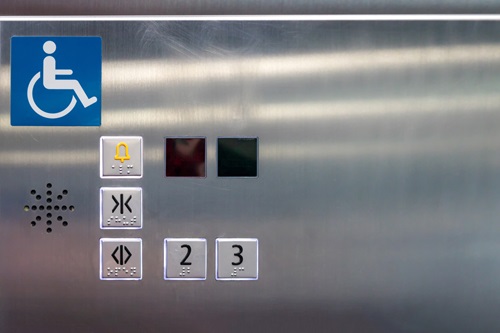
Worth noting: Ontario Airport recently celebrated the ADA’s anniversary, and spotlighted key improvements driven by the ADA, including more accessible terminals, assistance services for those in wheelchairs, enhanced communication systems, service animal relief areas and staff training/non-discrimination standards.
Ontario isn’t alone, according to the Associated Press, which notes, “Nearly a dozen airports, from Phoenix to Kansas City, Missouri, in the last few years have modified their facilities and operations to be more welcoming to another user group whose challenges may be largely invisible: Those with dementia. The airports have added amenities like quiet rooms and a simulation center where travelers with dementia can learn about flying or get a refresher.”
AP further notes that the group worked with London’s Gatwick Airport to create a visual cue for airport workers: the Hidden Disabilities Sunflower lanyard program. Light green lanyards with a sunflower pattern are issued to anyone who wants to subtly indicate they or a travel companion a not-as-visible disability. The lanyards let airport and airline personnel know the traveler may need more attention and perhaps need information repeated. The program is now in more than 200 airports worldwide.
About the Author