

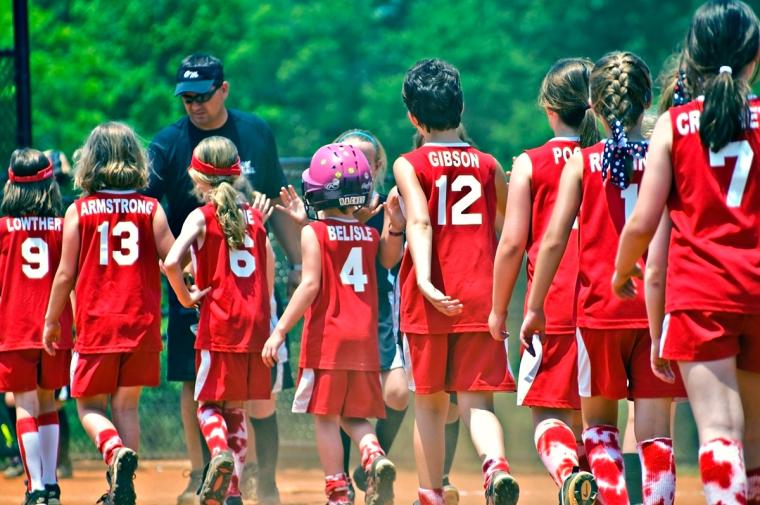
All photos © Susan Leggett | Dreamstime.com
A new survey of nearly 3,500 United States coaches from 66 sports delivers both good news and bad.
First, the good: “Building Safer Sports Together,” a first-of-its-kind report released by the Denver-based U.S. Center for SafeSport, found that 92% of coaches agreed that coaching has had a positive impact on their lives. What’s more, three-quarters of them (76%) felt confident that any concerns raised about athlete safety would be appropriately addressed by their sports organizations.
Now, the not-so-good: Nearly half of responding coaches (46%) said they’ve been the target of verbal harassment or abuse; of those, 56% of indicated the most common source of the mistreatment was parents of athletes. Additionally, 46% of coaches were aware of other coaches who have shouted at an athlete in a frightening, threatening or belittling manner sometime in the past five years. And more than one-third (35%) of coaches claimed that barriers to implementing and upholding athlete safety policies were related to organizational communication, fairness and mistrust.
These findings and more, detailed in the 94-page report, are noteworthy and in keeping with the nonprofit organization’s Congress-backed mission to end sexual, physical and emotional abuse of all athletes.
“When we create cultures where safety is foundational rather than an afterthought, coaches are free to do what they do best: mentor, teach and inspire,” said Paralympian April Holmes, who won gold medals in track & field in 2008 and bronze medals in 2004 and 2012 and also is Board Chair Emeritus of the U.S. Center for SafeSport. “Our commitment is to ensure that athlete safety and competitive success aren’t competing values, but rather complimentary pillars of a healthy sporting environment where achievement flourishes, athletes pursue excellence and coaches feel supported.”
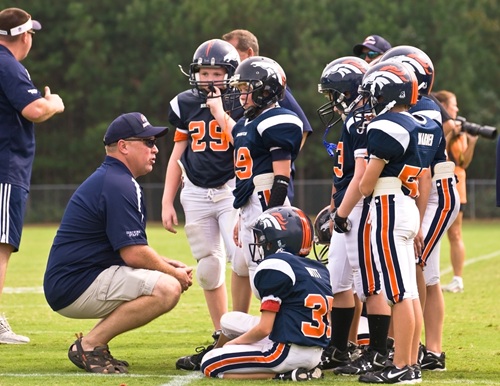
When it comes to coach support, survey respondents most frequently identified the need for increased access to educational and training resources, according to the report. Coaches noted the importance of training, workshops and other learning opportunities — not only for themselves but also for parents and volunteers.
ESPN.com noted from the report that “the most common bad behaviors cited were coaches initiating hugs and shouting at or belittling athletes. Although less common, more than one in 10 respondents said that they had also observed, at least once in the past five years, coaches having sexual relationships with adult athletes and making inappropriate comments about sex or the athlete’s body."
Additionally, the report noted, "More than half of female respondents said they had experienced more emotional abuse as athletes. They were also more likely to be burned out. Nearly 60% of female respondents said that they faced discrimination in their roles as coach, as compared to only a quarter of the men. More than one in 10 of the female respondents also experienced sexual harassment, per the survey’s findings. Coaches with disabilities cited experiences of discrimination at higher rates than those without disabilities, according to the survey.”
Officials at the Center for SafeSport say they will use the survey findings to spur dialogue in this country and abroad about how to better create safe sport environments and improve athlete safeguarding; enhance the Center’s training, education and engagement with stakeholders; prepare further research ahead of the 2028 Summer Olympic and Paralympic Games; and continue evaluating and improving the center’s approach and processes.
That last one might be particularly critical to these efforts. As ESPN.com reports, the U.S. Center for SafeSport, over its nine-year history since being established by Congress in 2017, “has been the subject of controversy regarding its effectiveness and management.” Ju’Riese Colón, the center’s former chief executive, left the organization in 2025 following scandals involving employee misconduct and mismanagement. Then, last month, an external audit of 114 cases handled by former U.S. Center for SafeSport investigator John Krasley led to the reopening of three of those cases.
“The audit … also found that while [Krasley] largely acted professionally with people he interviewed while working for SafeSport, some said he utilized an informal interview style that felt ‘overly familiar’” and in which he “failed to establish appropriate professional boundaries,” according to ESPN.com.
Meanwhile, the survey findings by the U.S. Center for SafeSport arrive two years after results of a National Association of Sports Officials survey in which almost 40% of the 35,813 participating officials claimed parents cause “the most problems with sportsmanship;” nearly a quarter of respondents blamed coaches. Additionally, when asked “Who is most responsible for improving sportsmanship?” more than half of all respondents (51%) said coaches, followed by parents (23%).
Coaches (at least some of them) recognize their increasingly vital roles not only in shaping young athletes but also in providing safe environments for those athletes.
For example, “[t]he Catholic Youth Organization in the Diocese of Cleveland has been trying to ratchet down the pressure on young athletes,” The New York Times reported in late December, citing a 2024 report by the American Academy of Pediatrics about burnout in young athletes. “At a training session in August, about 120 football, soccer, volleyball and cross-country coaches met for three hours to learn how to create safe spaces for children. ‘Kids start to drop out by 12, 13 because it’s not fun and parents can make it not fun,’ said Drew Vilinsky, the trainer.”
About the Author