

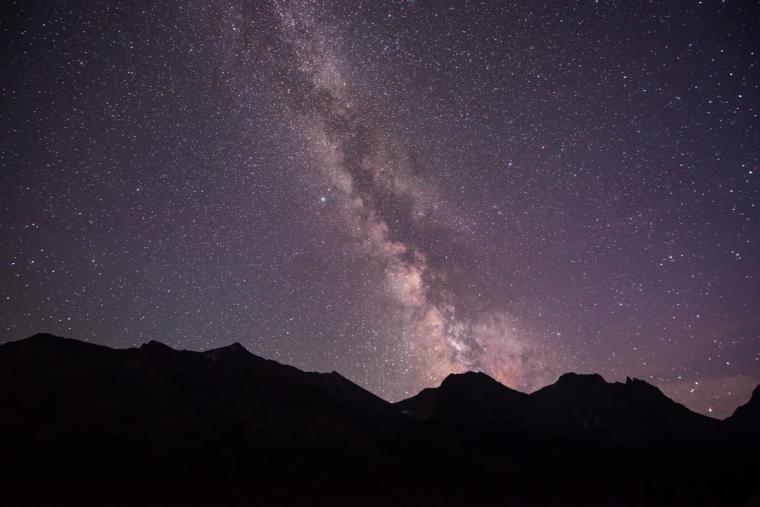
Photo © Jay Seeley | Dreamstime.com
Areas with planetariums or science centers, in addition to their sports facilities, could see a boost in tourism, thanks to a bonanza of celestial events in the fall and winter of 2025. And if event owners and destinations are savvy, they’ll partner to promote these attractions.
From eclipses to supermoons to meteor showers and more, the next two seasons are shaping up to give starry eyes not just to astronomy buffs and nature-curious tourists who often watch for such events but to kids who have never looked through a telescope before.
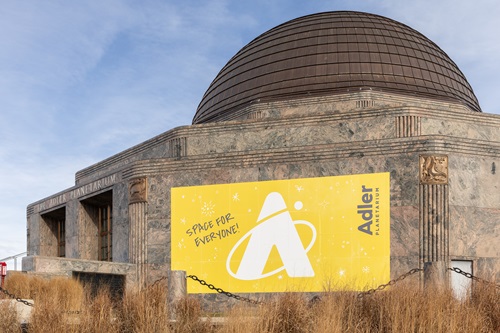
While dark sky tourism, which takes place in areas certified by Dark Sky International, are always prime spots for stargazing, there are plenty of family-oriented science centers in urban and suburban areas throughout the USA that are equally desirable. Children’s museums are another excellent option. (Bonus: Family science centers, children’s museums and planetariums are all designed with kids in mind.)
Proponents of celestial tourism, no matter where it is conducted, say it is an excellent way of raising awareness of the interest in STEM (Science, Technology, Engineering and Math) as well as in the outdoors, and conservation as a whole.
Here are some of the events on the calendar; the following information comes from the site, seasky; more details, as well as other links, can be found there.
- September 7 - Full Moon. The moon will be located on the opposite side of the Earth as the Sun and its face will be fully illuminated. This phase occurs at 18:10 UTC. This full moon was known by early Native American tribes as the Corn Moon because the corn is harvested around this time of year. This moon is also popularly known as the Harvest Moon. The Harvest Moon is the full moon that occurs closest to the September equinox each year.
- September 7 - Total Lunar Eclipse. A total lunar eclipse occurs when the moon passes completely through the Earth's dark shadow, or umbra. During this type of eclipse, the moon will gradually get darker and then take on a rusty or blood red color. (The USA won’t be seeing this as it will be visible only in Asia and Australia, as well as the central and eastern parts of Europe and Africa. (NASA Map and Eclipse Information).
- September 21 - New Moon. The moon will located on the same side of the Earth as the sun and will not be visible in the night sky. This phase occurs at 19:55 UTC. This is the best time of the month to observe faint objects such as galaxies and star clusters because there is no moonlight to interfere.

Many science-based attractions offer children the opportunity to be photographed as astronauts, scientists and other heroes. Photo © Lightfieldstudiosprod | Dreamstime.com September 21 - Partial Solar Eclipse. A partial solar eclipse occurs when the moon covers only a part of the sun, sometimes resembling a bite taken out of a cookie. A partial solar eclipse can only be safely observed with a special solar filter or by looking at the sun's reflection. Again, the USA is out of luck, since this partial eclipse will only be visible in New Zealand, Antarctica and the southern Pacific Ocean. (NASA Map and Eclipse Information)
- September 21 - Saturn at Opposition. The ringed planet will be at its closest approach to Earth and its face will be fully illuminated by the sun. It will be brighter than any other time of the year and will be visible all night long. This is the best time to view and photograph Saturn and its moons. A medium-sized or larger telescope will allow the vest viewings of Saturn's rings and a few of its brightest moons.
- September 22 - September Equinox. The September equinox occurs at 18:17 UTC. The Sun will shine directly on the equator and there will be nearly equal amounts of day and night throughout the world. This is also the first day of fall (autumnal equinox) in the Northern Hemisphere and the first day of spring (vernal equinox) in the Southern Hemisphere.
- September 23 - Neptune at Opposition. The blue giant planet will be at its closest approach to Earth and its face will be fully illuminated by the Sun. It will be brighter than any other time of the year and will be visible all night long. This is the best time to view and photograph Neptune. Due to its extreme distance from Earth, it will only appear as a tiny blue dot in all but the most powerful telescopes.
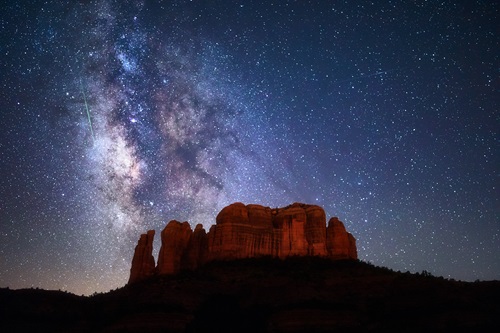
Multiple meteor showers will take place in this part of 2025. Photo © John Sirlin | Dreamstime.com October 7 - Full Moon, Supermoon. The moon will be located on the opposite side of the Earth as the Sun and its face will be fully illuminated. This phase occurs at 03:49 UTC. This full moon was known by early Native American tribes as the Hunters Moon because at this time of year the leaves are falling and the game is fat and ready to hunt.
This moon has also been known as the Travel Moon and the Blood Moon. This is also the first of three supermoons for 2025. The Moon will be near its closest approach to the Earth and may look slightly larger and brighter than usual.
- October 7 - Draconids Meteor Shower. The Draconids is a minor meteor shower producing only about 10 meteors per hour. It is produced by dust grains left behind by comet 21P Giacobini-Zinner, which was first discovered in 1900.
The Draconids is an unusual shower in that the best viewing is in the early evening instead of early morning like most other showers. The shower runs annually from October 6-10 and peaks this year on the the night of the 7th. Unfortunately, the glare from the nearly full moon will block most of the meteors this year.
Best viewing will be in the early evening from a dark location far away from city lights. Meteors will radiate from the constellation Draco but can appear anywhere in the sky.
- October 21 - New Moon. The Moon will located on the same side of the Earth as the sun and will not be visible in the night sky. This phase occurs at 12:26 UTC. This is the best time of the month to observe faint objects such as galaxies and star clusters because there is no moonlight to interfere.
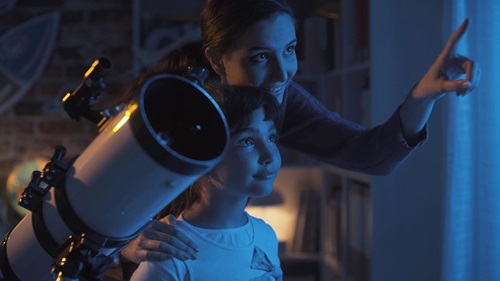
Family-friendly attractions can lead to an increased interest in the sciences. Photo © Andrea De Martin | Dreamstime.com October 21, 22 - Orionids Meteor Shower. The Orionids is an average shower producing up to 20 meteors per hour at its peak. It is produced by dust grains left behind by comet Halley, which has been known and observed since ancient times. The shower runs annually from October 2 to November 7.
It peaks this year on the night of October 21 and the morning of October 22. This is an excellent year for the Orionids. The moon will be absent all night long, leaving dark skies for what should be an excellent show. Best viewing will be from a dark location after midnight. Meteors will radiate from the constellation Orion but can appear anywhere in the sky.
- October 29 - Mercury at Greatest Eastern Elongation. The planet Mercury reaches greatest eastern elongation of 23.9 degrees from the sun. This is the best time to view Mercury since it will be at its highest point above the horizon in the evening sky. Look for the planet low in the western sky just after sunset.
- November 4, 5 - Taurids Meteor Shower. The Taurids is a long-running minor meteor shower producing only about 5-10 meteors per hour. It is unusual in that it consists of two separate streams. The first is produced by dust grains left behind by Asteroid 2004 TG10. The second stream is produced by debris left behind by Comet 2P Encke. The shower runs annually from September 7 to December 10. It peaks this year on the night of November 4.
Unfortunately, the glare form the full moon (to be discussed next) will hide most of the meteors this year. Best viewing will be just after midnight from a dark location far away from city lights, as well as from planetariums and other facilities set up with science in mind. Meteors will radiate from the constellation Taurus but can appear anywhere in the sky.
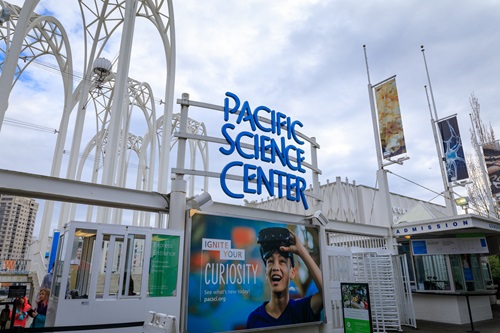
The Pacific Science Center, located in Seattle, has a planetarium. Photo © Yooran Park | Dreamstime.com November 5 - Full Moon, Supermoon. The moon will be located on the opposite side of the Earth as the sun and its face will be fully illuminated. This phase occurs at 13:21 UTC.
This full moon was known by early Native American tribes as the Beaver Moon because this was the time of year to set the beaver traps before the swamps and rivers froze. It has also been known as the Frosty Moon and the Dark Moon. This is also the second of three supermoons for 2025. The moon will be near its closest approach to the Earth and may look slightly larger and brighter than usual.
- November 17, 18 - Leonids Meteor Shower. The Leonids is an average shower, producing up to 15 meteors per hour at its peak. This shower is unique in that it has a cyclonic peak about every 33 years where hundreds of meteors per hour can be seen. That last of these occurred in 2001.
The Leonids is produced by dust grains left behind by comet Tempel-Tuttle, which was discovered in 1865. The shower runs annually from November 6-30. It peaks this year on the night of the 17th and morning of the 18th. This should be an excellent year for the Leonids.
The thin, crescent moon won't be much of a problem and skies will be dark enough for what should be a great show. Best viewing will be after midnight from a dark location (like a science center, planetarium, Dark Sky certified area – or any place where there is little ambient light). Meteors will radiate from the constellation Leo but can appear anywhere in the sky.
- November 20 - New Moon. The moon will located on the same side of the Earth as the sun and will not be visible in the night sky. This phase occurs at 06:49 UTC. This is the best time of the month to observe faint objects such as galaxies and star clusters because there is no moonlight to interfere.
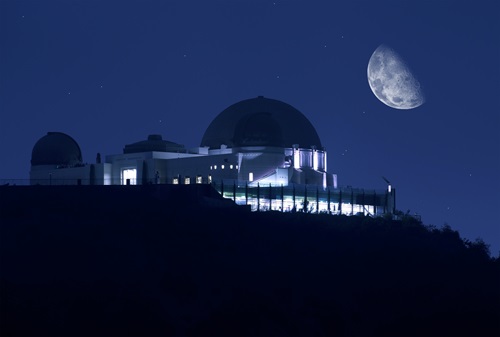
The Griffith Observatory in Los Angeles. Photo © Welcomia | Dreamstime.com November 21 - Uranus at Opposition. The blue-green planet will be at its closest approach to Earth and its face will be fully illuminated by the sun. It will be brighter than any other time of the year and will be visible all night long. This is the best time to view Uranus. Due to its distance, it will only appear as a tiny blue-green dot in all but the most powerful telescopes.
- December 4 - Full Moon, Supermoon. The moon will be located on the opposite side of the Earth as the sun and its face will be fully illuminated. This phase occurs at 23:15 UTC. This full moon was known by early Native American tribes as the Cold Moon because this is the time of year when the cold winter air settles in and the nights become long and dark.
This moon has also been known as the Long Nights Moon and the Moon Before Yule. This is also the last of three supermoons for 2025. The moon will be near its closest approach to the Earth and may look slightly larger and brighter than usual.
- December 7 - Mercury at Greatest Western Elongation. The planet Mercury reaches greatest western elongation of 20.7 degrees from the sun. This is the best time to view Mercury since it will be at its highest point above the horizon in the morning sky. Look for the planet low in the eastern sky just before sunrise.
- December 13, 14 - Geminids Meteor Shower. The Geminids is the king of the meteor showers. It is considered by many to be the best shower in the heavens, producing up to 120 multicolored meteors per hour at its peak. It is produced by debris left behind by an asteroid known as 3200 Phaethon, which was discovered in 1982.
The shower runs annually from December 7-17. It peaks this year on the night of the 13th and morning of the 14th. The second quarter moon will block some of the fainter meteors this year, but the Geminids are so numerous that it should still be a good show. Best viewing will be from a dark location after midnight. Meteors will radiate from the constellation Gemini but can appear anywhere in the sky.
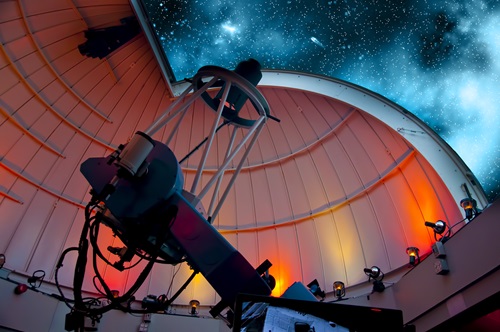
Telescopes at observatories create better observation experiences. Photo © Vlad Podkhlebnik | Dreamstime.com December 20 - New Moon. The Moon will located on the same side of the Earth as the sun and will not be visible in the night sky. This phase occurs at 01:45 UTC. This is the best time of the month to observe faint objects such as galaxies and star clusters because there is no moonlight to interfere.
- December 21 - December Solstice. The December solstice occurs at 15:02 UTC. The South Pole of the earth will be tilted toward the Sun, which will have reached its southernmost position in the sky and will be directly over the Tropic of Capricorn at 23.44 degrees south latitude. This is the first day of winter (winter solstice) in the Northern Hemisphere and the first day of summer (summer solstice) in the Southern Hemisphere.
- December 21, 22 - Ursids Meteor Shower. The Ursids is a minor meteor shower producing about 5-10 meteors per hour. It is produced by dust grains left behind by comet Tuttle, which was first discovered in 1790.
The shower runs annually from December 17-25. It peaks this year on the night of the 21st and morning of the 22nd. The thin, crescent moon will set early in the evening, leaving dark skies for what should be a good show.
Best viewing will be just after midnight from a dark location far away from city lights. Meteors will radiate from the constellation Ursa Minor but can appear anywhere in the sky.
More family-friendly information on skywatching, as well as on activities kids (and sports teams) can take part in can be found at NASA’s SpacePlace.
About the Author