

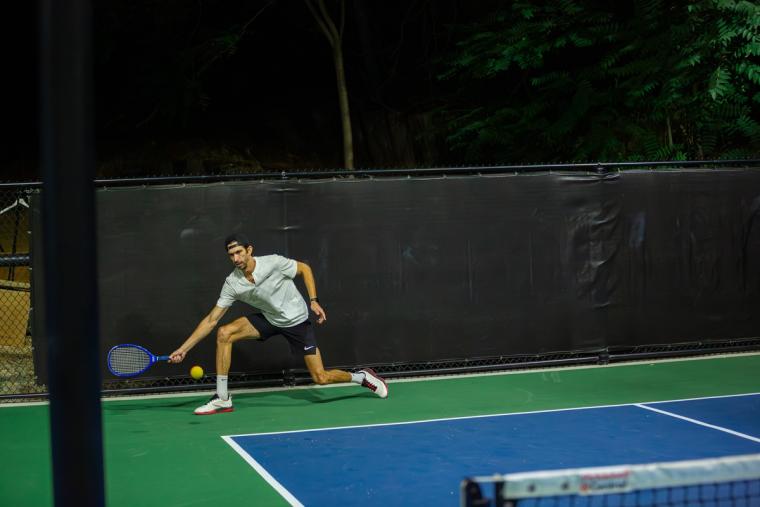
All photos courtesy of TYPTI
TYPTI has entered the chat.
The new sport, which uses a strung racquet and a foam ball, is being heavily promoted by its founder, who talks up the potential for pro and amateur tournaments and the opportunities to capitalize on unused courts.
At least one event has already been held; an all-skill level national competitive play circuit began with an inaugural event on February 25 at the Calabasas Pickleball Club.
According to press materials, the professional division will guarantee more than $100,000 in total prize money with at least $500,000 of prize money events in year one.
Year two events will have more than $1,000,000 in prize money featuring an integrated draw allowing players from all over the US to participate locally to start.
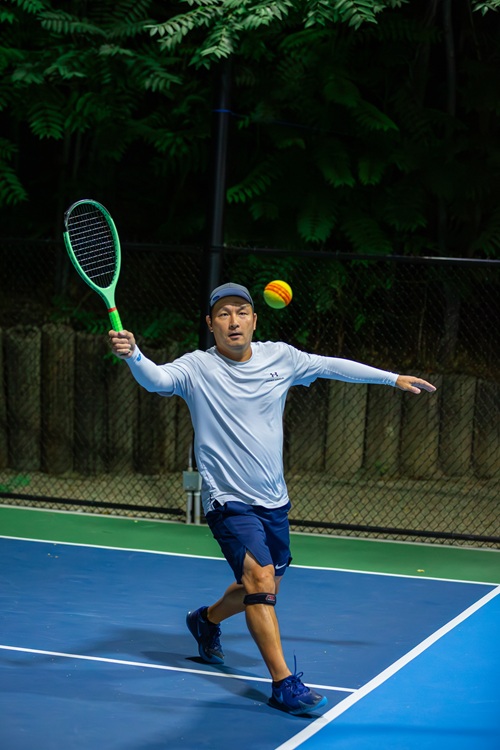
The sport was designed by Steve Bellamy, founder of the Tennis Channel, who says it can help capitalized on unused courts.
“We’re creating an infrastructure of tennis and pickleball clubs, entrepreneurs, family offices, racquet sport mavens and lovers and cities who understand the economic impact of participatory sports,” Bellamy said.
“We’re sanctioning tournaments and league teams and looking for brands wanting to leverage sports to market their products. We’re also scouring the country for amazing players who can be the first generation of TYPTI stars. Basically, we’re building a really smart racquet sport and creating a community for the infrastructure.”
The sport has been described as “a mixture of badminton and tennis.” Press materials state that it is almost noiseless and easy on the body, with low shock at impact and no overhead serve. Additionally, promotional materials note, the sport is easy for beginners to pick up.
But for all its advantages, TYPTI brings up some important talking points that could reveal headwinds to its widespread adoption:
The Concept: TYPTI, for all its hype, is only the latest entry into the market of short-court sports that use foam or low-compression balls. USTA has already championed its 36-foot and 60-foot tennis, which uses regular tennis courts with additional lines for short-court play (the USTA term is “blended lines”) and POP Tennis has gained popularity, as have Touch Tennis and Soft Tennis (detailed here).
The Facilities: TYPTI is marketed as a way to maximize use of existing pickleball courts. However, pickleball is picking up players more rapidly than any other sport in the market today, and its player numbers are outpacing its court supply.
The attempt to put a new sport on existing courts could mirror pickleball’s early years, when park and rec departments tried to line tennis courts for pickleball play as well, leading to congested facilities, as well as to arguments over who had the right to use the space.
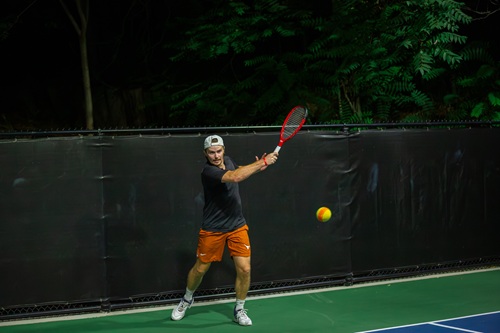
The Equipment: TYPTI is still in its infancy so its equipment can not be accessed on a widespread basis in retail or e-tail outlets; it is likely that for the present, buyers will use the sales page of the TYPTI website. Purpose-built racquets (which are 22 inches) cost $199, while foam balls are $17.99 for a package of three. Additionally, all strung racquets need periodic restringing by a professional to keep them playing their best.
In a recent interview with Sports Destination Management, Bonnie McLaughlin, Vice President, External Affairs & Industry Relations with the Sports & Fitness Industry Association, had noted that the cost of equipment remains an obstacle for many parents whose children want to take up a sport.
In fact, McLaughlin notes, more than 40 percent of parents who were surveyed cited cost as a limiting factor when signing up their children for sports.
This information was borne out by that gleaned from the Team Sports Parents Insights Report produced by SFIA. In that report (summarized here), parents voiced concerns over costs of equipment, stating that lower-priced options, bundled options or family discounts could help reduce the burden and drive more frequent purchases.
Should TYPTI become more widespread and should racquets become available at a lower price point, as well as on the secondary market, this may not be as much of an obstacle.
One of the advantages enjoyed by established racquet sports is the presence of inexpensive equipment everywhere from big-box stores to thrift shops, creating an affordable entry point for beginners.
The Events: The TYPTI website has a tournament section; however, no upcoming events have been listed yet. There is teaser copy for the Amateur Tour as well as for the TYPTI World Championships.
Note: Both events invite interested destinations to bring events to their market.
There are 19 male players listed in the sport’s official rankings section; the website will allow users to search according to other criteria (men, women, Juniors, Open, etc.) once those are added. However, at the moment, there are no entries in women or juniors, which creates a challenge in implementing TYPTI as a sport for a larger crowd, or as the big trend (the mantle pickleball now wears).
So, of course, the question has to be asked: Why take the risk of introducing a new racquet sport to a marketplace that already offers a number of options?
Bellamy says the mission is to complement, not compete.
“Our goal is not to cannibalize other racquet sports like tennis and pickleball, but instead bring the 25 million former players in the U.S. who don’t play anymore back on the court. If they play TYPTI and then migrate to tennis, pickleball, badminton, table tennis or padel, then that will be a huge success for the entire industry.”
About the Author