

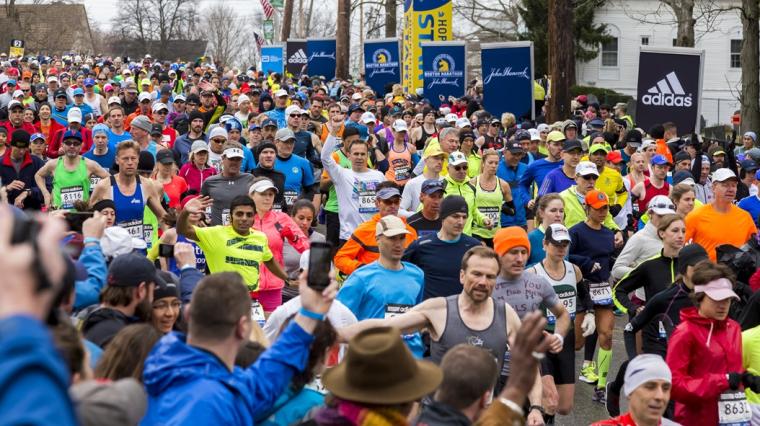
Photo © Marcos Souza | Dreamstime.com
Recently, MarathonFoto, a company that provides race day photography (and specifically, triumphant finish line photos) announced it had achieved record growth so far this year.
Having compiled data to compare for the first half (H1) of 2025, and comparing that to data from H1 2024, MarathonFoto saw growth across all clients, with 105 races photographed, a 12 percent year on year increase.
That’s pretty impressive, and even more so when you look at the numbers:
- 678,899 athletes photographed, an increase of 9 percent
- 581 photographers hired/contracted, an increase of 4 percent
- An average of 53 images captured of each athlete, an increase of 29 percent
- A total of 18,472,499 images captured, an increase of 20 percent
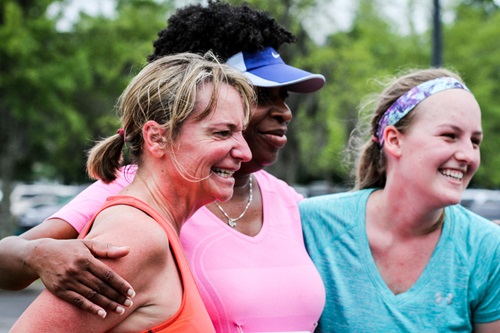
From those numbers, it has become clear: Race day photography has evolved from a nice-to-have amenity for marathons, to a must-have. Race directors are responding accordingly.
Spurring that growth is social media. Runners want to prove to the world (or at least the world wide web) that they finished a marathon. There isn’t a much more conclusive way to do that than professional photos.
“Races understand that their best marketing is a happy participant,” Running USA’s executive director, Jay Holder, told SDM in an exclusive interview. “What better way to ensure satisfied customers share their experience with their friends than to provide them with photos to post on social media?”
In fact, the need to wring out every last ounce of triumph has led to on-course photography, in which profiles can be created for each runner whose bib number is visible in shots.
MarathonFoto’s website, for example, notes, “MarathonFoto captures runners at several locations along the event race course, including the all-important finish line, plus post-finish locations where runners can catch their breath and strike a celebratory pose. Race participants will also receive a link to their own personalized race-branded ordering page at MarathonFoto.com.” (Individuals can then choose to purchase photos for a cost.)
There’s another advantage for race directors who opt to use a photo service, adds Holder, and it has to do with the business of racing.
“It's a great opportunity for sponsors,” he states. “It's a very valuable asset for brands to put their logos on as it goes not just to the participants, but the participants' large digital networks.”
But if they’re going to share something, runners want to make sure they look their best (yes, even in the midst of, and after, running 26.2 miles). That’s why there are blogs dedicated to giving runners tips for looking like their best while running as well as while crossing the finish line.

There are also, sadly, “finish line photo fail” sites, where people’s expressions of looking angry, tired, goofy or frustrated can live on in infamy and serve as a cautionary tale for others. (Some of these, the sites note, are preventable; for example, runners routinely sabotage photos by habitually looking down at their phones throughout the course, including at the finish line.)
By the way, race photography has also been instrumental in helping race directors identify those who are cheating in races by stealing other runners’ bibs and by cutting the course.
But if race photos are one trend, what are some others?
We’ve already seen that technology is on the rise in marathons (as it is everywhere else), and that runners want race directors to have mobile apps with a number of interactive features. Many runners are seeking ways to register and pay fees from their phones, and many marathons have seen a demand for mobile check-in as well.
There are also other technologies, Nancy Hobbs told SDM. Hobbs, the founder and executive director of the American Trail Running Association, has seen a rising demand for other electronic amenities.
“There’s a demand for GPS tracking of runners and for livestreaming events, which enables people to watch both as spectators and fans; it is also used by athletes’ crews who are onsite.”
Trail racing and endurance races, she adds, “absolutely” use photography.
According to ABC News, running communities are also tremendously important, particularly to runners who are just beginning to enter large events. The challenge of a marathon (or a half marathon, or even a race of a shorter distance like a 5K) is less intimidating for beginning runners when they are surrounded by others with the same goal.
Accordingly, running stores as well as event owners have worked to develop or to partner with local run clubs that attract runners who want to train together. Clubs often host programs such as regular meet-ups for runs of varying distances, discussions with experts on nutrition, sports medicine, shoes or sportswear; and training programs for everyone from first-time runners who want to complete their first 5K to those who want to improve marathon split times.
Hobbs says that event owners who are savvy have tapped into other runner-friendly measures, including “DEI policies for events and deferments for pregnancy; we see this at ultras primarily and in events that are expensive to enter.”

Speaking of ultras, endurance events (defined as races where a runner covers long distances) are proliferating and also becoming more accessible and widespread. The Guardian notes:
“Where once just a few mad explorers pushed themselves to these limits, now amateur sport is turning into a feat of ultra-endurance, from 4,000km bike rides to 100 mile runs. But … why?
“There are specific aspects to physical challenges like this,” says Dr Carla Meijen, a sport and exercise psychologist and assistant professor at the University of Amsterdam. “They offer a mix of endorphins, feeling fitter and observing progress.”
She says the increased accessibility of these events is one of the reasons they’re becoming more popular. For some, succeeding at something so extreme feels like an elite club for non-elite athletes. “People are reading about them and seeing posts on social media, so there is a greater pool of knowledge. They see others like them taking part and want to give it a try, to be part of the culture.”
About the Author