

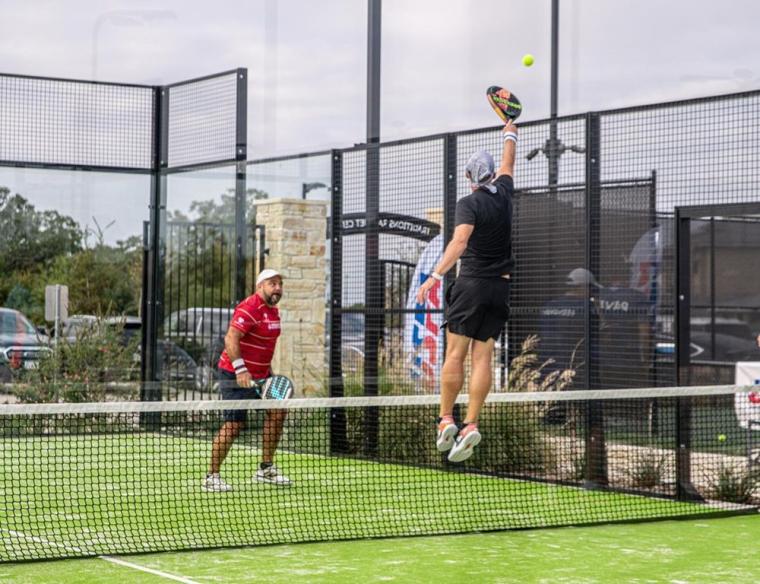
Photos courtesy of United States Padel Association
It has been called “pickleball’s posher, privileged cousin” (thank you, Washington Post). It has also been defined (by The Times) as “the fastest growing sport in the world.”
But even without the hype, the hoopla and the hyperbole, padel is gaining traction in the USA, where it is on the cusp of its biggest growth yet.
Need a full description of the sport? Here it is. But in short, padel is a closed-court sport that resembles both pickleball and tennis, with elements of squash and racquetball thrown in. It is played in doubles on a court with a synthetic turf surface. The court walls are made of glass and metal mesh (similar to chain link fence). It can be played indoors or outdoors.
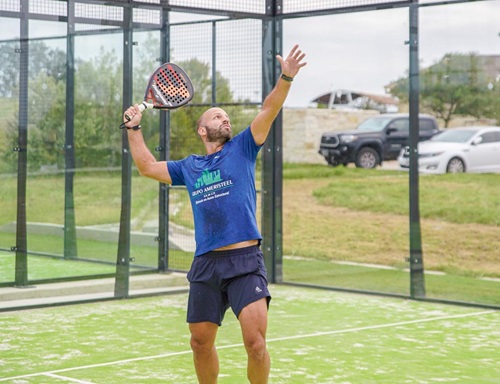
Wondering how to pronounce it? Good question. It is often pronounced “paddle,” although "puh-DELL" is also used.
While the scoring system in padel is similar to that of tennis, the equipment is different. Padel is played with a racquet that is more paddle-like in shape and design. The racquet is solid (like a pickleball paddle), only heavier and with air holes (approximately the size of a thumbtack or pushpin head) running through it. Padel is played with a padel-specific ball that is slightly smaller and less pressurized than a tennis ball, resulting in a lower, slower bounce.
The sport is governed internationally by the International Padel Federation (FIP) and within the USA, by the United States Padel Association (USPA).
And according to all sources, it’s ready to take off here in the USA.
Sporting Goods Business (SGB) notes that Playtomic’s “Global Padel Report 2025” found padel clubs increased 22 percent worldwide in 2024, with significant growth in Southern Europe.
In the U.S., the sport is still in its early stages, but faster expansion is expected in 2026, with what is termed “real acceleration” projected for 2027.
The study from Playtomic, an app for booking courts for racquet sports, including tennis, padel and pickleball, in collaboration with Strategy&, the business strategy arm of PricewaterhouseCoopers (PwC), found that in 2024, 3,282 new padel clubs opened worldwide, averaging nearly nine new clubs per day, to reach 15,933.
A total of 7,187 new courts were built in 2024, representing a 26 percent growth, which pushed the global total to 50,436. By 2027, the total number of padel courts is expected to exceed 81,000.
Rather than being built from the ground up, the way tennis and pickleball facilities are typically installed, padel courts are largely manufactured and sold as kits.
Some other industry-specific factors expected to help boost padel’s growth in the USA are as follows:
- Better Court Supply: While, previously, court kit manufacturers were all overseas, some domestic companies have since emerged and are making headway into the market.
- More Builders Specializing in Installing Courts: A growing population of contractors has become knowledgeable in the sport.
- More (and Better) Industry Information Available: Because construction and design information found on the Internet tends to be hit or miss in terms of accuracy and reliability, the American Sports Builders Association has announced that it is publishing a court construction manual, expected to provide guidance in the domestic market as clubs, schools and other entities go about the business of responding to the demand for venues.
Playtomic’s research found a fivefold increase in new padel courts since 2016, which is predicted to continue growing at a rate of 17 percent over the coming years.
And in the USA, that is evidenced by the trend of clubs adding facilities, as well as by the appearance of private courts in back yards nationwide.
Playtomic Co-Founder and Chief Commercial Officer Pablo Carro said, “With a new court opening every two and a half hours worldwide, padel has finally joined the top table of the world’s sporting elite.”
Key findings from Playtomic’s Global Padel Report 2025 include:
- Padel is now established in over 90 countries, with high-growth markets including Portugal, the Netherlands, USA, UK, UAE, Mexico, India and Indonesia.
- Padel has a 92 percent return rate, representing individuals returning to play the sport again after their first try. Researchers attributed the high return rate to the sport’s accessibility, social nature and addictive nature. (In short, the same things that make pickleball so popular.
- While often compared, padel and pickleball are increasingly coexisting with 30 percent of U.S. pickleball venues now offering padel courts – a significant shift from 12 months ago. (One of these multi-sport installations might surprise you: It’s the U.S. Tennis Association’s campus in Florida, where it also shares space with, naturally, tennis courts.)
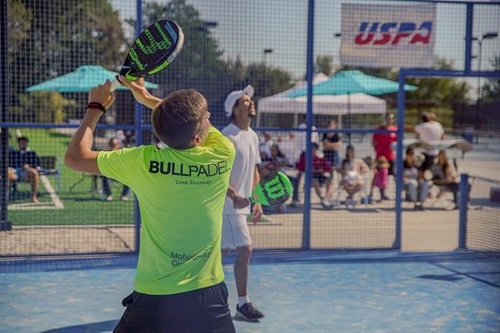
With backing from the International Padel Federation (FIP), 2025 is reported to be a pivotal year. Padel officials are pushing for inclusion as a showcase sport in the Brisbane 2032 Olympic Games.
“Once people see padel being played,” notes Scott Colebourne, association manager of USPA, “they want to try it and once they try it, they stick with it. You can wear the same shoes and clothes as for other racquet and paddle sports; if the courts are there, the only things you really need to invest in are a racquet and the balls.”
Researchers added, “While padel is aligning well with Olympic values, such as gender equality, ethical standards and growing international reach, its path to inclusion is hindered by the fact that only Spain and Argentina currently play the sport at a truly elite level.”
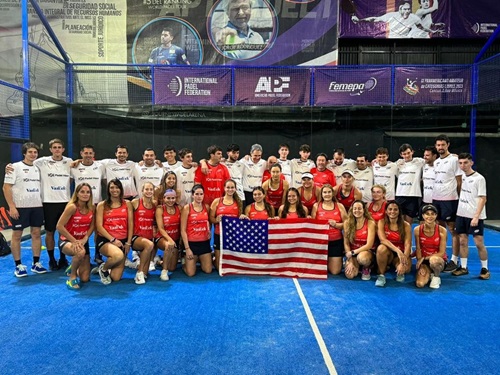
Don’t count on that to last, however. The U.S. Padel Association announced in 2024 that its women’s and men’s national teams had successfully qualified for the prestigious FIP World Padel Championships following their outstanding performances at the North American Qualifiers held in Monterrey, Mexico. The performance showcased the USA’s emerging national talent, as well as its potential to grow future stars of the game.
The U.S. recently added 352 padel courts and now has about 800 courts. Growth remains “scattered” in the U.S. with hot spots in Miami and Texas. Researchers said Miami “is the U.S. padel hub” although padel is expanding to the north of Florida, to cities such as Fort Lauderdale. In Texas, padel has a strong foothold in Houston with projects pending in Austin.
In the North, a “small but emerging padel scene” is emerging in larger cities with a few larger clubs in New York City and “a handful” in Boston and Chicago. Out West, padel has gained traction largely in Southern California. Emerging padel franchises in the U.S. include Padel Haus, Reserve, Bay Padel, Taktika, Ultra, Sense Padel and Padel X. A newer member of the U.S. market is Conquer Padel, which recently inked its first franchise deal and expects to open at least 50 new clubs nationwide.
The USPA site offers a page to help locate courts. It also offers a page to help locate events.
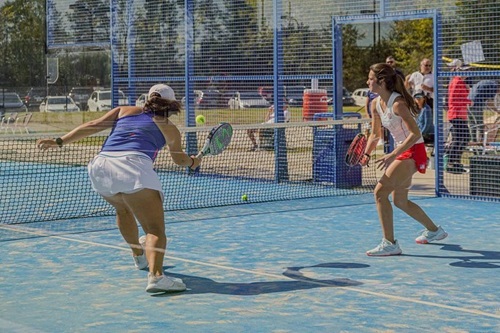
In the future, the U.S. is expected to lead countries with the most padel courts by around 2027, followed by Germany, France and Spain.
An unexpected contributor to the success of padel is pickleball. The Playtomic study said padel’s smaller courts attract different player profiles (and managed to throw a little shade at pickleball at the same time).
“Padel requires strong cardiovascular endurance, agility and strength to sustain performance levels. While pickleball also demands good footwork and quick reflexes, its smaller court and lighter ball require less physical exertion,” the researchers said in the report.
Know what else is boosting padel? A growing cadre of celebrities. The Washington Post article notes, “Scores of pro athletes including … David Beckham, Jimmy Butler, Novak Djokovic, Lando Norris and Max Verstappen are all publicly slapping the padel — acing the game into the feeds of their combined hundreds of millions of social media followers.”
The Times also adds, “Famous fans abound. David Beckham, Maria Sharapova, Rafael Nadal and Serena Williams all play. The Argentine footballer Lionel Messi recently installed a padel court at home. And Andy Murray is so committed to the sport that he has invested in Game4Padel, an Edinburgh-based operator that builds or converts courts at tennis and leisure facilities, as well as setting up dedicated padel centers.”
Additional followers include Zinedine Yazid Zidane, the former soccer star, and Tony Parker, the former NBA basketball player, becoming investors and players. The Premier Padel Tour was recently held at Roland-Garros tennis stadium. Oh, and Spider-Man actor Tom Holland is a fan and an investor as well; he recently hosted the first-ever BERO Padel Classic, a pro-am. (BERO, by the way, is Holland’s branded non-alcoholic beer).
Yahoo! Sports adds, “Holland helped organize the one-day tournament at London’s Padel Social Club. The event featured current World No. 1 Arturo Coello, along with several other elite padel players. On the celebrity side, competitors included rapper Stormzy, former tennis star Andy Murray, influencer Jay Shetty and content creator Juanpa Zurita.
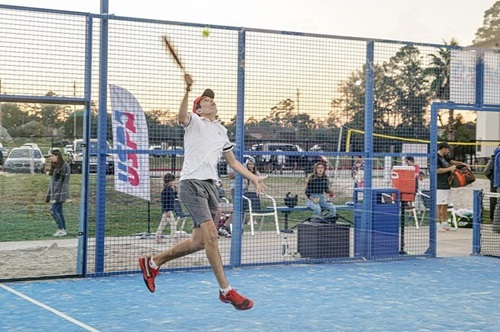
While Holland didn’t compete [although he does play recreationally-video evidence of that can be found here], he was active in the stands and courtside throughout the day, bringing energy and visibility to a sport he’s been supporting in recent months. The sport is known for its fast pace and it provided plenty of moments for the highlight reel.”
Then there are the pro tours, designed to create an in-person experience with the sport. These include the Pro Padel League, Premier Padel, Pro-Am Padel Tour and a few others. Worth noting: Red Bull TV carries Premier Padel, bringing the game to those who follow the channel to see extreme sports action.
The main headwind to the sport’s widespread success in the U.S. is the fact that unlike tennis or pickleball, there is a distinct lack of public courts here; currently, domestic padel courts are largely found in private clubs or on private residences, whereas in other countries, public outdoor courts are more common.
That has some padel industry members in the U.S. concerned that the sport might have the same trajectory as racquetball, another indoor sport whose growth has been stymied. The growing population of international residents, who bring with them a love of the game, may be unable to find courts and will move to different activities instead.
Like many individual sports, including tennis and pickleball, padel as a club sport suffered during the pandemic; however, once quarantine lifted, it began booming again, resulting in a demand for courts in multiple settings, both public and private.
PwC’s Head of the Global Padel Report, Elena Martin, mentioned: “We are delighted to see that the sector has returned to a path of organic and sustainable growth, following the post-COVID activity surge and the adjustments made in 2023.”
About the Author