
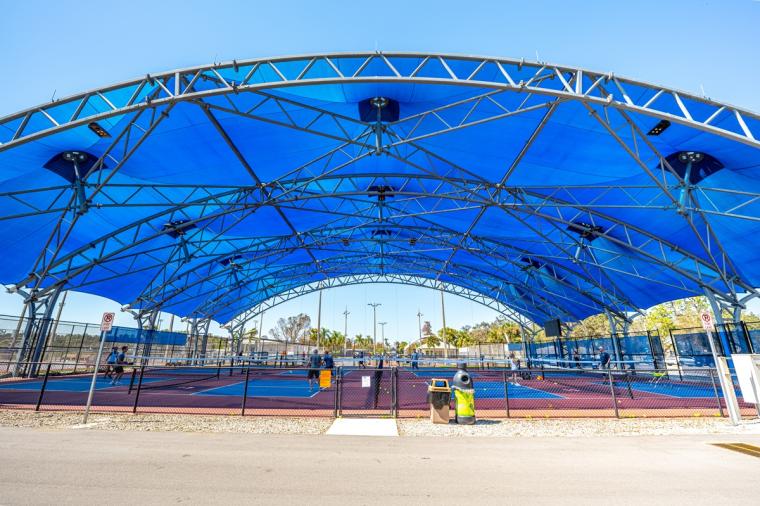
Photos courtesy of USA SHADE
Pickleball, padel and other paddle sports are driving one of the most significant waves of investment in outdoor recreation in decades, prompting sports destinations to rethink how courts are designed, built and operated.
The growth is undeniable. Pickleball has remained the fastest-growing sport in the United States for multiple consecutive years. In 2024, nearly 20 million Americans played pickleball, a 46 percent increase from 2023 and a 311 percent increase over three years.
More than 82,000 pickleball courts are now tracked nationwide, with thousands added annually. At the same time, padel is also gaining traction, especially in destination markets and mixed-use developments looking to add high-energy, social sport options.
As more facilities come online, the focus is shifting. It is no longer just about court count. It is about performance, utilization and long-term competitiveness. That shift brings one issue to the forefront. Shade is not just a comfort feature. It is part of the infrastructure strategy.
Extending Play and Protecting Revenue
With owners and operators, utilization is usually the first concern. In many Sunbelt markets, courts are full in the morning and evening but sit empty midday because of extreme heat. Those hours represent lost revenue and limited programming flexibility.
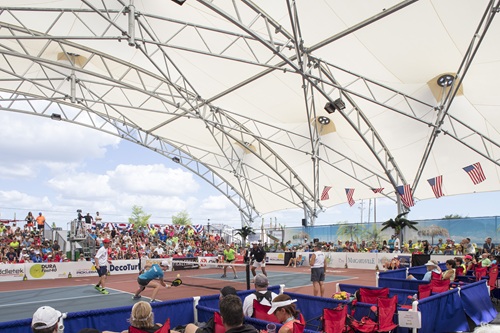
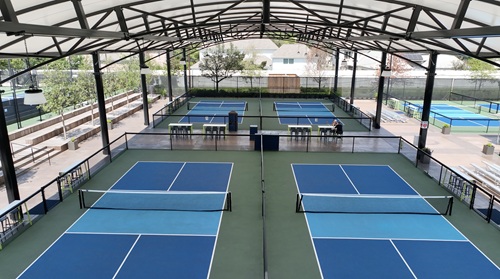
Our company has found that engineered shade systems can reduce temperatures underneath the structure by as much as 25 degrees, depending on fabric and climate. In dry markets such as Arizona, Nevada and Texas, shade mesh systems extend play through peak-sun hours.
In humid markets like Florida, solid membrane systems provide protection from both sun and passing storms, helping facilities stay operational.
For operators charging court fees, running leagues or hosting tournaments, extended playable hours directly support revenue continuity. It is common to see uncovered courts empty at high noon while players wait for space under covered courts.
The demand gap highlights the operational value of coverage. Shade, in practical terms, keeps courts productive for more hours of the day and more days of the year.
Strengthening Athlete Experience and Tournament Viability
As destinations compete for regional and national events, the standard is rising. Organizers look beyond the number of courts. They evaluate athlete experience, scheduling reliability and overall presentation.
Heat affects performance and operations. Direct sun and high surface temperatures impact hydration, stamina and match flow. Through our company’s partnership with USA Pickleball and conversations with facility leaders, we consistently hear that athletes feel the difference when competing under covered courts. Lower temperatures and reduced UV exposure allow them to sustain performance longer, particularly during peak heat.
For tournament directors, that translates into fewer mid-day disruptions and more predictable scheduling. In rain-prone markets, solid membrane systems can allow play to continue through passing storms instead of forcing a full reset of the bracket. That reliability matters when travel schedules, staffing and sponsor commitments are on the line.
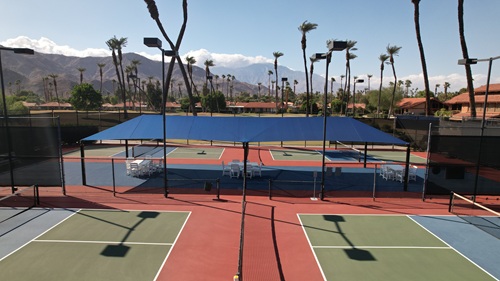
Shade structures also help define a competitive environment. Covered championship courts create a focal point for marquee matches and provide a more professional setting for spectators and sponsors. When destinations are evaluated for major events, that level of infrastructure signals readiness.
Planning Early to Control Cost and Disruption
One of the most common scenarios that arises is a facility that opens with new courts and no shade, only to revisit the issue after the first intense summer or major event. At that point, installation is more complex and more expensive than expected.
Large-span structures require engineered footings, steel erection and heavy equipment access. In existing facilities, that can mean cutting into finished courts or navigating tight site constraints. There is no way to execute that work without some disruption.
When shade is considered early, the process is far more efficient. Foundations can be coordinated with overall site development. Access can be planned. Even if installation is phased over time, identifying where coverage will go in a five- or 10-year plan reduces future cost and complexity.
Budget is always a factor, particularly as spans increase to cover multiple courts. But the larger question is long-term value. Over the next decade, how many playable hours are lost each season because courts are unusable during peak heat? How does that affect league scheduling, tournament bids and overall satisfaction? Viewing shade as infrastructure reframes the discussion from upfront expense to sustained asset performance.
Designing for Long-Term Success
As paddle sports expand into residential and mixed-use environments, facilities are facing increased scrutiny around noise, visual impact and overall site integration. Shade structures are not a standalone soundproofing solution, but they can contribute to a broader environmental strategy.
Solid membrane systems help contain some sound beneath the canopy, and when paired with thoughtful perimeter treatments and layout decisions, they support a more intentional and community-conscious design approach.
Shade also breaks up large expanses of hardscape and introduces architectural scale, reinforcing that the facility is built for longevity rather than short-term demand. That distinction matters, especially as participation continues to rise and more destinations enter the market.
The real question for sports destinations is not whether paddle sports will continue to grow. The numbers suggest they will. The question is how facilities position themselves in an increasingly competitive environment. Are they simply adding courts to meet demand, or are they investing in infrastructure that protects utilization, strengthens athlete experience and supports consistent revenue over time?
Facilities that maximize playable hours are the ones that plan coverage early and treat shade as part of the core design strategy. They will be better positioned to attract tournaments, retain users and compete for the long term. In that context, shade is not an upgrade layered on after the fact. It is part of building a high-performing asset from the start.
About the Author