

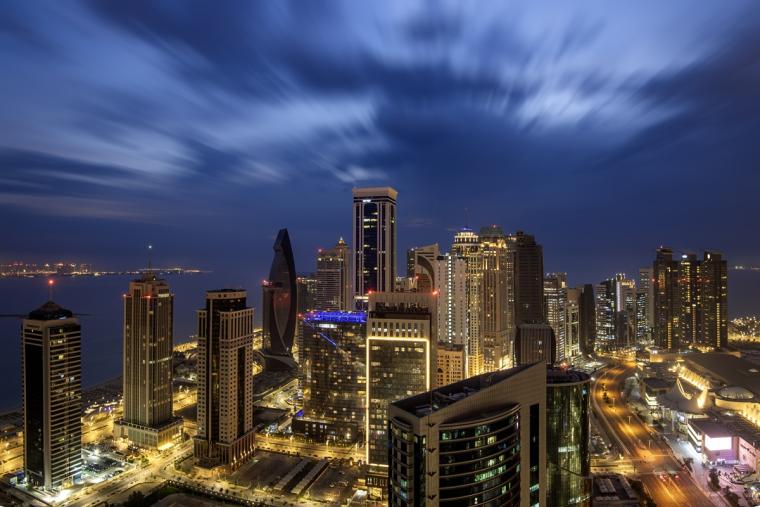
A view of Qatar by night. Photo © Hasan Zaidi | Dreamstime.com
Is there an echo in here?
Qatar wants to host the 2036 Summer Games but because of the heat, is proposing to move them to the fall, rather than their traditional July/August time frame.
The news broke at a time when record heat was hitting many sectors of the planet and Doha was no exception, with temperatures above 104 F the day the bid was announced.
History has already recorded the 2022 World Cup, held in Qatar in midwinter for the same weather reasons, as an all-time low for FIFA and the tipping point for an investigation into corrupt bidding and award practices.
That leaves the IOC with a big question regarding the dates (and the ethical questions that are sure to follow): Flex or stay fixed?
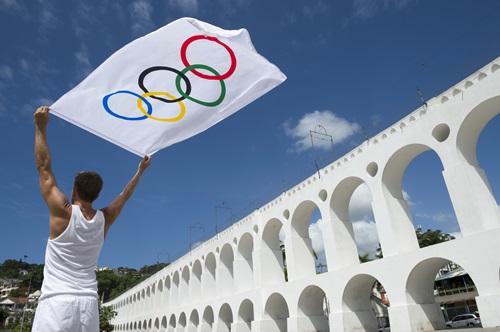
Qatar had actually approached the IOC for 2016 and 2020 bids, with proposals to host in the fall. Both times, the IOC shot down the idea, citing conflicts with the broadcast schedules and the global sports calendar.
But this time, Qatar’s luck may change because of a new and unexpected ally.
IOC President Kirsty Coventry told The Athletic back in March that the climate crisis has become pressing enough to make the IOC consider changing its calendar to provide more healthful conditions for athletes and spectators – and to provide bidding potential to more destinations.
"Do we need to remain steadfast on when we hold the Games?” asked Coventry. “I think we have to start that conversation to open up new regions and countries, but also just to tackle climate change. We have an incredible amount of interest in the Games for 2036 and 2040 from new regions, which is exciting. "It opens up the question of the timing of the Games and we need to be proactive about that, both summer and winter."
If the IOC wants to sidestep this issue and award the 2036 Summer Olympics to a destination other than Qatar, it has several strong choices; the following destinations have expressed formal interest in bidding:
- Ahmedabad, India
- Istanbul, Turkey
- Nusantara, Indonesia
- Santiago, Chile
A number of other areas (noted in the same link above) have bandied about the idea with varying levels of commitment since their initial remarks; these include cities in Africa/Egypt, South Korea, Saudi Arabia, Hungary, Italy, Denmark, Germany, Canada and a potential joint bid from Guangdong, Hong Kong and Macau.
Bids and expressions of interest from several other cities (also noted in the above article) have been rejected or have abandoned for various reasons.
Coventry’s remarks also covered the Winter Games. Over the years, there has been a dwindling number of destinations that can host snow and ice events because of climate change. Additionally, the expense of building and maintaining venues like sliding tracks for skeleton and bobsled, as well as towers for ski jumping, is another obstacle. Such facilities, while required for use in Olympic and international competition, are not typically used by amateurs and tourists and are thus unable to generate much revenue for the host city on an ongoing basis.
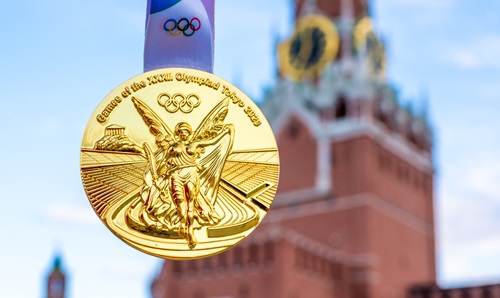
One suggestion for addressing the problem was having a permanent rotation of host cities known for reliable winter sports conditions. This concept actually has been brought up for both sets of Games for additional reasons, including security of athletes and spectators, the ability to avoid spending on the construction and equipping of new venues, having a dependable and safe environment (in 2016, Rio’s Games were beset by problems including polluted water and mosquito infestations) and even the ability to control doping more easily.
The 2036 Games are still more than a decade out and the IOC is unlikely to name a host until, at the soonest, 2026, say officials. The decision may also be held until 2027. Either way, it’s unlikely Qatar (to say nothing of the very vocal opponents and proponents) will be silent until then.
About the Author