


Photo © Cammeraydave | Dreamstime.com
In a piece of news that brought the mind sports industry to its feet, the International Chess Federation (FIDE) has been accepted as a member of the International World Games Association (IWGA).
The decision was taken by the IWGA membership during its Annual General Meeting held at the Olympic Museum in Lausanne recently.
According to the IWGA, “FIDE’s inclusion represents an important step in the continued development and diversification of the IWGA, further strengthening its global reach and the range of sports represented within The World Games Movement. As the international governing body for chess, FIDE brings a well-established global structure and a strong community of players and stakeholders.”
Does that mean we’ll see chess contested as part of the quadrennial multi-sport extravaganza, which will next be presented in 2029 in Karlsruhe, Germany?
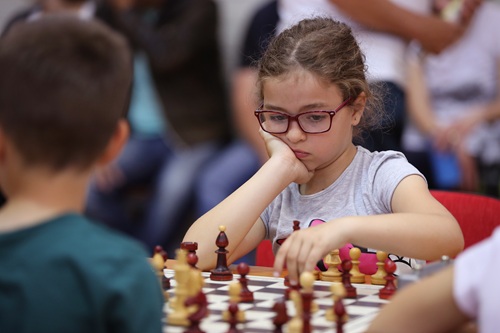
Well, not yet, according to Anna Jacobson, IWGA’s Head of Social Media and Digital Engagement.
“At this stage, the inclusion of chess in TWG 2029 program has not yet been confirmed. While FIDE’s membership in the IWGA is an important and positive step, participation in a specific edition of the Games remains subject to a separate evaluation and selection process.”
To be considered for permanent inclusion in the World Games, a sport needs to pass several litmus tests — much the same way a sport in the NCAA’s list of Emerging Sports for Women must, prior to being named a championship sport.
“In terms of the process, sports are considered for inclusion by the IWGA based on a range of criteria, including global reach, governance standards, organizational capacity, spectator appeal and alignment with the overall vision of The World Games,” notes Jacobson. “Membership in the IWGA enables FIDE to engage more directly in this process, but it does not automatically guarantee inclusion in the competition program."
The leadership of FIDE, for its part, is thrilled.
“Chess is a truly global sport that unites millions of players across all continents through strategy, discipline and creativity,” said President Arkady Dvorkovich. “Its inclusion within the IWGA reflects the growing recognition of mind sports alongside traditional athletic disciplines, and the shared values of excellence, fair play and international exchange. We are very excited for this new chapter and the opportunities it will bring for the continued development of chess within the international sporting movement.”
Of course, the next question that is bound to arise is whether chess might take the next big step — to the Olympic podium.
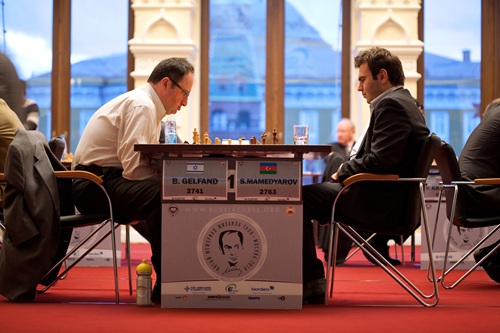
According to Wikipedia, it has — sort of. In 2000, the game made its debut as an exhibition sport (defined as a non-permanent sport that is making a one-time appearance) at the 2000 Summer Olympics. (Full details of matches can be found here.)
Online chess debuted as an esport via Chess.com at the 2023 Olympic Esports Week. However, chess has yet to debut as a full sport at the Olympics.
Within this country, the governing body is the United States Chess Federation (US Chess) and according to John Fernandez, Vice President of US Chess, the organization is all in on growth.
“US Chess is not currently recognized by the US Olympic & Paralympic Committee (a status common to mind sports) but we remain fully committed to elevating chess at every level, from scholastic programs to the highest levels of international competition. Any growth in chess's global profile advances our mission to empower people, enrich lives and enhance communities through the game.”
Hernandez also says the IWGA acceptance is an enormous step in the right direction.
“As for the World Games, [permanent inclusion is] a natural next question, and we think an achievable goal. With the recent announcement, we are hopeful that the process can now begin. Whether we see chess at a future World Games depends on the outcome of that process, but the door is more open today than it was yesterday.”
Certainly, the sport does not lack for enthusiasts. According to House of Staunton (a chess board and piece manufacturer), approximately 605 million adults worldwide play chess regularly. This statistic is a testament to the immense popularity of chess, with over a half billion people playing it.
Another interesting statistic says that there are an estimated 8.2 million active FIDE-rated chess players in the world. It shows that millions of people are actively engaged in the game competitively, which makes it one of the most popular board games today.

The pandemic brought more than a few people into (or back to) chess as well, particularly since the internet made it easier than ever for people to learn, play and connect with other fellow enthusiasts, and platforms like Twitch allowed players to watch grandmasters at work.
Notes House of Staunton, “Certain initiatives, such as the Queen’s Gambit-inspired surge in female participation and grassroots programs aimed at introducing chess to underserved communities. These have significantly contributed to a more inclusive and vibrant chess community.
According to the marketing research company NPD Group, in the first three weeks of the Queen's Gambit debut, the sales of chess sets went up by 87 percent in the U.S. On top of that, the sales of books about chess leaped 603 percent.
Although still dominated by men, chess is a game that today has millions of active female players worldwide.”
In 2021, SDM profiled the U.S. Chess Federation, which sanctions and rates more than 10,000 tournaments and more than half a million games. The organization hosts 25 or more national championships and awards titles to both amateurs and professionals, ranging from elementary school students to senior citizens.
“Chess is a fascinating subculture, and running a tournament is one of the most fascinating things about it,” Pete Karagianis, assistant director of events, told SDM in an interview. “The sport takes discipline and work, and it also takes someone who is strong enough, mentally and physically, to develop the strategy to win.
About the Author