

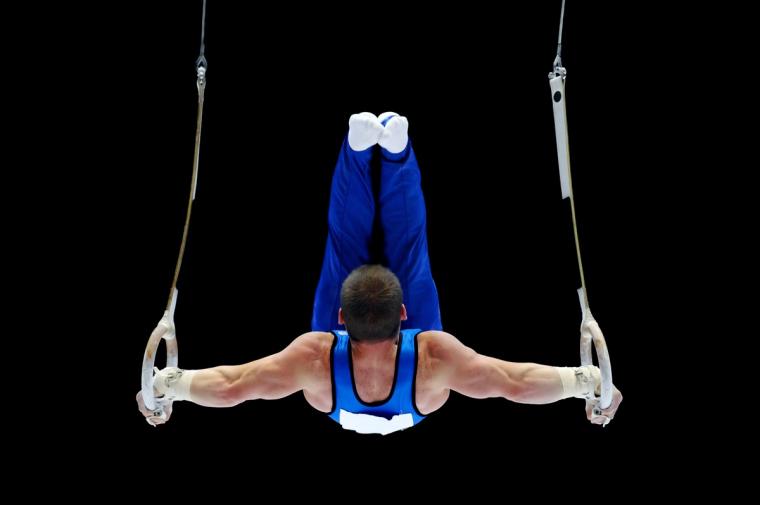
Photo © roibul | Dreamstime.com
Fun facts: Of the 232 members of the U.S. Olympic team, 36 percent were athletes with NCAA connections. Five teams had at least 75 percent collegiate participation on their U.S. Olympic rosters, including bobsled, cross-country skiing, ice hockey and skeleton.
The U.S. women's ice hockey team, for example, was a full NCAA showcase: all 23 players had NCAA experience across eight programs. On the men's side, 20 of 25 players on Team USA's roster played NCAA men's ice hockey
In many cases, athletes who compete in Olympic winter sports come from NCAA teams, but not necessarily in those sports. Sammy Smith, who competed in Italy as part of the women’s cross country ski team, is a Stanford soccer player. Washington student Anna Gibson, a track & field and cross country athlete, competed in ski mountaineering (known for short as skimo).
That’s all great news and it’s a nice way to highlight the role college programs play in molding and supporting Team USA.
The not so-good news: Colleges are continuing to cut what they term non-revenue programs in order to support high-ticket teams like football and basketball. And that, say coaches and others in the Olympic movement, is causing irreparable damage to the athlete pipeline for future Games.

With the advent of NIL and direct-revenue sharing with college athletes, which has put schools on the hook to distribute as much as $20.5 million to athletes for the upcoming school year, non-revenue sports, often referred to as Olympic sports, are facing an uncertain future.
Athletic departments, desperate to trim expenses, are already cutting low-level administrative and support staff positions, and have dangled the idea of cutting some non-revenue sports altogether.
And the United States Olympic & Paralympic Committee is worried about it.
“If we let this get to the point of crisis, it will decimate these (Olympic) programs and Team USA for decades to come,” USOPC CEO Sarah Hirshland said, emphasizing that it’s not something that could be fixed overnight.
“I think the (public) awareness is broader than it was three years ago, but we have a long way to go for people to understand what’s happening. Part of the issue is that people aren’t seeing (sports cut) right now in a mass way. But those of us in the business recognize the train is coming down the tracks. And the headlights are staring right at us.”
The USOPC has no way of identifying talent in many sports if the athletes are not showcased at the collegiate level. There are no independent travel programs or events for sports like cross country skiing, biathlon or ski jumping if they are not offered at the college level.
It's not just winter sports that will suffer, either. Iowa State recently suspended its gymnastics program. Washington State University, meanwhile, eliminated support for al field events in its track & field program and reduced the opportunities for sprint and hurdle events. And Concordia University Irvine in Irvine, California announced the elimination of its men’s and women’s swimming & diving programs, as well as its men’s and women’s tennis programs, effective at the end of this season.
Wrestling programs are getting the axe as well. In January 2025, the Akron Beacon Journal reported that in Ohio alone, college wrestling was down to just three DI programs. Water polo is another Olympic sport suffering from cuts at the college level.
The feeder programs at the high school level are dwindling as well. More than two decades ago, for example, Athletic Business cited a decline in high school gymnastics programs; that trend has continued today.
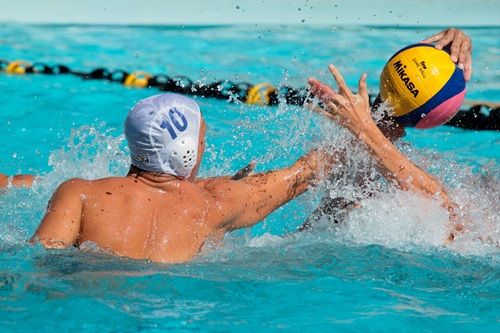
Men’s gymnastics faces an enormous problem in the USA; as recently as 2022, there were only 15 NCAA men’s collegiate gymnastics programs. Teams USA’s male gymnasts overwhelmingly are selected based on their performance on their college teams.
And again, there are no travel programs in many of these Olympic sports, including wrestling, swimming, diving , cross country or track & field, leaving the USOPC without trained athletes.
Greg Earhart, of the College Swimming and Diving Coaches of America, remarked in an article in Sports Illustrated that unfortunately, the impact of cutting programs will trickle all the way down to the youth level.
“People start to see this in the news,” Earhart pointed out. “Parents have choices of what they want to enroll their kids in. Now we see fewer kids involved in swimming. If you don’t have eight-year-olds enrolling in swimming, you’re not developing the pipeline to get players [for the Olympics].”
Earhart told The Washington Post that college swimming is the “secret weapon in terms of how we prepare the elite” but said its presence also impacts the sport’s whole landscape in the country, including youth athletes and the events they attend.”
Meanwhile, Yahoo! Sports points out, football and men’s basketball continue to grow exponentially, straining nearly every other sport.
Basketball and football should not be seen as the villains in the story, though, Hirshland says.
“When you look at it from a business model and consider the economic incentives, these schools are almost mandated to continue to invest to be competitive in football. They have to try to keep up. And as the pressure on that revenue keeps growing, they’re going to have to take dollars from Olympic sports and funnel them to football instead.”
The USOPC has a strong working relationship with college athletic directors and is trying to find a path forward that balances financial needs of colleges with the support of an Olympic pipeline.
“The promotion of how Olympians are made here, highlighting those crossover athletes, trying to celebrate them and recognize the importance of these sports, we’re all doing that,” North Carolina athletic director Bubba Cunningham (and who sits on the USOPC board of directors) told Yahoo! reporters. “I think we’re gonna do everything we can to sustain what we have.”
About the Author