

Photo © Voltairesview | Dreamstime.com
According to a recent study, Americans are investing more in their health and engaging more with fitness, nutrition and sports than ever before.
The study, which can be requested at the link above, shows 86 percent of active Americans exercise at least weekly and 62 percent report they have increased their activity over the past six months.
Additionally, the study shows, strength workouts are narrowly edging out cardio in popularity (66 percent to 65 percent).

Perhaps, then, it’s no surprise that there has been a rise in fitness competition participation among adults.
At the same time, there has been a marked increase around fitness competitions. Whether these are defined as functional fitness or as an obstacle race (or anything in between), it’s an adult sports trend worth examining.
Matchable cites the fact that the ACSM's 2026 fitness trends survey placed Adult Recreation and Sport Clubs on the list for the first time. And while we already know about the strength of adult sport and social clubs, fitness competitions are a different matter entirely.
While the industry lacks a study that takes in all brands contributing to the rise of fitness competitions, it is possible to view the growth through the lens of specific events.

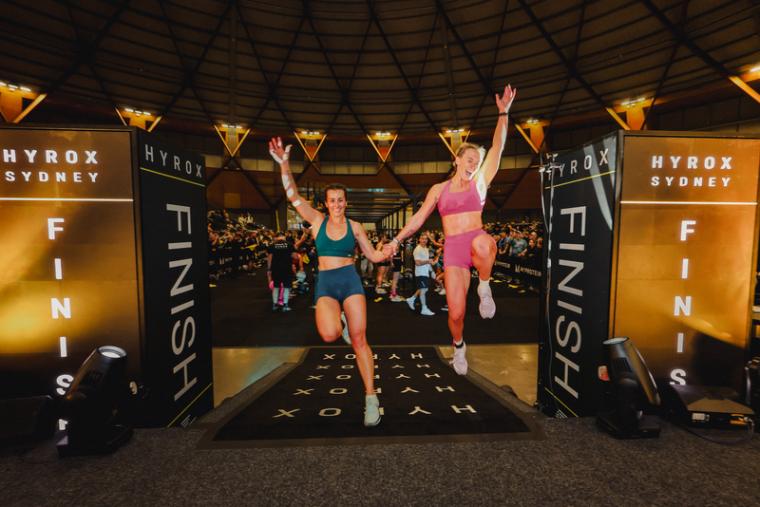
HYROX combines 8 km of running with eight functional workout stations. Matchable noted that HYROX's growth trajectory reads like a startup success story. From a single event with 650 participants in 2017, the sport grew to 175,000 competitors across 65 races in 2023.
By 2024, that number had ballooned to more than 650,000 participants globally , a staggering 1,000% increase in five years. (Competitions are even offered on cruises.) Next year's racing season is predicted to be its biggest yet, welcoming more than 2 million athletes, according to reports.
Matchable theorizes this is because of the accessibility of the brand, noting, “Unlike CrossFit, which demands Olympic weightlifting skills or obstacle course races that require climbing walls in the mud, HYROX offers a standardized format built around exercises most gym-goers already know: sled pushes, rowing, lunges and wall balls.
The result has been a global fitness racing phenomenon that's selling out arenas, generating $140 million in annual revenue and creating a massive business opportunity for gyms and trainers.”
But it’s not all the HYROX Show. Club Solutions Magazine notes that the very dynamic of the gym industry has changed: “Walk the floor of any major fitness trade show and you feel it: the language of competition has moved from the fringes into the mainstream. Concepts once reserved for elite athletes — race-day programming, qualifier rounds, performance hubs, etc. — are now being built into the core offerings of health clubs, big-box franchises and boutique studios alike.”
Other brands are leaping into the space with both feet.
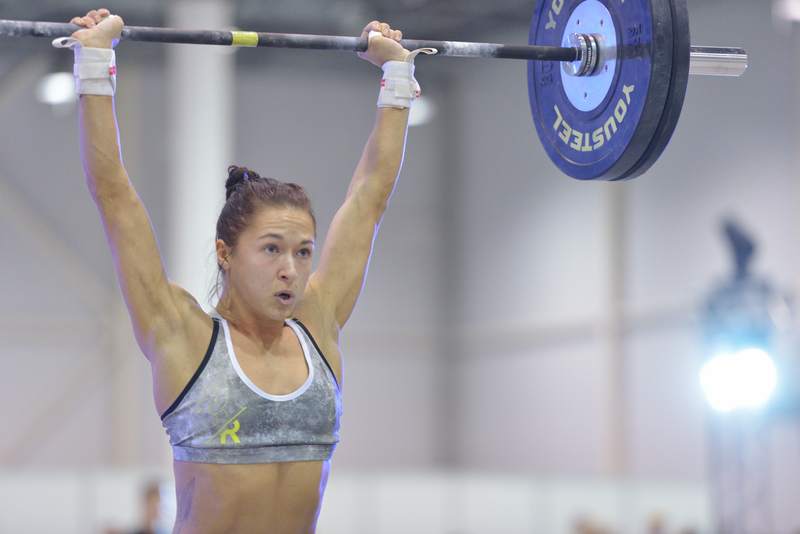
Life Time, for example, recently launched HYBRID XT, a group training program designed for the explosive growth of hybrid-style fitness where strength, endurance and athletic movement converge.
F45 Training debuted its PEAK500 format, a 30-minute hybrid workout built around five stations: bike erg, a dumbbell circuit combining devil’s press and suitcase lunges, ski erg, a combination of shuttle sprints and thrusters and a row erg. The format can be completed individually or in pairs and is designed as a measurable performance test —progress that can be tracked, compared and competed against over time.
CR Fitness Holdings, the largest Crunch Fitness franchisee, went even further with its Conquer Challenge — a three-phase competition that ran April through June across all 93 participating locations and offered a $17,000 prize purse.
Registrants paid a $50 entry fee and also got two personal training sessions, a kickoff experience and a branded athlete T-shirt.
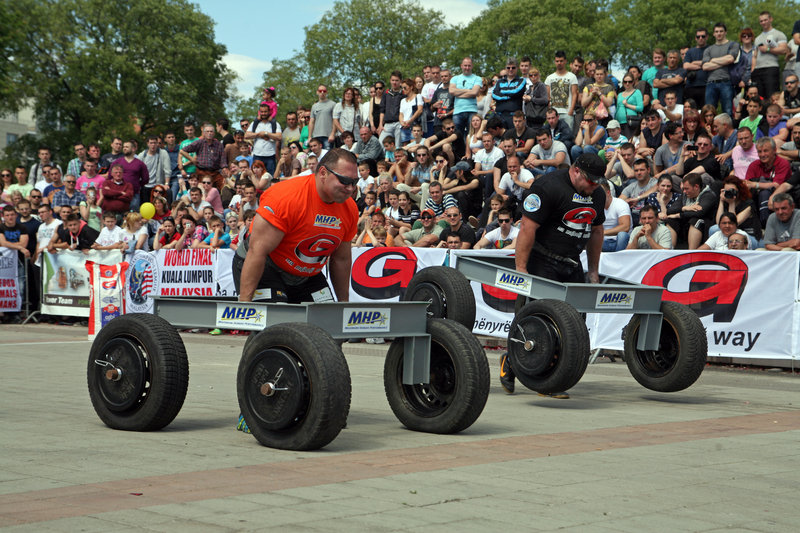
Strongman, another branded event, also allows destinations to welcome athletes who perform feats like pulling a fire engine or boat, heaving enormous weights and similar challenges.
Obstacle races are still very much in the mix, says The Guardian. Spartan Race launched DEKA Fit, its functional fitness product, in 2019.
DEKA workouts include training that improves the body’s ability to perform everyday activities such as lifting, squatting, twisting and balancing.
There’s No One Engine Powering the Growth
The reasons for the spike in popularity of fitness competitions are multi-faceted.
Competition: Many of the adults participating in fitness competitions are former youth athletes, whose lives once included a regular schedule of practices and competitions. A competitive event makes their workout more meaningful, according to Men’s Fitness:
“Instead of working out without direction, more people are training for something specific. A time to beat, a leaderboard to climb, a standard to hit. That shift from aesthetic-driven training to performance-driven training is subtle, but it matters.”
Community: If the COVID pandemic taught the world anything, it’s this: People like having social connections and being part of something bigger.
Matthew Brooke, senior vice president of global operations at Spartan, told reporters at The Guardian that people gravitate toward these challenges because they “are seeking a community where they feel a sense of belonging, where being uncomfortable together is empowering. Once you’re in that ecosystem, it’s almost self-reinforcing. Not quite a cult, but it has that power.”
Bragging Rights: Social media has helped up the ante. An article in BlkBox states that platforms like Instagram and others have accelerated the rise of fitness events by highlighting real people achieving challenging goals, by explaining training journeys and transformations and of course, by capturing the atmosphere and energy of live events.
Andrew Manteit, who founded the Turf Games (similar to HYROX), went one step further, pointing out that the idea of posting about finishing a race or getting a PB is a motivator in and of itself., since some fitness creators’ most-liked content comes from these competitions.
Manteit told The Financial Review his theory that almost everyone who participates will post on Instagram about it or at least put up a story.
“If Instagram were to close down tomorrow, fitness comps would probably halve in size because people would have no reason to go,” he laughed.
Technology: Providing self-fulfillment and validation for those in adult fitness, wearables are now standard equipment.
The acceptance of connected fitness equipment has gone well beyond early adopters, notes this report, with 75 percent of active Americans using a wearable while exercising, rising to 90 percent among households earning $150K or more.
It’s an Idea Whose Time Has Come: For decades, savvy coaches and entrepreneurs have looked for ways to turn gym attendance into a sport and make it look less like drudgery, Mark Dyreson, a professor of kinesiology who co-directs the Penn State Center for the Study of Sports in Society, told The New York Times.
“Some people really love to just go to the gym and work out on the circuit, but for most people, historically, it’s fairly boring, right?” Dr. Dyreson said. “If you can turn something into a competition, into a game, you get a lot more interest.”
About the Author