

All photos courtesy of the Guardian Caps website
Just as Friday night lights are illuminating skies in communities large and small, polarizing discussions surrounding the use of padded mushroom-shaped football helmet caps to help reduce the impact of concussions won’t be dimming anytime soon.
For example, an effort to mandate Guardian Caps — the most common padded helmet, and one accepted by organizations from the professional level on down to youth levels — for all youth football players in West Virginia recently ended with lawmakers failing to advance the bill. Senate Bill 585 was introduced in February as the Cohen Craddock Student Athlete Safety Act, named after a middle school football player who died after suffering a traumatic brain injury during practice in 2024.
“I think that although the intentions were very well-founded for that bill, it didn’t really have a lot of good science behind it,” Republican Sen. Eric Tarr told West Virginia’s News. “Relative to the expense that it takes to manage concussions well and reduce concussions, I think that it took away from the ability to actually direct money towards stuff that had some science behind it.”
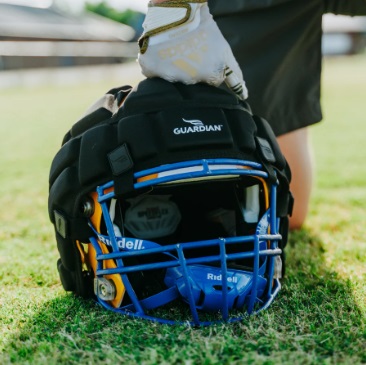
The West Virginia Secondary School Activities Commission approved the use of Guardian Caps during practices and games, but few players reportedly wore them. The Guardian Cap has four straps that pull through a helmet’s facemask and attach back to themselves. The Velcro strap in the back tightens around the helmet. The result is an odd-looking piece of headgear that appears almost cartoonish.
Earlier this year, a University of Wisconsin-Madison study of 2,610 high school football players found that “wearing soft-shell helmet covers, marketed as Guardian Cap helmet devices, during practice had no effect on the rates of sports-related concussions.”
“Unfortunately, we found that using these devices may provide false reassurance to players and their parents who are hoping to reduce their kids’ risk of concussion,” Dr. Erin Hammer, the study’s lead author and assistant professor of orthopedics and rehabilitation at the University of Wisconsin School of Medicine and Public Health, said at the time.
For its part, Guardian Sports — the maker of Guardian Caps — never claimed the extra padding would reduce the number of concussions its wearers would sustain.
“No helmet, practice apparatus or helmet pad can prevent or eliminate the risk of concussions or other serious head injuries while playing sports,” according to the company’s website. “Researchers have not reached an agreement on how the results of impact absorption tests relate to concussions. No conclusions about a reduction of risk or severity of concussive injury should be drawn from impact absorption tests. Guardian has always stood by the fact that Guardian Caps reduce the impact of hits and that its use should be one piece of the puzzle to an overall safety strategy.”
Perhaps that’s why parents of players on the Alhambra (Calif.) High School football team hope to raise about $6,000 to buy Guardian Caps after two players suffered concussions in the same game in September; one was taken off the field on a stretcher. There’s no room in the school’s athletic department budget for the caps, so parents took matter into their own hands.
“We can move much faster as parents and as a community than schools normally can. So we’re able to just get the ball rolling,” football dad Stephen Parini told a local TV news station.
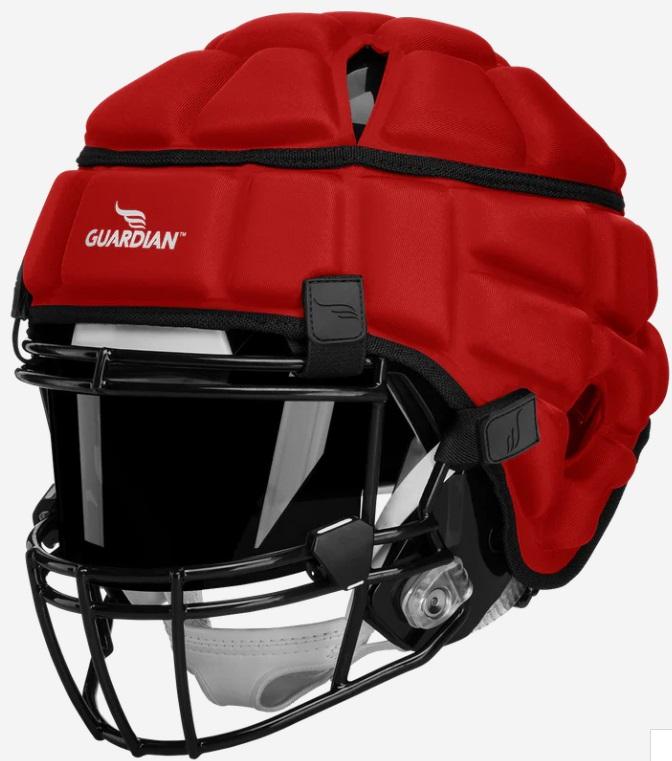
Incidentally, California is one of the states from which Guardian Caps receives the most pushback, Guardian co-founder and CEO Erin Hanson told SDM last year. That’s, at least in part, because the National Operating Committee on Standards for Athletic Equipment, which sets helmet performance standards, has stated that attaching the caps to certified helmets could void helmet manufacturers’ safety certifications.
But Avelino Valencia, a California Assembly Democrat and former tight end for San Jose State University, introduced in March a bill that would prevent youth football leagues from prohibiting players from wearing Guardian Caps or similar protection. The bill has support from the California Medical Association, the California Academy of Family Physicians, the California Neurological Society and the California Orthopaedic Association, according to CalMatters.org.
“Look, we went from leather helmets to hard-shell helmets,” said Republican Assemblymember David Tangipa, a former tight end and special teams player at Fresno State University. “There probably was grumbling that happened for that, and now we’re going to be adding an additional layer. I don’t think anybody should be bothered by that, especially if it protects our kids.”
One of the highest-profile NFL players to don a Guardian Cap is Green Bay Packers wide receiver Romeo Doubs, who suffered two concussions during the 2024 season — one during the regular season and one during a playoff game in Philadelphia. He began wearing the cap after the first concussion and continues to compete with it. “Better safe than sorry,” he has said about that decision (despite the memes).
About the Author