

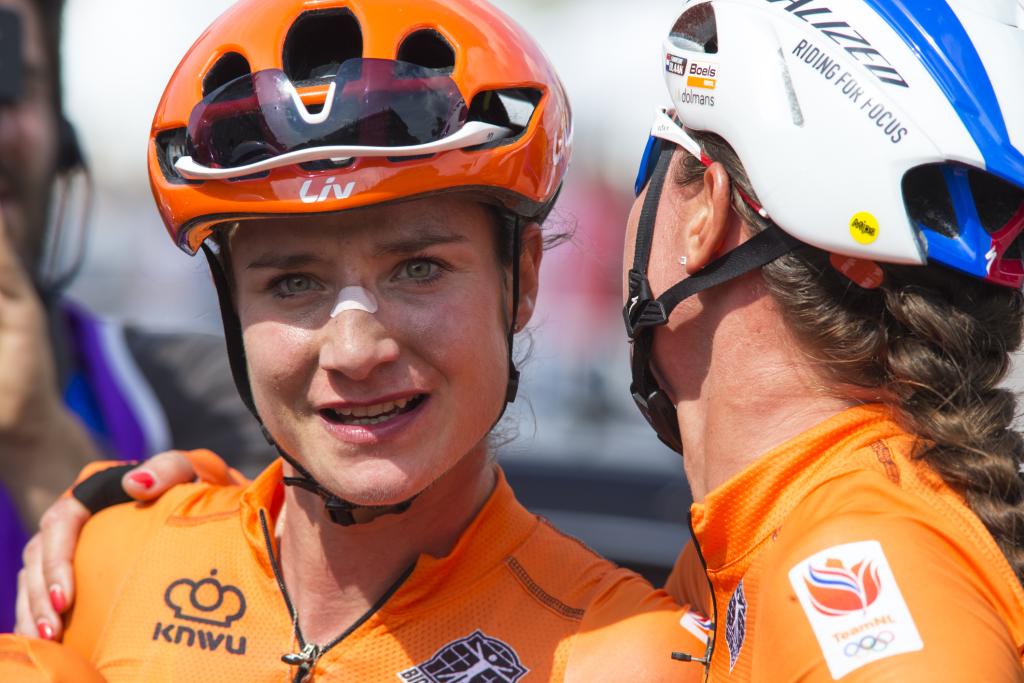
Photo © Dusan Zidar | Dreamstime.com
When the cancellation of the 2026 Maryland Cycling Classic was announced last week, it just seemed to hit more heavily.
After all, enthusiasts pointed out, this was one of the last remaining pro cycling events in the United States.
“This is not the news North American cyclists want to read,” noted Canadian Cycling Magazine.
A flurry of finger-pointing followed. Organizers said a restructuring behind the scenes left too little time to stage the event, according to the Baltimore Sun.
Hoodline went into more detail, noting the following:
“Organizers and public records point to months of financial strain at the state-created entity that produced the race. Filings and nonprofit data reviewed by ProPublica show the Sport & Entertainment Corporation of Maryland ran multi-million-dollar deficits and saw its net assets shrink. The state later stepped in to cover outstanding bills tied to those events, as reported by the Baltimore Business Journal.
The Maryland Stadium Authority has opened a process to collect vendor invoices and determine which bills are eligible to be paid from state funds as it sorts through the shortfall. The agency’s public guidance spells out which documents vendors must submit and notes a June deadline for those claims.”
A great deal of confusion had surrounded the race, judging by the communication released, notes Cycling News:
“One of the red flags was raised in the winter when both men's and women's races were listed on the UCI calendar as three-day events. Members of event leadership, hired by ownership group Sport and Entertainment Corporation of Maryland (Sport Corp), said both races were supposed to be just one-day events with three days of ancillary activities. Teams contacted by Cycling News all said they expected to race for three days.
The cancellation is an especially difficult blow to women's racing in North America, which also saw the Tour de Bloom downgraded from a UCI 2.2-level, leaving just one internationally sanctioned event for the first half of the season.”
Still, organizers remain optimistic for the event’s future. Race chair John Kelly and longtime organizer Steve Brunner told The Baltimore Banner the Classic will return.
They also pointed out that the 2025 edition drew roughly 85,000 spectators. According to organizers, an independent group is now working with city and state leaders to secure sponsorship with an eye toward a 2027 return to the international calendar.
But the Maryland Cycling Classic is only the latest casualty on the calendar.
In 2019, the Amgen Tour of California was cancelled. In 2021, the Tour of Utah made an announcement that it was closing up shop. The Tour of Battenkill UCI Race previously held UCI sanctioning; however, it no longer does, according to this article. It last held UCI sanctioning in 2010 and 2012. The event became known only as “Battenkill” and its next iteration will be in May of 2027.
Other factors are in play. Many races have failed to secure sponsorship and investors. Others have been deterred by the logistical costs of hiring security and medical support, closing roads, advertising and generating publicity, as well as the time-intensive work of recruiting and training volunteers.
Sometimes, the reasons for cancellation of races are tangential, rather than economic. Crusher in the Tushar, scheduled for this month in Beaver, Utah, has been cancelled because of poor air quality related to wildfires; it was not presented in 2024, although its 2025 event made a good showing. (Numerous mountain bike races out west, including the Silver Rush 50, suffered a similar fate this year.)

But the problem is not actually event-specific; it appears that the USA has not embraced cycling as a whole. An article in Medium breaks down the problem:
- "Generational change. Millennial/Gen Z is not as motivated by purely competitive participation sports; digital media, social engagement, and adventure are all at least as important as winning. On top of that, attention spans are shorter now, so spending months to train for a singular sport is less appealing than it was for Boomers. This phase shift is not limited to bike racing: triathlon, golf, marathons, tennis and even college football spectating have all been trending downward for five to10 years.
- There’s no business model for traditional bike races. Road racing events typically need a lot of operations support from cities and counties: roads need to be closed, police and safety personnel need to be hired and media broadcasts need to be produced. This stuff all costs money. And yet there are relatively few participants to pay entry fees and offset costs.
As an example, take the San Dimas Stage Race. It’s a three day event that is a staple of the Southern California cycling scene. I counted 476 entrants at this year’s event, with each paying $160 to enter. There’s a time trial, a road race, and a criterium. If you do the math, they took in about $76,000 in entry fees. They do have some sponsors, but I can’t imagine their overall budget was much more than $100k.
How does a race director put on an event of that size and compensate him/herself for their time? A gravel event is different: fewer paved roads to close, and an event might have over 2,000 participants. And in Europe the production costs of races are typically covered by the municipalities. So the bike race business model is viable in Europe and on gravel but not on the roads in the US.
- Road safety and lack of women are big issues for cycling. At the grassroots level, riders are opting for gravel and mountain bike events because they feel safer being away from the roads. In addition, traditional road cycling, whether in a race or on group rides, is not welcoming to women.
Compare the San Dimas Stage Race (11% female/89% male) to a typical running event (57% female/43% male). Cycling has been blind to the gender issue for years, and it’s now paying the price for that. The Tour of California, which to their credit does have a smaller women’s race, is critically missing female fans, sponsors, and athletes."
Additionally, the cycling industry, and its adjacent community, are shrinking in the USA. There are fewer bicycle-specific shops to provide support and generate interest among customers, there are more virtual cycling programs (like Zwift) and increasingly, racing is moving to Europe where it is better supported. There are also relatively few bicycles manufactured in the USA.
While children learn to ride a bicycle when they are young (in fact, it is a rite of passage), there is little awareness of cycling as a competitive sport in the USA, the way there is of baseball, soccer or other sports. That feeds into a lack of a pipeline for this country when it comes to Olympic talent. Additionally, even commuting by cycle remains a niche concept, unlike the U.K., Europe and other international destinations.
Amateur racers might register and train to participate in a triathlon, but most mass-participation bicycle events in the U.S. are fundraising rides that lack a competitive aspect
According to Formula Fixed, the ingredients are there — but the final mix falls flat.
“Survey data shows an estimated 94 percent of Americans know how to ride a bike. In spite of this, only about 6% of Americans (8 percent of American sports fans) follow professional cycling. Compare this to the 72 percent of the US population who follow American football, the vast majority of whom have never played in their life. What explains America’s ambivalence toward a sport with such cultural ubiquity?”
One positive market is the rise of trail races, often known as gravel grinders. In fact, Forbes is calling this discipline “the hottest trend in cycling.”

It’s for good reason. A lack of cars is an obvious advantage but so is the ability to be out in nature and to have great scenery, as well as landscape-specific challenges.
Destinations are jumping on the bandwagon, too, Forbes states:
“Wisconsin recently debuted its vast new tourism initiative focused on the gravel trend, a first-of-its-kind statewide network of gravel cycling routes connecting communities and landscapes, with more than 1000-miles across 11 regions and 70 towns. The state is determined to be the premier U.S. gravel biking destination, built around the “Granite Belt,” a region in Northcentral Wisconsin with more than 1,000 miles of distinctive red granite roads and 16 routes spanning Marathon, Lincoln, Langlade, and Shawano counties. It offers riders high-quality surfaces using compacted red granite and looped, mapped routes for all skill levels linked by "trailhead communities" with lodging, dining, and amenities, all detailed on a new website.”
FormulaFixed sums up the problem: “While cities across the U.S. feature vibrant urban cycling subcultures including bike messengers and fixed gear racers – who blend cycling with elements of fashion, music, art, and extreme sports – the elite racing scene remains detached from this energy. Without a clear cultural or economic bridge to broader audiences, professional cycling remains a sport that many Americans feel is out of reach and out of step.”
About the Author