


Dashboard of Humana Cognitive Games
The National Senior Games take place in Des Moines but one ancillary event is getting a lot of buzz already: The Humana Cognitive Games, put on by NSGA’s presenting sponsor, Humana. The Games, which feature several types of mind sports (trivia, word games, etc.) allow for a fun diversion but also allow older adults to exercise their minds and play an active role in maintaining their brain health.
“We thought it would be something fun and entertaining,” notes Sue Hlavacek, president and CEO of the National Senior Games. “People could do it while they are at the Games or if they’re not participating, they could do it from home.”
The Humana Cognitive Games, running from July 14 through August 11, is a virtual challenge that is intended to engage older adults across the country, competitive athlete or not.
Participants can visit the Cognitive Games website and rack up points by playing brain-exercising games, reading educational content and taking polls and quizzes about brain health. Games include:
- Mahjong Solitaire
- Word Wipe
- Jewel Shuffle
- Block Champ
- Brain Buster
- Brain Teaser
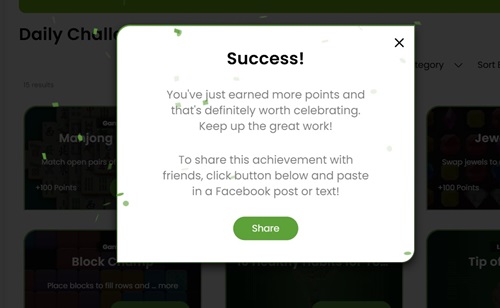
There are also various challenges, such as Get Up and Move! (selfie of user doing activity required for points, and users are encouraged to do activities with friends since one of the goals is to foster social connections). Visitors can also learn about NSGA and the athletes competing in the Games, and can share information about the Cognitive Games with friends (and earn points).
Research shows that engaging in regular mental exercises can have both short- and long-term benefits for brain health, helping older adults stay independent and potentially reduce the risk of dementia and cognitive decline.
“Healthcare starts long before you step into a doctor’s office – it begins at home with daily choices we make to take care of our bodies and minds,” said George Renaudin, Humana’s President of Insurance.
This message echoes findings from Humana’s recent survey conducted with Morning Consult, which revealed that 78 percent of adults aged 65 and older prioritize independence over longevity without self-sufficiency.
“You’ve got to exercise your brain. It’s like anything in life. If you can strengthen that muscle, it will help keep you sharp,” says Isabel Souffront, MD, Chief Medical Officer for Conviva Senior Primary Care in Broward County, Florida. “Trying new things – whether it’s a hobby, an instrument or a puzzle – stimulates the brain and helps protect against mental decline.”
There is further scientific evidence that people are embracing the strong health triad of an active mind, better acuity and better overall health. The American College of Sports Medicine’s 2025 Survey of Fitness Trends listed its top 20 predictions; among those were number seven: Exercise for Mental Health. (More insights can be found in this article.)
About the Author