

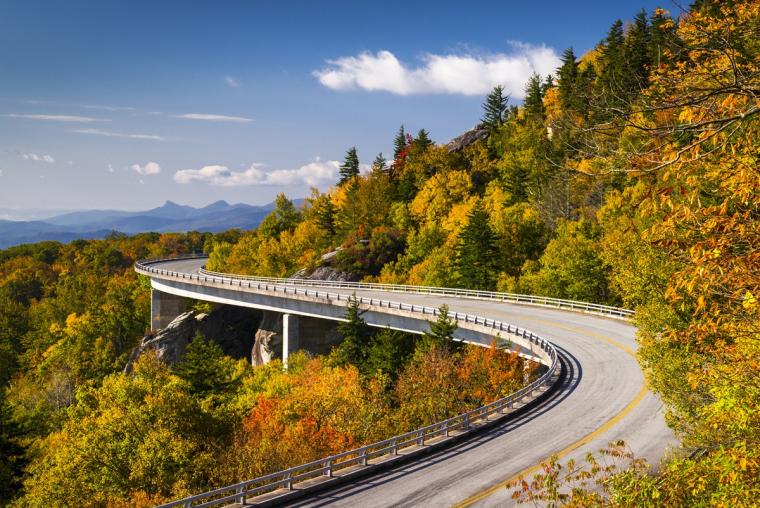
The Blue Ridge Parkway, one of the prime leaf tourism thoroughfares, sustained damage from Hurricane Helene in 2024. This year, it’s up and running, through improvement work continues. Photo © Daveallenphoto | Dreamstime.com
Last year, Hurricane Helene seriously rained on Asheville’s parade.
Asheville, North Carolina, in addition to being a youth sports powerhouse, traditionally welcomes tourists by the carload for each fall for leaf-peeping. In fact, it’s not uncommon for tournaments held in the fall to be particularly appealing because of this juxtaposition, nor is it uncommon for stays to be extended to take in the sights.
Only in 2024, the area saw its 2024 fall leaf season end before was even able to start.
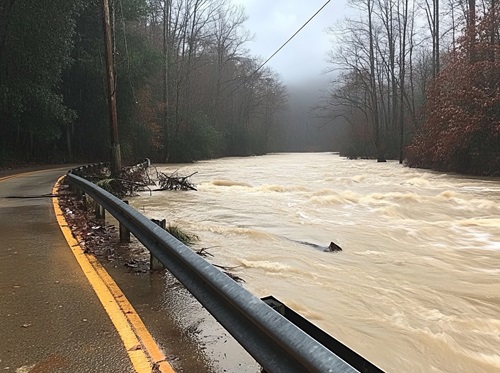
The fall and early winter season typically brings 30 percent of the area’s tourism revenue (a total of $2 billion, according to this report). The cuts were especially deep, according to the report, with current data showing tourism was down by 70 percent in 2024, according to Explore Asheville. Even charitable giving was down and many Asheville residents lacked drinkable water for nearly two months.
But it wasn’t just Asheville, nor even just North Carolina. Helene first made landfall in Florida, and also tore across South Carolina, Georgia, Virginia and Tennessee, leaving a 500-mile trail of destruction. Additional states also saw events cancelled and sustained damages.
According to the South Carolina Daily Gazette, Helene caused roughly $200 million in estimated damage to the state’s forest industry, the South Carolina Forestry Commission said in a report presented to the House Agriculture, Natural Resources and Environmental Affairs Committee.
The report estimated a jaw-dropping $83 million in timber damage and $60 million in damage to forests in and near cities.
And, says the Clemson News, hurricanes like Helene can significantly alter forest canopy structure and affect leaf color.
But those destinations are pulling a phoenix act and rising from the destruction with strength and resiliency.
Katie Button, chef and co-founder of James Beard award-winning restaurant Cúrate. told National Geographic reporters, “This fall will be a special time to be here in Asheville. Visitors should know that we are here for them with open, welcoming arms and a big heart full of love and pride for this community.”
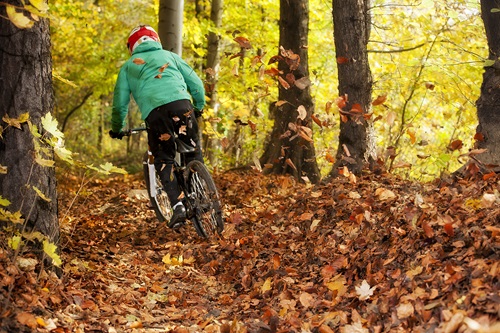
The Knoxville News notes that the hardest-hit areas of Great Smoky Mountains National Park have mostly reopened, with visitors returning to Cataloochee Valley, Big Creek, Cosby and Balsam Mountain to enjoy campgrounds, trails and picnic areas.
Crews had re-graveled key roads, completed some trail restoration, cleared downed and hazard trees and stabilized historic structures, mostly on the North Carolina side of the park.
Only a few areas remain completely closed but on the whole, trips to the country’s most-visited national park have bounced back. Cataloochee saw a 4 percent increase in visitors between April and July compared to last year, according to preliminary data. And Big Creek rose 8 period compared to the same period last year.
Other states are rebounding as well. In Tennessee, flooding from Hurricane Helene shut down one fall agritourism farm right before the start of its six-week season, causing its owners to “have to rebuild 25 years in 300 days.” (Spoiler alert: They managed it and the farm is ready for its close-up.)
Virginia was also hit hard by Helene. The town of Damascus, for example, which sustained an estimated $12 million in damages, was a big center for mountain biking, particularly along the 34-mile gravel trail, a former railway, that between Abingdon to White Top.
The most popular portion is from White Top to Damascus, as it is mostly downhill and shaded in trees, making it a popular destination in the fall when leaves are at their peak. Helene’s impact on that section was catastrophic but the town continues to rebuild.
“Helene came in with a vengeance, and she may have damaged and destroyed our structures, but she did not shatter our Appalachian mountain virtues or our love for our town,” Mayor Katie Lamb told reporters with the Virginia Mercury.
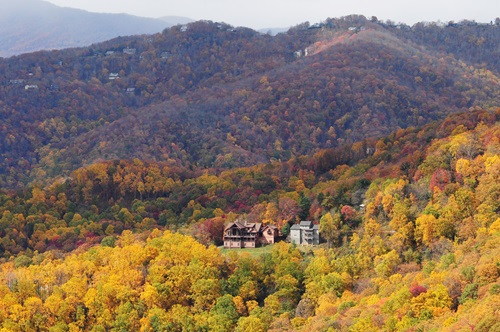
The Blue Ridge Parkway, a major thoroughfare for all tourism in Virginia as well as in North Carolina, is open but work is ongoing; the latest information can be found at this site.
Whether this year’s fall colors will rival or fall short of those in previous years is open to debate. Scientists say that fall colors are the result of stress on trees (something Helene brought in spades) but others say this year’s overall climate might result in duller colors. The site, Almanac.com, has an interactive map of the United States showing the progression of fall colors.
NatGeo also notes that Mother Nature, despite having the final word last year, can still be leveraged as an educational opportunity for kids who are traveling with their parents. At the same time, that damage can also be a tourist attraction. (Take that, Ma Nature!):
“Helene was not just a hurricane; it was a geological event that changed the Earth’s structure. These changes are most noticeable for visitors hoping to hike, mountain bike, or stand-up paddle down the French Broad River, as well as those checking out the scenic views and fall colors on the Blue Ridge Parkway. Les Love, president of the Carolina Mountain Club, says most trails have reopened, though hikers and bikers may notice off-trail debris and even giant root balls too heavy to move.
“It’s good for folks to come and see just how powerful Mother Nature is, and what she can do,” he says.”
About the Author