
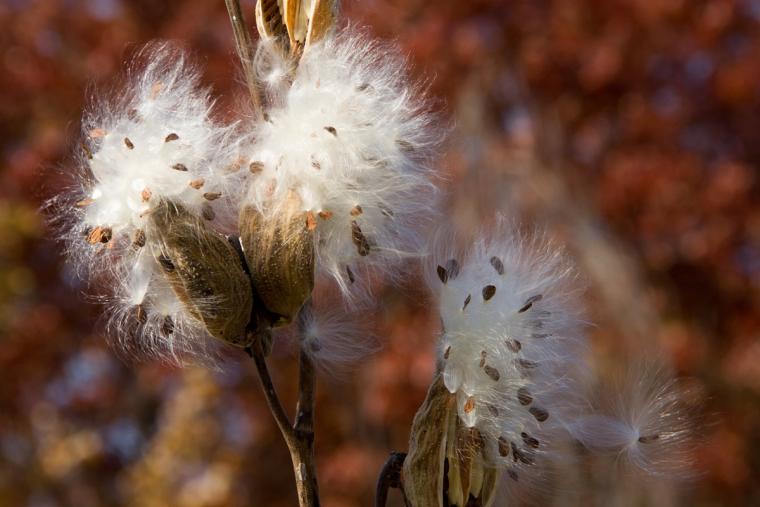
Photo © Kixalot | Dreamstime.com
Before there were widespread youth sports, there was competitive milkweed collecting.
Back in the World War II era, milkweed (y’know, the stuff monarch butterflies love, and the plant every gardener is now being encouraged to cultivate) was highly sought after – but for its patriotic value, not its pollinator appeal. And in the days before widespread youth sports, picking milkweed was a pretty competitive pastime among children.
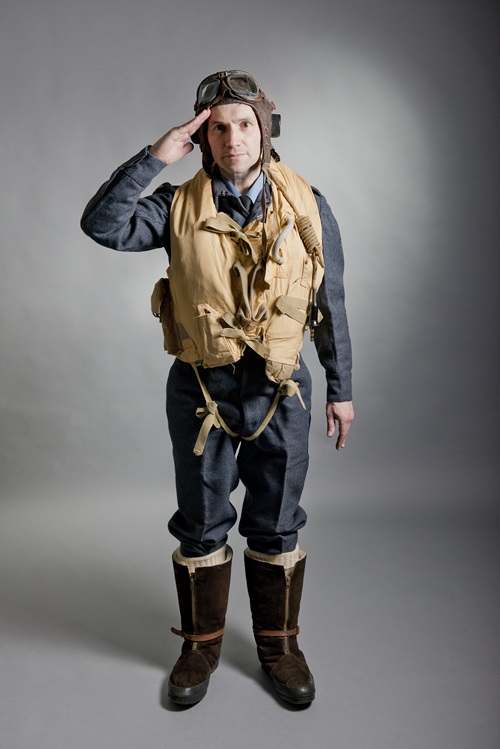
But to get to that point, you have to look backwards. The Wisconsin Department of Natural Resources notes, “Before the war, life preservers were made from kapok, a silky fiber from the fruit of a tree grown in the East Indies (present-day Indonesia). But Japan's occupation of that region during the war cut off kapok supplies.”
Faced with an immediate need to manufacture life jackets and life preservers for troops, the federal government hit upon the idea of using milkweed floss, a naturally buoyant and water-repellant fiber, as a suitable substitute. (In fact, studies showed that a pound of milkweed floss could keep a 150-pound man afloat for more than 40 hours.)
But a lot of milkweed was needed for the government to outfit all the soldiers who would need safety gear; in fact, 2 million pounds of ripe mildewed pods were needed if they were to be processed and transformed into 100,000 life jackets. And there was no time to start farming, since the war was on and supplies were needed immediately.
Dr. Boris Berkman pitched a bold idea to Congress: “enlist” schoolchildren to pick the pods of milkweed which grew in abundance across the U.S. and Canada but previously had not been farmed because milkweed was, well, a weed. Why not, Berkman suggested, let children not only gather milkweed but let them compete against one another, and against other schools, to see how much milkweed everyone could bring in?
Berkman’s pitch hit the right note with Congress. Berkman was awarded an investment for the Milkweed Corporation of America, located in Petosky, Michigan.
“In 1942,” the Wisconsin DNR reports, “the government appropriated a former lumber company in Petoskey, Michigan, located on the milkweed-rich northeastern shores of Lake Michigan, as the country's only milkweed processing plant.”
Further, the DNR notes, “Petoskey was accessible by road, rail and ship. Collection points were established at rural stores and small businesses across the Midwest and New England to funnel the fruits of the children's efforts to the company's processing plant, where they went through a procedure to dry and separate them.”
Veterans Breakfast Club says, “Newspapers like the Pittsburgh Sun-Telegraph publicized the need for milkweed, and even launched a “milkweed drive,” offering $500 in prizes. An ad in the paper asked young people to become members of the Sun-Telegraph Junior Victory Army, who when they signed the pledge, would promise “that all of the precious milkweed in my neighborhood is not destroyed and that it is harvested at the proper time. I do this as my help in keeping the production of life jackets for our fighting men at top peak.”
The often repeated phrase, "Two bags save one life," became the mantra for the effort, noted the Wisconsin DNR.
Children were provided with gunnysacks and encouraged to fill them with milkweed pods and sling them over fences to dry. Monetary rewards were dangled in front of kids, who were paid 15 to 20 cents per bag. Members of 4-H clubs received extra credit for their efforts.
Children were all in on the effort; after all, who could resist the chance to show some red, white and blue spirit – and compete with their friends?
The demand for milkweed floss kept increasing, with the U.S. Navy ordering 1.5 million pounds of floss in 1943 alone. Other branches of the military wanted it as well. Overall, more than 12 million pounds of milkweed were collected, largely by children, notes Monarch Joint Venture.
In September of 1945, World War II ended and in the years that followed, the U.S. government canceled its contract with Milkweed Floss Corporation of America as milkweed was no longer needed. Kapok became accessible again and other synthetic materials had begun being tested as an alternative. Berkman fought to keep milkweed as a cash crop in the Petoskey area, but ultimately, the Milkweed Corporation of America building was sold and its contributions and history largely forgotten.
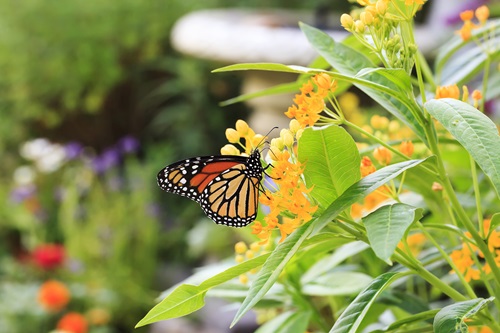
And while the once revered plant did temporarily revert to “weed” status, it is now enjoying what might be called its second career; it’s essentially considered a hall-of-famer among pollinators because of its role in attracting monarch butterflies.
And kids are still competing in the milkweed arena. In Iowa, for example, a 4-H team placed first in in the State Wildlife Habitat Education Program (WHEP) senior team division where one aspect of the competition focused on tallgrass prairie and urban and wetland ecoregions – where milkweed played an enormously beneficial role.
A Girl Scout in New Jersey used her pandemic time to join a competition to improve something within the community. Elizabeth Gillen, 17, and her friends created a Facebook page called Morris Monarchs and shared a survey in online gardening groups, offering free milkweed seeds to anyone who wanted to plant them before the winter of 2021. More than 1,000 people responded, and Gillen and her friends began sending out seeds and tracking the seeds' location on a map. This effort won them first place in their state competition.
Not to be outdone, in June of 2024 at the JA National Student Leadership Summit in Washington, D.C., a team from Hoover High School in Ohio, known as Mission Monarch, took third place in the national Junior Achievement competition with its milkweed seed bomb, intended to help increase the population of the monarch butterfly.
It won’t be giving youth soccer event owners sleepless nights any time soon but milkweed-inspired competition could still be considered a niche sport in the U.S.
About the Author