


Photo © Trong Nguyen | Dreamstime.com
Maximizing athlete comfort and safety is one of the primary aims of event owners. Whether the player is an amateur or a trained professional, their ability to apply their skills in an optimized environment is crucial. Meeting this goal involves a range of responsibilities on the part of the venue owner, from regular maintenance to maintaining facility cleanliness, to engaging with the community to procuring equipment and more.
From netball to basketball, volleyball to badminton and tennis to pickleball, one factor can make a significant impact: the choice of a sports surface. Current technology in sports surfacing systems can bring a range of benefits to any activity requiring a cushioned hardcourt or traditional hard court, including the potential for injury reduction and heat exhaustion, as well as a chance for less impact on joints.
Here in an inside look at today’s technologies that can contribute to enhanced playing surfaces, making them popular and able to be enjoyed by athletes of any skill level.
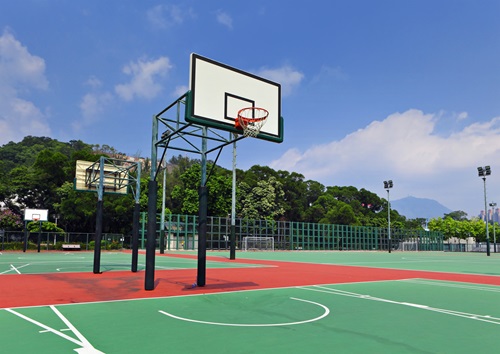
Optimizing Player Comfort
With optimal hard-surface technologies, some venue surfaces can help reduce some of those post-match twinges.
For example, today’s surface solutions can deliver enhanced shock absorption in the right applications, which can be a major difference-maker for today’s top-line recreational facilities. Cushioned systems incorporate acrylic resins and rubber granules that are designed to absorb impact and redistribute pressure, enabling a desirable feel for the player without compromising durability. The application process of cushioned technology is rooted in rooftops and surfaces with expansion joints, where subsurface movement is anticipated.
Players won’t notice much of a difference while on the court, but a more comfortable playing surface can help alleviate some of the next-day soreness that can occur after playing on a hard court. Shock-absorbing systems can be applied to a variety of surfaces but are especially advantageous to applications like pickleball, which have gained popularity for their “anyone can play” approachability.
Striking the right balance is important. Too soft a surface can impact the bounce of the ball, leading to adverse playing conditions. Excessive cushioning can contribute to the greater likelihood that a player may experience an injury while playing such as a rolled ankle. To avoid these types of problems if opting for a cushioned surface, work with a reputable supplier.
New Frontiers in Solar Reflectivity
Another key feature to look for when looking to optimize an outdoor court surface, whether you’re building a new court or renovating an existing one, is its solar reflective index (SRI). SRI measures the surface’s ability to effectively reflect solar rays and to mitigate the associated heat during use and play.
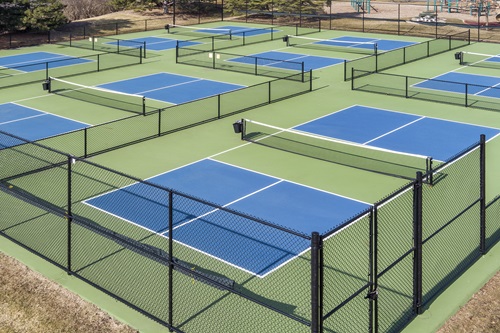
Reflective surfaces are becoming more popular in a range of applications, for good reason. Extreme heat in the summer months has become increasingly common in recent years, and reflective surfaces are an effective way to mitigate the creation of heat sinks. Heat sinks are created in outdoor built environments that become hotter than the natural surrounding environment; preventing them can keep local climates cooler and more comfortable.
Reflecting surfaces can have a positive impact on outdoor sports areas. For example, a tennis court can become significantly hotter than the ambient air temperature when the sun is shining, potentially reaching up to 140 F (60 C) on a hot day. The heated court surface further radiates heat back into the surrounding air, creating a hotter microclimate around the court.
For athletes, such conditions can lead to faster dehydration, increased heart rates and greater fatigue. Excessive heat can also increase the risk of heat-related illnesses and pose challenges to overall player health and safety. Heat stress, muscle fatigue and cramping and inhibited cognitive function are all risks associated with playing in high heat conditions.
A surface that can reflect a certain amount of sunlight can help keep on-court temperatures more comfortable, even at full sun exposure. However, a careful balance needs to be struck. The surface must not be so reflective that it impacts players’ visibility (ideally, reflective ratings of 20% to 30% greater than that of standard surfaces will be optimally beneficial). Available finishing topcoats delivering this performance can be combined with other high-tech surface technologies to create a fully optimized system.
Color coordination should also be considered, because while traditional tennis courts have tended to historically be darker greens and terracotta reds, customization reigns supreme throughout modern sports surface applications. Consider that grays and blues are popular among newly proliferating pickleball courts.
Venue owners are contending with modern challenges for keeping their facilities safe, reliable and comfortable, making it of utmost importance to select the technology that can deliver on the needs of players.
Not all sports surface coatings are created equal, so for venue managers, it is important to select and specify coating technology that delivers the right performance characteristics. Working with a trustworthy supplier that maintains a track record of providing surface solutions for critical applications can go a long way toward ensuring your surface will ultimately perform as desired.
The choice of sports surface can make a difference for the facility’s reputation, thanks to the comments of the players who use it. Understanding the technologies available can help athletes unlock their full potential.
About the Author