

Photo © Wisconsinart | Dreamstime.com
If you’ve watched outdoor football in the winter, you’ve probably seen (or even sat through) a snow game.
And over the years, the snow has been as much of a star as the on-field action. After all, who can forget the famous “Snow Bowl” in Buffalo in 2017, when the Bills played the Colts? Or how about the 1982 “Snow Plow Game,” where the field had to be cleared before a field goal kick lifted the Patriots over the Dolphins? Or any of these other games (including one in Texas) immortalized by wintry conditions?
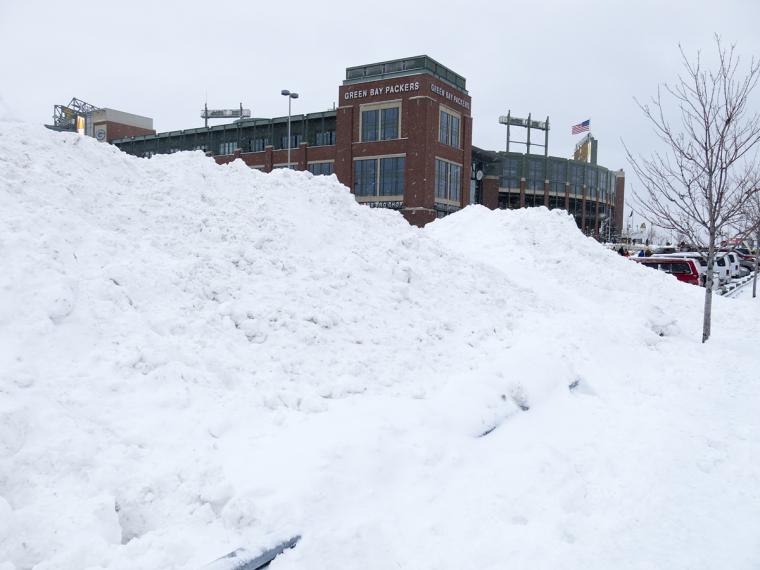
But back in 1967, change was already afoot, thanks to the invention of under-field heating systems. And in the NFL, it started on Lambeau Field, ironically still referred to by sportscasters as “the frozen tundra.”
According to Popular Mechanics, Lambeau Field installed “a hydronic heating system, burying pipes six inches to a foot under the turf and filling them with warmth to keep the soil and roots from freezing.”
If you want to see a picture of a field heating systems installation, click here. Systems are available for use in both natural and synthetic fields. The goal is the same: To keep the surface from freezing and becoming too slick for players, as well as (in the case of natural grass) to protect the rootzone.
WarmlyYours gives a quick description of how the systems work these days, noting they are “typically comprised of PEX (crosslinked polyethylene) pipes embedded six inches underground. Boilers installed nearby pump a mix of water and glycol, allowing the system to stay warm even in the coldest of temperatures while preventing the liquid from freezing.”
As the warmth is pumped underneath the field, it slowly raises the temperature of the turf. (By the way, there are also electrical systems.)
Popular Mechanics states that today, almost all NFL teams whose games are played outdoors in cold weather have such systems. The only holdout has been Buffalo; however, their new stadium, slated to open this year, will have such a system installed.
Experts are quick to point out that heating fields is a science unto itself; it is not like turning on the heat in a car, or even a house. Groundskeepers on each field have worked, in many cases for years, tinkering with the temperature and the technique in order to develop the right strategy for the field on any given winter day.
If it gets too chilly in the days leading up to a Packers game, Lambeau groundskeeper Allen Johnson told reporters in 2019, he adds a tarp, props it up and blows warm air under it, creating a blanket of warm air to keep the surface dry.
"When it gets really bitter up here, you can't get the surface totally warm because you can't control the ambient air,” Johnson noted. “There was a time in 2007 when I brought the heat system up and maxed it out to battle the bitter cold. It was working overtime that day."
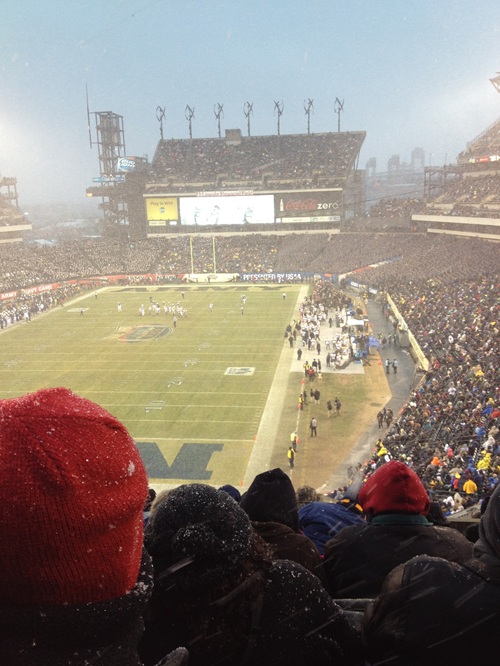
Every groundskeeper has a different strategy, notes the PopMech article. The Baltimore Ravens crew warms its soil to nearly 50 degrees and Philadelphia once pushed its field to 60 degrees. The Chiefs grounds crew targets 50 degrees, ensuring the field isn’t frozen. In all cases, the goal is to keep the field safe for players and officials.
Want to know what can happen when you play on an icy field? If you weren’t around for the so-called Ice Bowl in 1967, you can read about that here.
Subsurface heating has also trickled down to college fields like those at Michigan State, University of Minnesota and the University of Wisconsin. Because it represents a substantial investment, it’s unlikely to become a fixture in the youth market any time soon.
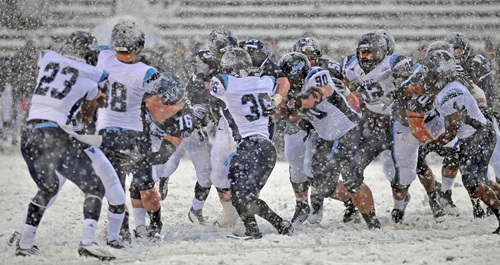
Also, don’t think the system melts the snow on contact or that it keeps the playing surface bright green and completely dry in the middle of a winter storm. It’s only intended to lower the potential for ice.
As Fansided notes, “from a practical standpoint, heated NFL fields are designed to keep the ground from freezing and the grass alive, not to turn December games into slush bowls. Sometimes snow sticks. Sometimes it doesn’t.”
In other words, it’s not like the heating systems that you’ll find under driveways and some roadways, that work to melt snow as it falls and keep it from accumulating. (And, by the way, whether those pavement heating systems will move into the U.S. sports market for use under facilities like concrete or asphalt tennis courts is anyone’s guess.)
But subsurface heating systems are not the only thing designed to combat the cold in football stadiums. Heated benches for players help too. And that invention, originally known as the Jenkins Hot Seat, was born on the Jersey Shore.
Spectators’ butts, unfortunately, are on their own.
About the Author