

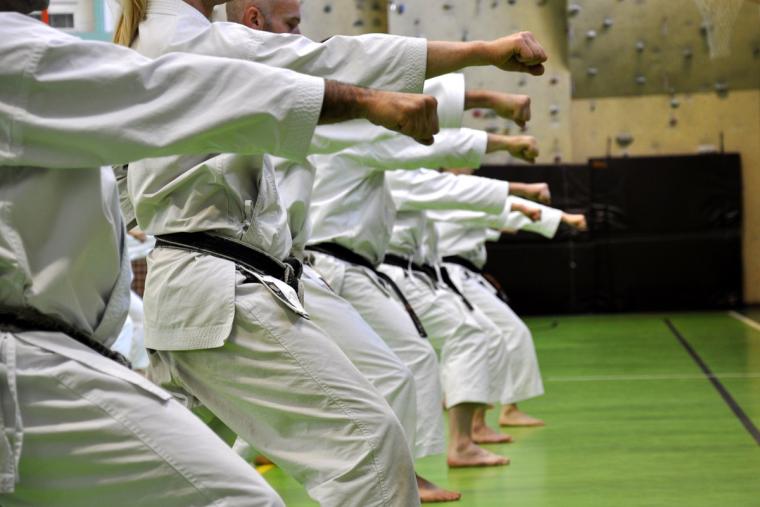
Photo © Kamil Ďurana | Dreamstime.com
After a triumphant showcase appearance in the 2020 Olympic Games in Japan, karate found itself unceremoniously kicked to the curb not just once but twice, being excluded from both Paris in 2024 and Los Angeles in 2028.
Now, the World Karate Federation (WKF) is eyeing Brisbane and a potential comeback worthy of a Rocky storyline, or perhaps, a Karate Kid movie.
According to Inside The Games, Antonio Espinós, president of WKF, stated, “the future of Olympic karate should be bright. We are a federation that really has all the parameters and all the conditions to be an Olympic sport and to add to the Olympic Games."
Espinós also threw some big shade at former IOC president Thomas Bach and stated he is hopeful Kirsty Coventry, the new IOC president, will be a better advocate for the sport: "We have not been lucky with the former president Thomas Bach and the good news is that with Mrs. Coventry, we only can improve. I mean we cannot be worse than it has been with Thomas Bach in the last years."
Side note: Ouch. Because maybe it can get worse. In an article penned by scholars at Australia’s Victoria University, a discussion of potential sports did not include karate; rather, cricket, lacrosse, sport climbing, surfing, skateboarding and baseball/softball were considered the strongest contenders. Karate didn’t even make the list for “maybe” or even the “long shot” mentions.
And Reuters states, “One might also ask whether the Games needs another combat sport. Judo and taekwondo were added inside the last six decades to the more-than-century-old disciplines of wrestling and boxing.”
Unfortunately, karate’s one moment in the sun, and in the Land of the Rising Sun at that, came in Tokyo during what became known, unfortunately, as the “pandemic Games.” Many athletes, including those in karate, performed to empty arenas.
A headline in Sports Illustrated summed it up: “This Is Not How Japan Envisioned Karate's Moment at the Olympics.” The subhead: “With deep roots in Japan, the sport's debut in Tokyo was fitting. But the host country deserved better than these pandemic Games.”
SI further noted, “With fans, the kata competition would have done what the Olympics should do: Give a host country a chance to revel in its own brand of sport.”
The lackluster background for any showcase sport (which, to be clear, was unavoidable) could have contributed to its less than stellar debut and to other nations, like France and the USA, stepping back from it.
Espinós says that karate is a natural fit for the Games, however, and that it should take its rightful place in Brisbane in 2032. In fact, he has insisted the sport could become a permanent fixture, telling the IOC, "The same as karate needs the Olympic Games, the Olympic Games needs karate. We have shown to the world that karate is a unique sport. We have shown the merits to be in the Olympic program as a permanent sport."
Karate has multiple points in its favor, all strong points. As a sport where athletes compete one on one, it does not create the larger head count that team sports demand, making it an easier addition to the Games. It has a storied history that can be traced back in terms of centuries, rather than decades, just as do the Olympics themselves. It is open to both male and female competitors, something the IOC requires.
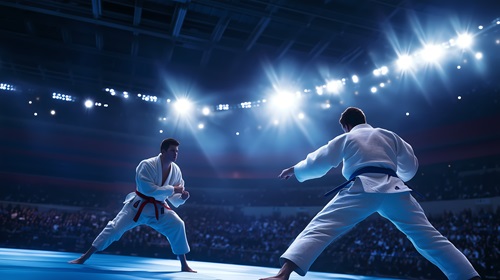
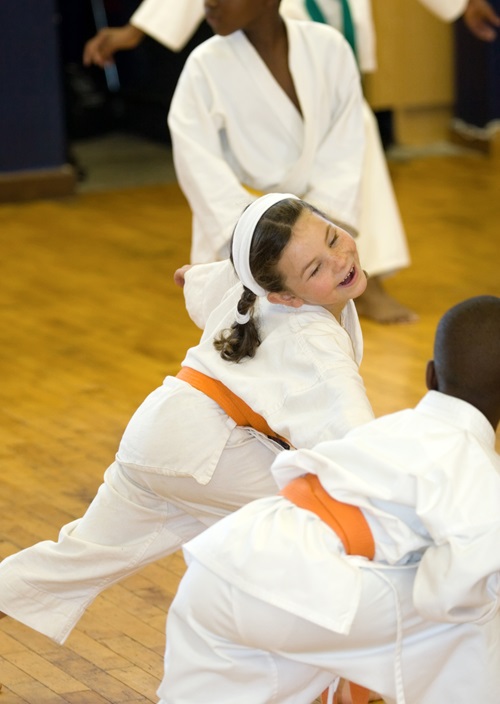
Within the U.S., it is a well-liked sport, particularly at the youth level, with studios nationwide, as well as a strong and valued place in afterschool programming. It even has a place in popular culture, being the subject of movies for children (like the Karate Kid franchise) and adults (a multitude of combat films, including those starring Bruce Lee).
Proponents of karate say it builds character and self-confidence and that it promotes mental and physical discipline while teaching a respect for the sport and for fellow combatants.
“Karate brings more than athletic excellence; it offers meaningful impact through education, respect and empowerment,” said WKF CEO Sara Wolff.
WKF is continuing its quest to bring the sport back to the podium; in July, its leadership met with officials from the Brisbane 2032 Olympic Games Organizing Committee (BOCOG). The WKF shared the sport’s rapid global development since the last meeting, noting growing visibility, popularity, commercial reach and social impact.
WKF General Secretary Toshihisa Nagura came out of the meeting in Brisbane feeling optimistic.
“The WKF looks forward to continuing its collaboration with BOCOG as we will remain maximizing our efforts to be included in the Olympic program for Brisbane 2032,” he stated. “I believe that we can show the unmatched added value that karate would bring as part of the Olympic movement. Our meeting today was a great opportunity to share the progress of our sport and how we could contribute to the success of the Brisbane 2032 Olympic Games.”
Those who follow the Olympics closely will recall that while karate has had its moment in the Games and is now trying to get back in, another recently added sport has been trying far longer before it achieved success.
Squash was first mentioned as a potential medal sport in 1947 (in! 1947!) and eight (count them, eight) decades of efforts followed. (It will finally be seen at the Olympics in 2028.)
Keep kicking, karate. You’ll get back there.
About the Author