

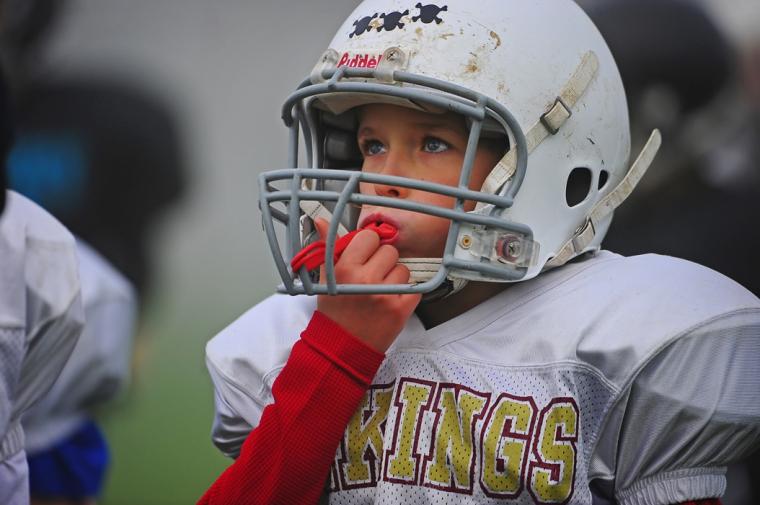
Photo © James Boardman | Dreamstime.com
Here’s some welcome news in the tackle football space. The National Operating Committee on Standards for Athletic Equipment (NOCSAE) has finalized the first performance standard for youth football helmets.
The new standard may provide some measure of peace for the parents of youth football players, including those participating in leagues affiliated with Pop Warner, American Youth Football, USA Football and similar organizations, according to Sports Business Journal.
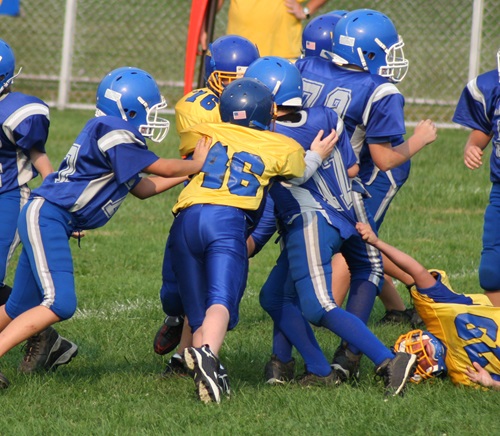
It’s time, say researchers, to use science to make the sport safer. SBJ notes, “The Sports & Fitness Industry Association reported that 758,000 youth ages 6-12 were regularly playing tackle football as of 2023, which is down from 965,000 who consistently played a decade ago in 2015, a 21 percent decrease. And those who do play have been wearing helmets certified by a safety standard primarily with adults in mind, not kids.”
The player demographics cited by NOCSAE researchers for the purposes of the helmet studies were (a) five- to nine-year-olds, and (b) nine- to 14-year-olds.
SGB Online says the new standard, ND006, is the culmination of a decade of NOCSAE-led effort and funding to support scientific research, testing and analysis, establishing sufficient youth-specific data and testing criteria necessary to develop the standard.
And to be very clear: NOCSAE is not a manufacturer; it is an organization that creates safety standards. Now, it’s up to helmet manufacturers to ascertain their products can meet the standard.
To allow manufacturers time to develop youth helmets that meet the standard, the NOCSAE Standards Committee set an effective date of March 1, 2027, for ND006.
NOCSAE already has one football helmet standard in place, ND002; however, ND006 addresses the unique risk exposures faced by youth football players, which differ from those at or above the high school level.
The primary differences in exposure at the youth level include the frequency, type, location, and magnitude of head impacts. All these factors are influenced by the player’s age, size, speed and coordination.
“We’ve known for some time that youth football players face different risks from those at or above the high school level. Put simply, younger players don’t run as fast or get hit as hard as older players, but they do fall to the ground more often and their heads are proportionately larger compared to their bodies,” said Dr. Robert Cantu, MA/M.D., FACS, FACSM, FAANS, NOCSAE vice president and chair of the NOCSAE Scientific Advisory Committee. “Adjusting the standard for these conditions will enable manufacturers to design helmets that focus on what youth players need, not what players need at the high school, college and professional levels.”
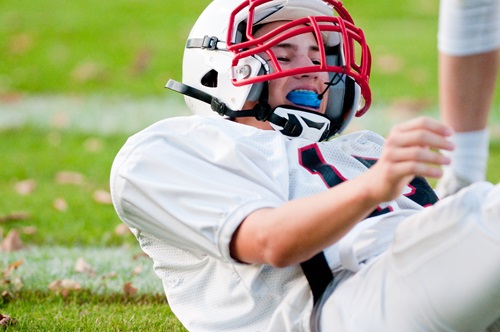
NOCSAE researchers pointed to the fact that helmets for older athletes are typically heavier, constituting more of a burden on youth players. ND006 states that helmets for the youngest players (facemask included) cannot exceed 3-½ pounds. (While a few manufacturers do have lighter helmets, there is overall a very limited selection, adds SBJ.)
In developing the new standard, NOCSAE research included multiple studies, as well as experiments with various helmets. One study, for example, used in-lab testing of helmets. (A full description is here.) Another study involved three stages of analysis: video analysis, laboratory reconstructions and finite element modeling of head impacts from youth football games. (A full description is here.)
Youth tackle football event owners should be aware of the new standards, the details of which are available on NOCSAE’s website.
About the Author