

Photo © Roman Kosolapov | Dreamstime.com
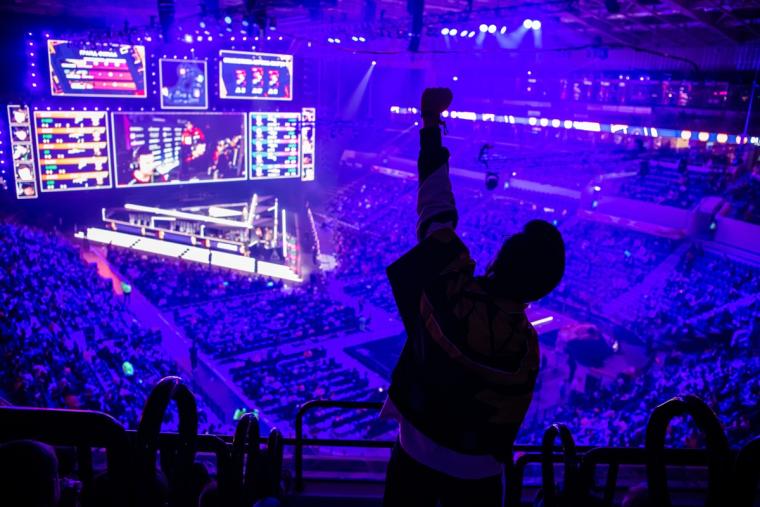
Much has been written about the American esports event market, but a new report shows the sector has expanded into new growth hubs (Europe, Latin America, Africa, India and, more recently, the Middle East) driven by significant public and private investment, as well as sponsorship and media rights.
Esports in the Olympic Era, compiled by De Gaulle Fleurance, studies the growth of the sport, as well as the economic and legal challenges it faces.
Initially limited to a community of enthusiasts, competitive gaming has established itself as a structured global phenomenon. The report’s authors note that it sits “at the crossroads of sport, entertainment and the digital world. It now attracts a massive, global audience and generates revenues comparable to those of certain traditional sport.”
A Global Market in Continuous Growth
The global esports market has experienced rapid growth, driven primarily by sponsorship and media rights. Global revenue is estimated at $2 billion in 2023, with a projection of nearly $4.2 billion in 2027 and forecasts suggesting it could exceed $10 billion in 2032.

By way of comparison, the global video game market, the industry to which esports is linked, is projected to be worth nearly $189 billion in 2025.
This momentum is spreading to France. According to the Esports Economic Observatory, the sector’s turnover, as aggregated from the sample, rose from €31 million ($35,758,500 in 2019) to €116 million ($133,806,000 in 2022), representing an average annual growth of nearly 55%.
Furthermore, what was originally a private practice has become a major phenomenon: the global esports audience is expected to exceed 640 million viewers by 2026, comprising 318 million dedicated fans and 322 million casual viewers.
In France alone, 11.8 million people aged 15 and over identify themselves as either esports consumers or players, representing 23% of internet users in this age group.
What Makes Esports Unique as a Market
According to the report, esports as a member of the sports event industry is unique among its peers for three key reasons:
- A young audience: Esports is distinguished first and foremost by the profile of its audience. The average age of its viewers is approximately 26 to 29 years old, compared with nearly 50 years old for fans of traditional sports. Moreover, more than 60% of esports fans are between 16 and 35 years old, a target audience particularly sought after by advertisers and difficult to reach through traditional media channels.
- A “digital native” broadcasting model: Esports relies almost exclusively on digital distribution channels. Competitions are broadcast on streaming platforms (Twitch, YouTube Gaming), which offer real-time interactivity, monetization through subscriptions and donations, and precise measurement of viewer engagement.
- A transnational discipline by nature: Competitions are played online, audiences are global and communities develop independently of borders.
A Decisive Phase of Economic Consolidation
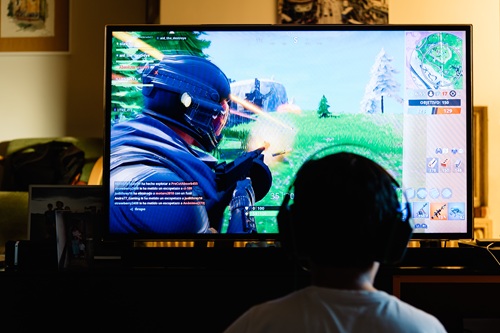
The report’s authors provide an overview of the key players in this emerging sector (video game publishers, esports competition organizers, professional esports clubs, etc.) as well as the legal framework in place worldwide.
France is thus one of the few countries to have legislated on the subject (Law No. 2016-1321 of October 7, 2016 on the Digital Republic).
Finally, one of the key characteristics of esports lies in the ownership held by publishers over the video games used in competitions. Consequently, due to the intellectual property rights they hold, publishers play a pivotal role in the esports ecosystem.
“The esports sector is entering a decisive phase of economic consolidation for all stakeholders within its value chain,” note the report’s authors, Smaïn Guennad, Partner, Esperanza Barrón Baratech, Senior Counsel, Grégoire Froussart and Victor Omnes, Solicitors.
“Two major challenges are emerging in the short term: on the one hand, the sustainable, large-scale monetization of the audiences generated by the broadcasting of competitions, which is largely free and still undervalued; on the other hand, the search for a more stable, recurring and diversified business model, enabling the sector to reduce its structural dependence on sponsorship and external funding.”
The report can be accessed at this link.
About the Author