

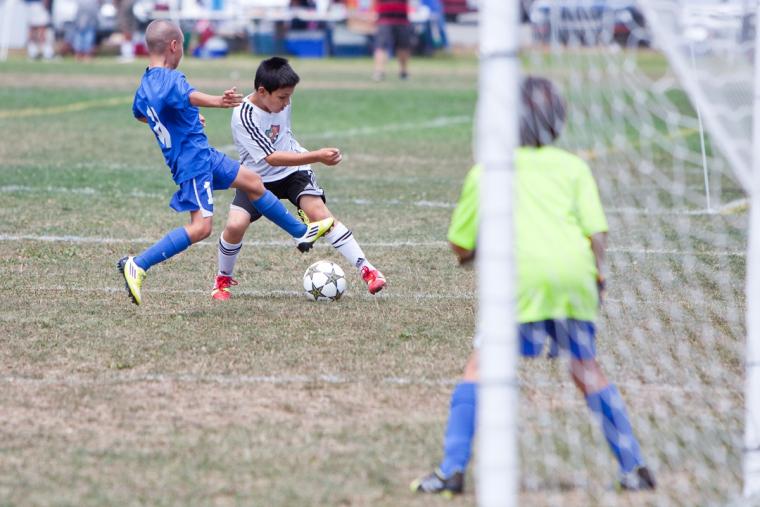
Photo © Paul Topp | Dreamstime.com
Good news, bad news, more good news. That’s pretty much the theme of the State of Play 2025 report, produced by the Aspen Institute Sports & Society Program.
The report, which chronicles youth sports in all their (admittedly often messy) glory, found this year that participation is strong and healthy; in fact, the numbers are even higher than when they boomed in 2019 (before you-know-what wreaked havoc on the industry and the less said about that, the better).
The report pulls together statistics across a range of data to arrive at its conclusions. So with that in mind, there’s good news for event owners everywhere:
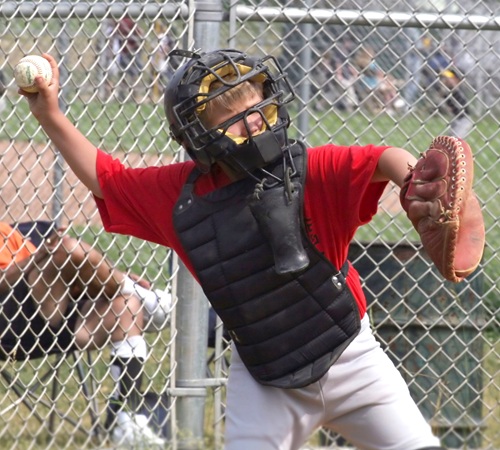
Participation Is Up. Way Up. More children and adolescents engage in organized play than at any time since 2019, according to government and industry data.
Administered through the U.S. Census Bureau, the National Survey of Children’s Health shows that 55.4 percent of youth ages 6-17 played sports in 2023, the most recent year of available data and an increase from 53.8 percent in 2022.
Additionally, the Sports & Fitness Industry Association (SFIA) had great news. Its most recent data, from 2024, shows a 6 percent one-year uptick of children ages 6-17 participating in a team sport at least one time. Kids ages 6-12 also regularly played team sports at a slightly higher rate in 2024.
Unfortunately, SFIA found that regular participation continued to decline for teenagers ages 13-17; however, if we look at the most recent sports participation survey by the National Federation of State High School Associations (NFHS), a very different picture emerges.
The most recent academic year covered by the NFHS survey showed an all-time high in terms of the numbers of student athletes. There was a total of 8,260,891 participants, up from the previous record of 8,062,302 set in 2023-24. That’s an uptick of nearly 200,000.
Girls Are Leading That Charge. The bulk of that growth, said the NFHS, came in girls’ sports, with wrestling and flag football leading the way.
The rapid rise of girls' flag football programs across the country led to 68,847 girls participating in the sport last year – an impressive 60 percent increase from the previous year. In addition, schools sponsoring the sport increased by nearly 1,000.
Girls' wrestling topped 74,000 participants for the first time, jumping 15 percent from a year ago and adding nearly 1,000 schools with a girls wrestling program. Boys' wrestling participation is also enjoying a rebound in numbers, recording an increase of 8,340 to top the 300,000 mark for the first time.
Project Play notes, “In the decades to come, we may view youth sports as two eras – before flag football exploded and after. We’re currently in the early stages. Consider what happened from 2019 to 2024: flag football was the only team sport tracked by SFIA that experienced growth in regular participation among kids ages 6-17. (Tennis and golf increased as individual sports through separate data shared with Aspen.)
In 2017, flag surpassed tackle as the most commonly played form of the game for kids 6-12. The gap continues to widen at that age, with 4% playing flag in 2024 vs. 2.7% playing tackle. Among youth ages 13-17, it’s important to note that tackle (6.4%) is still much more popular than flag (2.8%). And the number of high school 11-man tackle participants increased in three of the past four years – a trend not seen since the mid-2000s.”
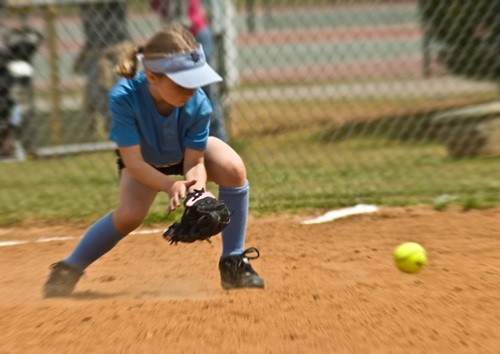
Casual Play is Up. Pick-up games have been seen as a vanishing art but this past year showed there is still good reason for optimism. Six percent more more children ages 6-17 played a team sport at least once in 2024 compared to 2023. No matter the age, casual participation was up 6%-7% for both the 6-12 and 13-17 age groups.
All told, 65% of youth 6-17 tried sports at least once in 2024 – a significant jump from 59% in 2021 and the highest on record tracked by the Sports & Fitness Industry Association dating to at least 2012.
“For the last five years, we were expecting growth and it’s nice to finally see it,” said Alex Kerman, SFIA senior director of research operations and business development.
Other Trends Bear Watching: From NIL to gambling, from AI to mega-facilities, from pickleball to states’ roles in regulating youth sports, there are distinct trends afoot and the Aspen report discusses them here.
Headwinds to Growth. There’s a counterbalance to all this good news. Challenges remain on the landscape, and as the report notes, those challenges “in some cases have escalated over the past year.” These can be summed up in several ways:
- Club and travel programs, which many parents and children prefer, are more expensive than rec leagues or school sports teams. The costs of youth sports continue to grow, and are up a whopping 46 percent since 2019, according to Aspen Institute Project Play research.
- Inflation is also a concern. Tariffs are making sports equipment and uniforms more costly, leading to the obstacles facing children from lower income families. Children from the wealthiest households play their primary sport more frequently than their peers on community, school and travel teams and through independent training. That’s every captured setting except free play, a lost art for many children and where the lowest-income kids play the most.
- Cuts in funding for recreational programs, as well as the elimination of many sports being offered by churches and schools due to tightening budgets have impacted poorer families, who rely on these programs for affordable opportunities for youth sports.
- Political issues have also come into play, says the survey: “Government raids of parks where immigrant children play, and other developments have created a dynamic environment that suggests a reshaping of the youth sport landscape.”
- Technology and television are seen as obstacles to activity, with the attraction of social media and videogames attracting the time and attention of many children.

Despite This, Youth Sports Continue to Boom. The Aspen report states, “overall participation rates rebounded, with 55.4 percent of youth ages 6-17 playing as of 2023, according to the federal government. Even more played in 2024, according to data from the Sports & Fitness Industry Association.”
Further, the report states, “There was no guarantee this would happen. During the last major societal disruption, the economic recession of 2009, participation rates fell – and never recovered. Municipal budgets got cut, local recreation programs suffered, and private sport providers flourished, favoring families that could afford as much and leaving out many kids.”
“The rebound in participation since the pandemic is a credit to all who have innovated to improve access to quality sport programs,” said Tom Farrey, executive director of the Sports & Society Program. “But we’re going to need leadership to ensure that as more money flows into the space, the needs of children – all children – are prioritized in the development of policies, practices and partnerships shaping what is still a disjointed landscape.”
"State of Play 2025" features additional results from the Aspen Institute’s National Youth Sports Parent Survey, which includes analysis from parents of youth with disabilities, in partnership with Utah State University and Louisiana Tech University. (More parent survey data is available; click here.)
Parents are Fully Involved. Back in October, an SFIA report noted that parents are prioritizing their children’s sports experiences, and that 85 percent of them described themselves as being active in their children’s sports programs. Some other key insights:

Photo © Robert Philip | Dreamstime.com Fond memories drive the train: Parents with good memories of their own time in youth sports are likely to support their children’s sports programs.
- Moms run (most of) the show: Mothers are the chief planners when it comes to kids’ activities, vacation planning and entertainment – but the responsibility for buying sports equipment is almost equally divided between mothers and fathers. (One surprising fact: Kids have input on these decisions as well.)
- Both parents agree on the benefits: Neither mom nor dad needs to be sold on the value of youth sports; they are generally united in their belief that being a part of a team teaches children important lessons.
For those who want more details, the Team Sports Parents Insights report is available for purchase at this link.
The entire Project Play report, which includes demographics, participation by state and other great insights, is available free at this link.
About the Author